


The clock hit 2:30 PM EST on a Tuesday in March 2025.
James Mitchell
Senior Trading Analyst
☕ 12 min read
What you'll learn:
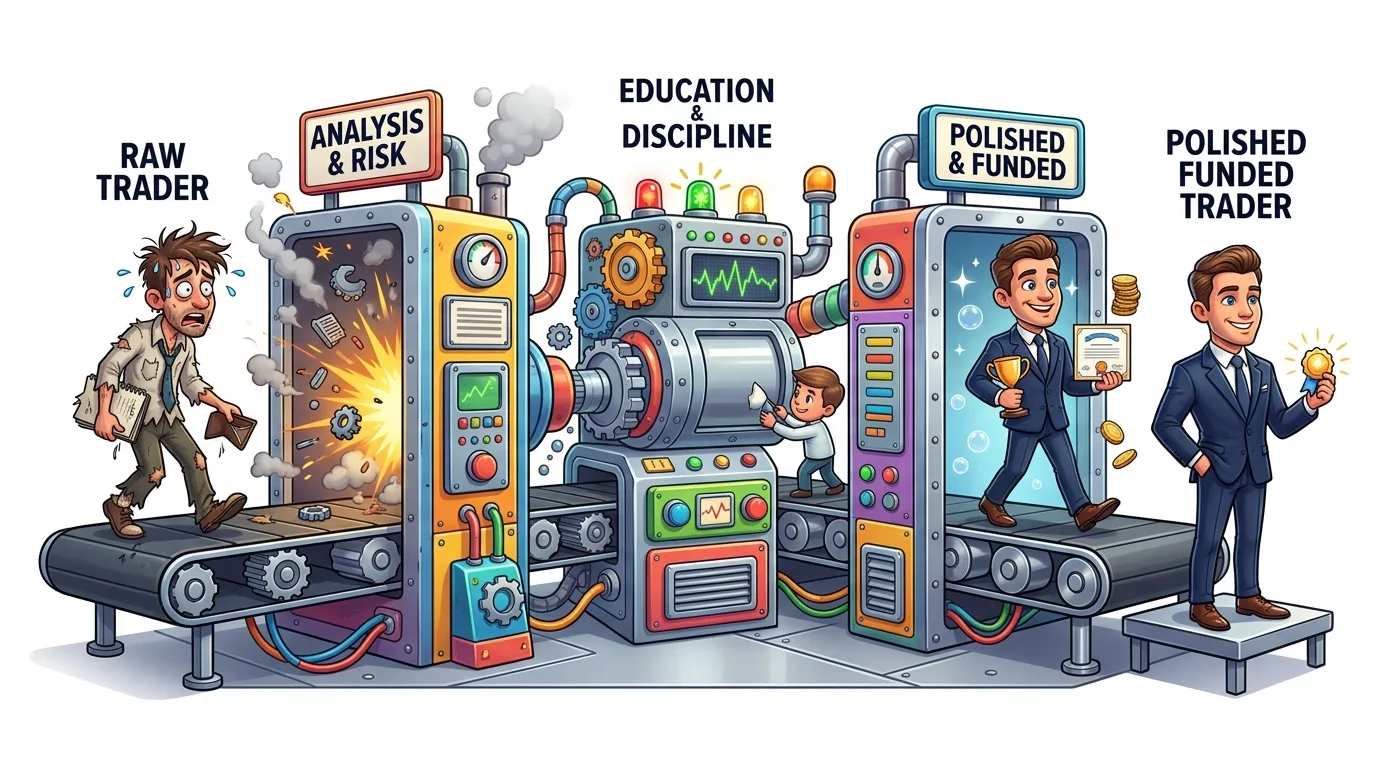
The clock hit 2:30 PM EST on a Tuesday in March 2025. I was staring at my NinjaTrader screen, watching the E-mini S&P 500 futures contract. My funded account with a futures prop firm was up $1,200 for the day. Then, the FOMC minutes dropped. The market spiked 15 points against my short position in under a minute. My heart sank as I watched my profit evaporate and my daily loss limit tick closer. That moment, more than any win, taught me what trading with someone else's capital is really about. It's not a free ride. It's a contract with rules tighter than any you'd set for yourself. If you're looking at futures prop firms, you need to know the real deal - the costs, the traps, and the strategy to actually get paid.
Let's cut through the hype. A futures prop firm isn't a broker. It's not a hedge fund. It's a company that uses its own capital to let you trade. You prove you can trade profitably under their specific rules, and if you pass, they give you a funded account. You keep a big chunk of the profits (usually 70-90%), and they take the rest. They take on the risk of loss; you bring the skill.
The key legal trick, especially here in the US, is how they're structured. They don't hold your money to trade with. You pay them a fee for an evaluation service - a test. If you pass, you get to trade their capital as a contractor. This distinction is what has, until recently, kept them mostly outside the direct grip of regulators like the CFTC and NFA. But that's changing fast, which we'll get into.
Why futures? For the prop firms, it's cleaner. They're dealing with regulated exchange-traded products on the CME or CBOT. The data is transparent, the margins are standardized, and there's no dealing desk nonsense. For you, it means direct access to markets like the ES (S&P 500), NQ (Nasdaq), CL (Crude Oil), and GC (Gold) without worrying about broker shenanigans. It's why there's been a 'Great Migration' from forex prop shops to futures prop firms. The model just feels more solid.

Warning: Don't confuse a prop firm with a broker like IC Markets or Pepperstone. You're not depositing money to trade with. You're paying a fee to audition. Your relationship is with the prop firm, not the exchange.

💡 Winston's Tip
Your evaluation fee is the cost of tuition. Expect to pay it more than once. The goal isn't to pass on the first try; it's to learn the discipline required to keep a funded account.
“Passing a prop firm evaluation isn't about being a brilliant trader. It's about being a disciplined robot.”
Here's where dreams get a reality check. That 'funded account' comes with layers of fees. I learned this the hard way after my first payout was smaller than I'd calculated.
The Evaluation Fee
This is your ticket to the tryout. For a $50,000 account, this might be $100-$150. For a $150,000 account, expect $250-$400. Firms run constant sales with 50-80% off, so never pay full price. This fee is gone whether you pass or fail. Industry-wide, only about 5-10% of traders pass. Let that sink in.
The Activation Fee
You pass! Congrats. Now, most firms hit you with a one-time 'activation' or 'onboarding' fee to set up your live funded account. This ranges from $0 to about $150. Apex Trader Funding charges around $99. Bulenox is about $148. This is a crucial number to factor into your total startup cost.
The Monthly Nut: Platform & Data Fees
This is the silent killer. You will pay a monthly fee to use the trading platform (like NinjaTrader or Tradovate) and for real-time market data from the CME and CBOE. This can be $0-$30 for the platform, plus $10-$15 for CME data, and another $5-$8 for CBOE. If the firm uses Rithmic and requires your own NinjaTrader license, you could be out $60+ per month before you even place a trade. Tradovate-backed firms often bundle this, which can save you a lot.
Commissions & Withdrawals
Every futures contract you trade has a commission. Usually $0.50 to $2.00 per side. It comes off your profit before the split. Withdrawals might cost $0-$25 depending on the method. Crypto withdrawals are often fastest and cheapest.
The Profit Split
This is the carrot. Most firms offer between 70/30 and 80/20 in your favor. Some have gimmicks like '100% of the first $10,000' (Topstep) or pathways to a 90/10 split. As of 2026, TradeDay moved to a standard 90/10. FundedNext Futures offers a 100% share. Read the fine print. That '100%' is often after fees, and may only apply to the first target. The split is always on net profit, after all commissions and fees.

Example: You make $5,000 gross profit in a month. You traded 100 total contracts with $1.00 round-turn commissions. That's $100 in commissions. Your platform/data fee was $40. Net profit = $5,000 - $140 = $4,860. On an 80/20 split, you get $3,888, the firm gets $972. Your $150 evaluation fee and $100 activation fee are sunk costs from earlier.
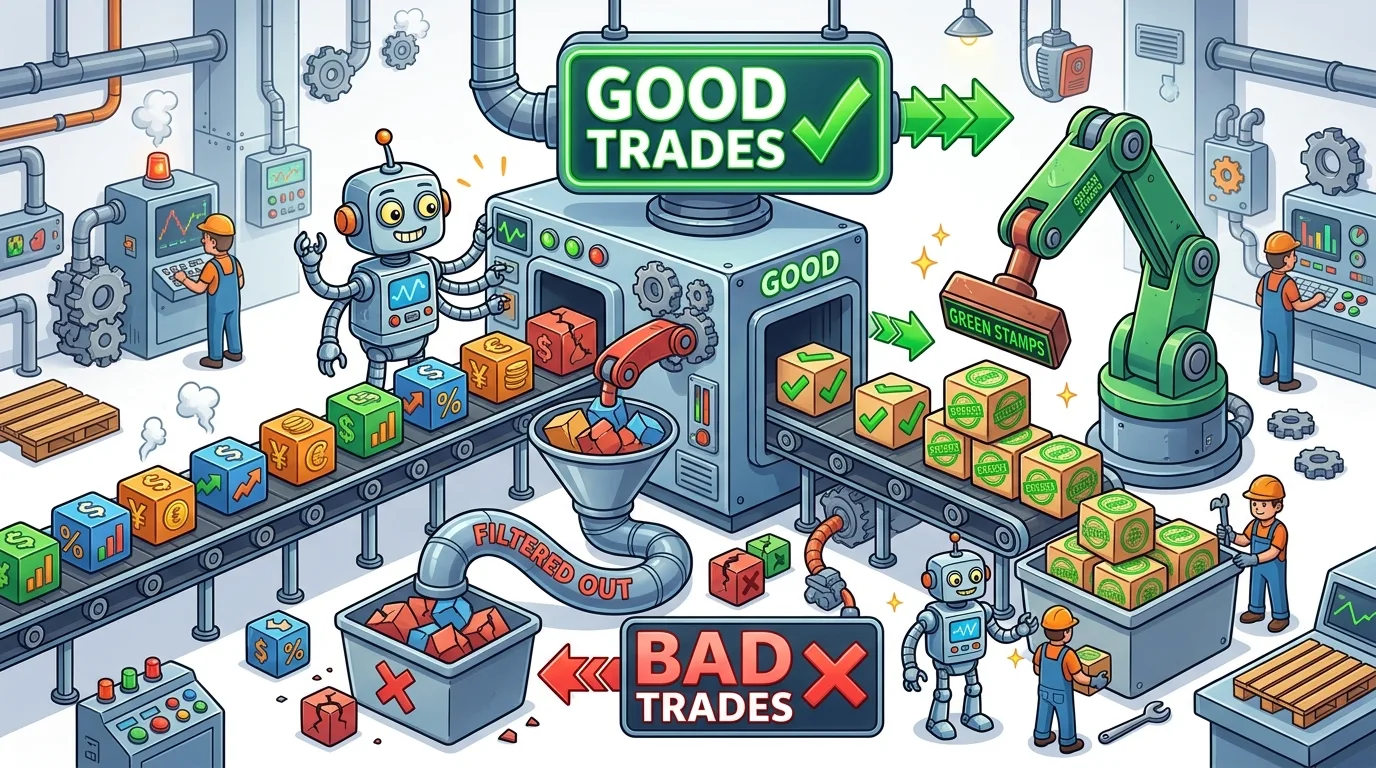
“The worst feeling is making $8,000 in your first funded month, then giving $6,000 back because you forgot the rules still apply.”
I've blown up more evaluation accounts than I care to admit. My ego cost me thousands in fees before I got it. Passing isn't about being a brilliant trader. It's about being a disciplined robot.
The rules are always some variation of this: 1) Hit a profit target (e.g., $3,000 on a $50k account). 2) Don't hit a daily loss limit (e.g., $1,500). 3) Don't hit a total loss limit (e.g., $2,500). 4) Trade a minimum number of days. The profit target is usually the easiest part. The loss limits are what get you.
Here was my mistake: I'd get up $800, feel smart, and then take a bigger trade to 'get the day over with.' One loser would wipe out the gain and tag the daily limit. Game over. Reset fee, please.
My winning blueprint:
- Treat it like a job, not a lottery. Your goal isn't the profit target. Your only goal is to not hit the daily loss limit. Survive.
- Use a microscopic position size. On a $50k account with a $1,500 daily loss, don't trade more than 1-2 micro ES contracts (MES) at first. This isn't the time for a 5-lot. Use a position size calculator religiously. Your max risk per trade should be a tiny fraction of that daily limit.
- Aim for consistent, boring gains. $200-$300 profit days are glorious. Lock it in and stop. The scalping strategy mindset works well here - small, frequent wins.
- Ignore the profit target. It will come naturally if you just avoid blowing up. I passed my first consistent evaluation by literally hiding my running P&L and only focusing on whether my individual trade risk was acceptable.
- Know the drawdown rules inside out. Is it based on your starting balance? Your peak equity? This matters hugely. If it's trailing from peak equity (most are), once you're up, you can't give all the profit back.

Pro Tip: The psychology is everything. You're not trading to get rich in the eval. You're trading to get a job. The real money comes from the funded account. Your mindset should be that of a cautious employee on a probation period, not a cowboy gambler.
💡 Winston's Tip
Calculate your maximum position size based on your daily loss limit, not your account balance. If your daily limit is $1,000, risk no more than $100-$200 per trade. Survival is the only metric that matters.

“The worst feeling is making $8,000 in your first funded month, then giving $6,000 back because you forgot the rules still apply.”
You passed. The funded account is live. This is where I made my second big mistake: I thought the hard part was over. It's not. It's just beginning.
The pressure changes. It's real money now, even if it's not yours. The firm's rules are still active, often with similar or even tighter drawdown limits relative to the larger capital. The worst feeling is making $8,000 in your first funded month, getting overconfident, and then giving $6,000 back in week one of month two, nudging you dangerously close to your trailing max drawdown.
You must develop a withdrawal ritual. Take profits out regularly. It makes the money real, reduces the psychological burden of the account size, and protects you from yourself. If your split is 80/20, request a payout every time you hit a milestone that makes sense for you - maybe every $2,000 in net profit.
This is also where your strategy might need to evolve. The evaluation forced you into a short-term, risk-averse box. Now, with (hopefully) more breathing room in your daily loss limit, you can consider holding runners for a swing trading move, or scaling into positions more methodically. But change slowly. The discipline that got you here is still your greatest asset.
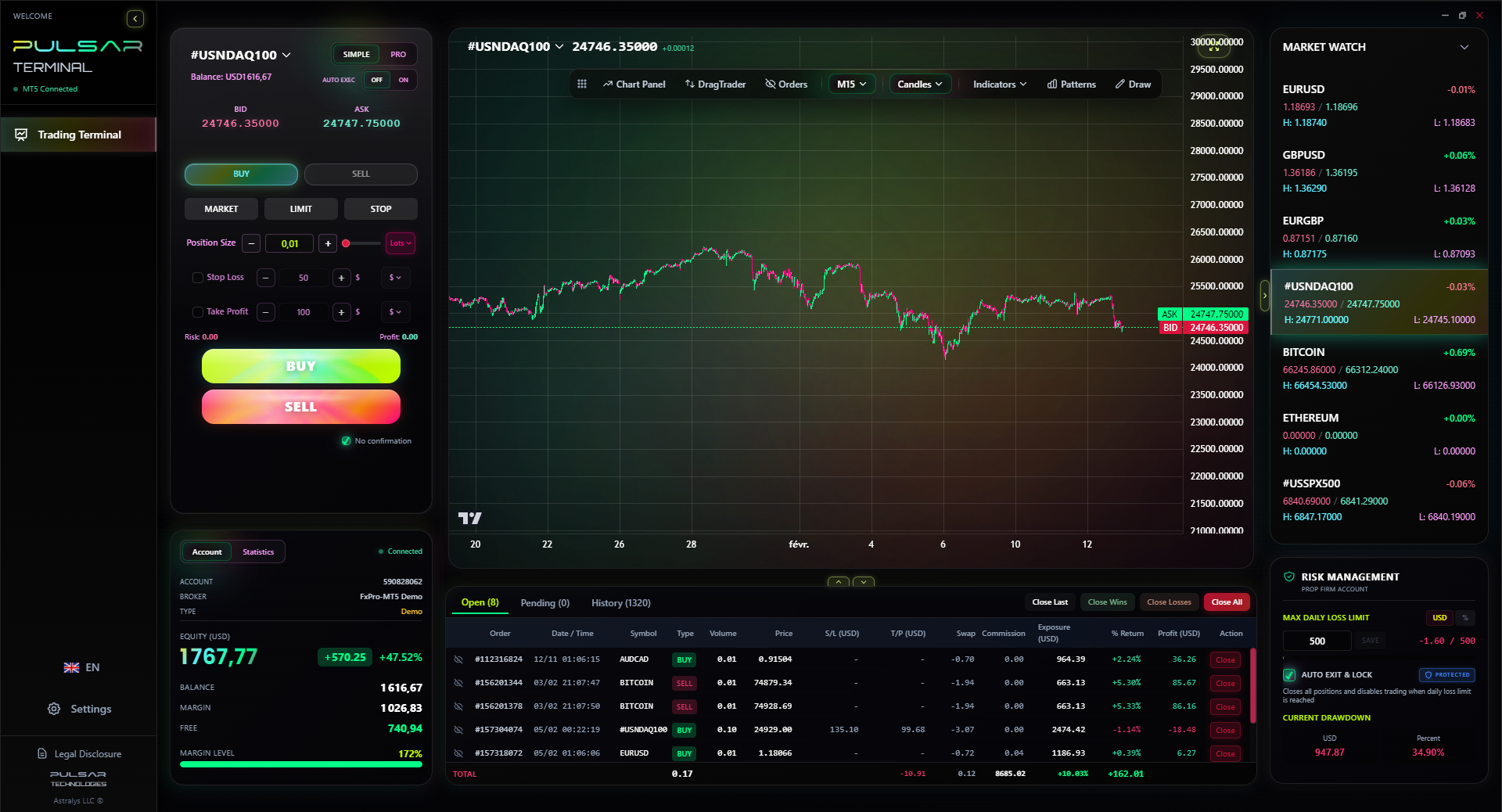
One of the smartest things you can do is use tools that enforce discipline. This is where a platform companion like Pulsar Terminal shines. Setting a hard daily loss limit that automatically stops you out is a lifesaver. You can't trust your emotional self in a drawdown.

“Your position size must account for the worst-case scenario, not just your planned stop loss.”
When I started, the prop firm world felt like the wild west. That's ending. Between 2024 and 2026, the CFTC has been asking a very pointed question: Are these firms actually unregulated Commodity Trading Advisors (CTAs)?
If the answer becomes 'yes,' everything changes. CTAs must register with the CFTC and NFA, meet capital requirements, keep detailed records, and get audited. This isn't speculation; it's active scrutiny. The SEC also backed off from trying to classify some prop activity as broker-dealer activity in early 2025, but the CFTC is the main event for futures.
What does this mean for you right now?
- Consolidation is happening. An estimated 80-100 smaller, shakier prop firms folded between 2023-2024 due to tighter internal rules and fear of regulation. The prediction is that a handful of big, well-structured players will dominate. This is good for you - more stability, clearer rules.
- Choose firms that look 'regulation-ready.' Look for those with transparent terms, clear KYC/AML processes, and professional operations. They're more likely to survive the shakeout. Your funded account and pending payout are only as good as the firm's solvency.
- Expect rule standardization. No more wildly different drawdown calculations or news trading policies. The regulators will demand clarity. This protects you from shady fine print.
- The model is maturing, not dying. The migration to regulated futures and the sheer volume of payouts (over $325 million globally in 2025) shows the model has value. It's just moving from a grey area into a more formal, sustainable one. For a US trader, this increased oversight is a layer of protection.
💡 Winston's Tip
Regulatory scrutiny is a filter, not an apocalypse. It will separate serious firms from scams. A regulated future for prop trading means more security for your payouts. See it as a long-term positive.

“Your position size must account for the worst-case scenario, not just your planned stop loss.”
Don't just pick the one with the flashiest ads or the biggest account size. You need to match the firm's structure to your trading style. Here’s a breakdown of key criteria.
| Feature | Why It Matters | What to Look For |
|---|---|---|
| Profit Split & Payout Schedule | This is your paycheck. | 80/20 or better. Clear, frequent payout schedule (e.g., bi-weekly). No hidden hurdles. |
| Drawdown Type | This dictates your risk management. | Understand if it's 'trailing from peak' or 'static from starting balance.' Trailing is tougher. |
| Platform & Data Fees | Your monthly overhead. | Low or bundled fees. Tradovate bundles can be cheaper than Rithmic/NinjaTrader combos. |
| Contract Scaling | How you grow. | Clear, attainable rules for growing your account size after consistent profits. |
| News Trading Rules | Can you trade events? | Some restrict trading around high-impact news. If you're a news trader, this is a deal-breaker. |
| Customer Support | For when things go wrong. | Responsive live chat or email. Check reviews for payout issues. |
My personal checklist:
- Low Evaluation Cost on Sale: I won't pay more than $150 for a $100k eval. I wait for sales.
- Simple, Static Drawdown: I prefer firms that use a max drawdown based on the initial balance, not a trailing equity high. It's less stressful.
- Tradovate Platform: I like the all-in-one fee structure and clean interface.
- No Consistency Rules: Some firms require a certain number of winning days. I avoid those; they encourage overtrading.
Firms like Apex Trader Funding, Topstep, and Take Profit Trader are established in the futures space for a reason. Newer entrants like FundedNext Futures are trying to compete with aggressive splits. Do your homework. Your trading capital depends on it.
“The migration to regulated futures prop firms isn't a trend; it's the industry growing up.”
I want to end with vulnerability, because that's where the real lessons are. My biggest mistake was overleveraging in the funded account. I had a $150,000 account. The daily loss limit was $3,750. In my head, that meant I could 'safely' trade 5 standard ES contracts, because a 10-point stop (a $500 move per contract) would be $2,500. Seemed okay, right?
What I didn't account for was gap risk overnight. I held a 3-lot short over a weekend due to stubbornness. The market gapped up 30 points on Sunday open. That was a $4,500 loss on that position alone, instantly breaching my daily limit. The account was closed. I lost my funded status and all future profit potential from that account because I didn't respect the gap.
The lesson was brutal: Your position size must account for the worst-case scenario, not just your planned stop. I now never hold a position overnight that could gap beyond my daily loss limit. Period.
The tool that saved my next account was automated daily loss protection. Manually tracking it was a failure point. I needed something that would flat-out stop trading for the day when a hard dollar limit was hit. While many platforms have this, I found implementing it seamlessly within my MT5 workflow was key. Having a system that automatically enforces your number one rule - survival - removes emotion from the most critical decision. It turns a psychological battle into a simple, mechanical circuit breaker. That's the kind of edge you need when trading a futures prop firm's capital; your own discipline isn't enough.

Enforcing a strict daily loss limit is the single most important rule in prop firm trading, and Pulsar Terminal automates this protection directly on your MT5 platform.
Pulsar Terminal
The all-in-one MT5 companion: drag-and-drop orders, multi-TP/SL, trailing stop, grid trading, Volume Profile, and prop firm protection. Used by 1,000+ traders daily.
FAQ
Q1Are futures prop firms legal in the United States?
Yes, they operate legally by structuring themselves as service providers offering evaluation challenges for a fee. They trade their own proprietary capital, not pooled client funds, which allows them to avoid registration as brokers or Commodity Trading Advisors (CTAs) under current interpretations. However, this regulatory status is under active review by the CFTC as of 2026.
Q2What's the typical profit split with a futures prop firm?
Most firms offer splits between 70/30 and 90/10 in the trader's favor, with 80/20 being very common. Some have special structures like 100% of the first $10,000 profit. Always remember the split is applied to net profit after all commissions and platform fees are deducted.
Q3How much does it cost to get a funded futures account?
Total costs include an evaluation fee ($100-$400+, often discounted), a possible activation fee ($0-$150), and monthly platform/data fees ($15-$60+). All-in, you could spend anywhere from under $100 to over $600 to get a live funded account, depending on the firm and account size.
Q4What's the hardest part about passing a prop firm challenge?
The psychology and the daily loss limit. The profit target is secondary. The primary challenge is avoiding a single bad day or a series of small losses that hit your maximum daily drawdown. This requires extreme discipline in position sizing and the willingness to stop trading after a small loss.
Q5Can I trade any futures contract with a prop firm?
Most firms provide access to major CME Group products like E-mini S&P 500 (ES), Nasdaq (NQ), crude oil (CL), gold (GC), and Treasury futures. Some may restrict very volatile or low-liquidity products. Always check the firm's allowed instruments list.
Q6What happens if I break the rules in a funded account?
You typically lose the funded account. The firm will close it, and you keep any profits that were already split and paid out to you, but you lose access to the remaining capital and future profits from that account. You may be allowed to purchase a new evaluation to try again.
Q7Is trading with a prop firm better than using my own capital?
It's different. With a prop firm, you get access to larger capital without personal financial risk, but you trade under strict rules and share profits. With your own capital, you have complete freedom but carry 100% of the financial risk. For many traders, the structure and capital access of a prop firm are valuable, but it's not for everyone.
Prof. Winston's Lesson
Key Takeaways:
- ✓Treat the evaluation like a job interview, not a casino.
- ✓Risk a maximum of 10-20% of your daily loss limit per trade.
- ✓Factor in all fees: eval, activation, monthly data.
- ✓Choose firms with simple, static drawdown rules.
- ✓Automate your daily loss limit. Trust a tool, not your emotions.
How useful was this article?
Click a star to rate
Weekly Trading Insights
Free weekly analysis & strategies. No spam.
About the Author
James Mitchell
Senior Trading Analyst
Based in New York with over 9 years of trading experience. Focuses on major USD pairs, prop firm challenges, and the US regulatory landscape.
Comments
Risk Disclaimer
Trading financial instruments carries significant risk and may not be suitable for all investors. Past performance does not guarantee future results. This content is for educational purposes only and should not be considered investment advice. Always conduct your own research before trading.
You Might Also Like

Cara Trading Forex Sukses: 7 Prinsip dari Trader Profesional
Cara trading forex sukses dengan 7 prinsip trader pro: manajemen modal, disiplin, journal trading, backtest. Data nyata, bukan janji profit palsu.
Jam Trading Forex Terbaik untuk Trader Indonesia: Panduan Lengkap dengan Tabel Waktu
Panduan jam trading forex untuk trader Indonesia. Tabel 4 sesi dunia, jam emas 20:00-00:00, sesi mana yang harus dihindari. Data akurat + tips dari trader berpengalaman.
Top 5 Sàn Forex Uy Tín Nhất 2026: Review Jujur dari Trader Indonesia
Top 5 sàn forex uy tín 2026 untuk trader Indonesia. Review jujur: spread, deposit, withdraw, dukungan lokal. Exness, XM, IC Markets & lebih.
Get Pulsar Terminal
All these calculators are built into Pulsar Terminal with real-time data from your MT5 account. One-click position sizing, automatic risk management, and instant calculations.
Get Pulsar Terminal