


I remember staring at my screen in late 2023, watching USD/INR tick up past 83.20.

Rajesh Sharma
Senior Forex Analyst ·  India
India
☕ 12 min read
What you'll learn:
- 1The Legal Landscape: What You Can Actually Trade in India
- 2The Real Most Traded Pairs: INR Takes Center Stage
- 3Costs, Brokers, and the Offshore Dilemma
- 4How to Actually Trade USD/INR: A Practical Approach
- 5Adapting Your Strategy: Timeframes and Mindset
- 6The Future: Regulatory Shifts and What They Mean
- 7Getting Started: A Safe, Step-by-Step Path
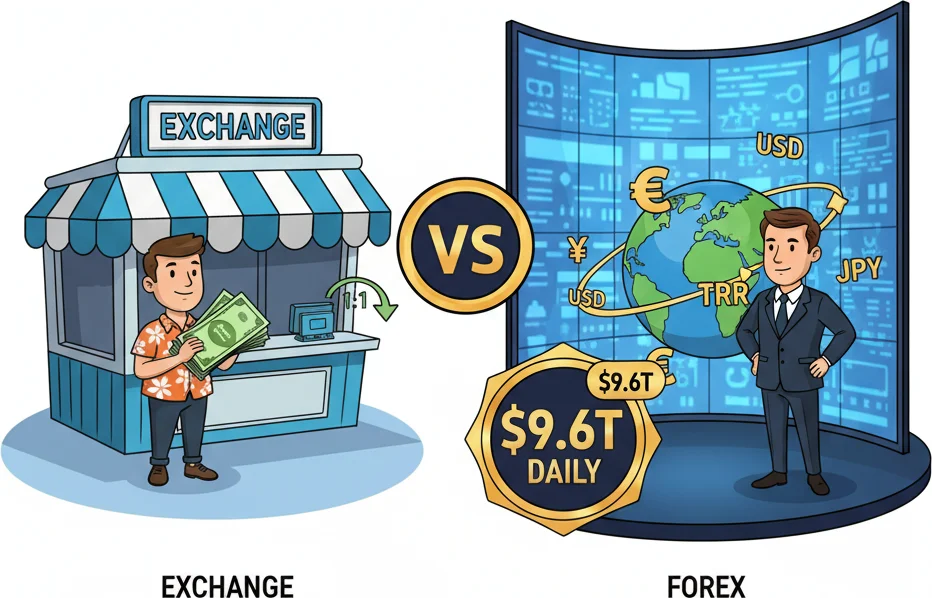
I remember staring at my screen in late 2023, watching USD/INR tick up past 83.20. The news was all about oil prices and RBI intervention, and my small long position was finally moving. Then, in April 2024, the rules changed overnight. The RBI's circular hit, and suddenly, the onshore market for pure speculation felt like it had vanished. That moment taught me more about the reality of trading the most traded forex pairs in India than any textbook ever could. It's not just about charts and pips here. It's about understanding a unique, regulated landscape where your options are defined by law, not just liquidity.
Let's get the uncomfortable truth out of the way first. If you're a retail trader based in India, your legal options for forex trading are very specific. The global list of most traded forex pairs - EUR/USD, GBP/USD, USD/JPY - doesn't directly apply to you in a straightforward way.
The Reserve Bank of India (RBI) and SEBI have clear rules under the Foreign Exchange Management Act (FEMA). For the average person, you are only permitted to trade currency pairs that include the Indian Rupee (INR) on SEBI-regulated exchanges like the NSE or BSE. This means trading USD/INR futures or options is legal. Logging into an offshore broker's platform to speculate on EUR/USD is not.
I learned this the hard way early on. I funded an account with a popular international broker, attracted by the 500:1 use and slick platform. I made a few good trades on GBP/USD. But the constant low-grade anxiety about the legality wasn't worth it. Withdrawing profits felt like a hurdle, and I always wondered what would happen if the RBI ever decided to crack down. I moved my speculative trading capital back to the onshore derivatives market for peace of mind, even though the tools and use were more limited.

Warning: The RBI has repeatedly warned residents against using electronic platforms of overseas entities for forex trading. While many still do it, you operate in a regulatory grey area without the protections of Indian law. A broker like Exness or IC Markets might accept you, but that doesn't make the activity compliant with FEMA from the RBI's perspective.

💡 Winston's Tip
The RBI isn't your opponent; it's the most powerful player on the board. Trade USD/INR with the humility of someone who knows a state bank can change the game in seconds.

“In India, the most traded forex pairs aren't about global liquidity; they're about local legality.”
So, what are the most traded forex pairs for an Indian trader? The answer revolves entirely around the Rupee.
USD/INR: The Undisputed King
This pair is the backbone. It consistently makes up over 85% of all INR-related forex volume. Why? Everything ties back to the dollar - oil imports, software exports, foreign investment. Its movements are dictated by global dollar strength, RBI intervention, and domestic economic data. Trading USD/INR futures on the NSE is where most of the legitimate action is.
The Supporting Cast: EUR/INR, GBP/INR, JPY/INR
After USD/INR, you have the other major crosses. EUR/INR is second, influenced by Eurozone politics and ECB policy. GBP/INR can be volatile around UK news events. JPY/INR often acts as a barometer for risk sentiment in Asia. These pairs have lower liquidity than USD/INR, which often means wider spreads, so your position size calculator needs to account for that extra cost.
Here’s a quick comparison of what you’re looking at onshore vs. the global market:
| Pair | Status for Indian Retail Trader | Primary Drivers |
|---|---|---|
| USD/INR | Legal (via NSE/BSE derivatives) | RBI policy, US Fed, oil prices, FDI/FII flows |
| EUR/INR | Legal (via NSE/BSE derivatives) | ECB policy, EU economic data, risk sentiment |
| GBP/INR | Legal (via NSE/BSE derivatives) | Bank of England, UK politics, inflation data |
| EUR/USD | Not permitted for speculative retail trading | Relative US-EU economic strength, interest rate differentials |
| GBP/USD | Not permitted for speculative retail trading | UK vs. US economic data, Brexit aftermath, risk trends |
The volume in these INR pairs is real and growing. The market doubled from about $32 billion in 2020 to $60 billion in 2024. But remember, this is primarily an institutional and hedging market. As a retail speculator, you're a small fish in a big pond that's designed for larger commercial purposes.

Example: Let's say the USD/INR December future is quoted at 83.5000/83.5025 on the NSE. That's a spread of 0.0025, or 2.5 paise. If the minimum tick size is 0.0025, that spread is effectively one tick. Compare that to a typical 0.6 pip spread on EUR/USD with an offshore broker, and the cost structure is different. You need to think in paise, not pips.

“Trading USD/INR means you're not just charting a currency, you're guessing the RBI's next move.”
Your costs and experience depend entirely on which path you choose: the regulated onshore route or the offshore grey area.
Onshore (SEBI-Regulated Brokers like Zerodha, Upstox, Angel One):
- Fees: Typically a flat ₹20 per order or 0.03%, whichever is lower, for intraday trades. It's transparent.
- use: Strictly limited by exchange rules. You might get 10:1 or 20:1 on futures, not the crazy 500:1 you see advertised elsewhere. This is actually a good thing for beginners - it prevents instant blow-ups.
- Platforms: You'll use their proprietary apps (Kite, Upstox Pro) which are great for Indian markets but lack the advanced charting of MetaTrader.
- Funding/Withdrawal: Seamless via UPI, Net Banking. Money is in your bank account in hours.
Offshore (Brokers like XM, Pepperstone, IC Markets):
- Spreads/Commissions: You can find raw spreads from 0.0 pips plus a commission. It can be cheaper for active traders. A broker like Pepperstone offers tight spreads on majors.
- use: Can be extremely high (up to 1000:1). This is a double-edged sword. I once used 200:1 on a small scalping trade on EUR/USD. I made 1.5% in minutes, but a reverse move of the same size would have wiped out my risk capital just as fast. It's seductive and dangerous.
- Platforms: Full access to MT4/MT5, cTrader, with all their indicators and expert advisors.
- The Catch: Funding can involve international wire transfers or crypto, with fees. Withdrawals take days. And you have zero recourse to SEBI or Indian courts if something goes wrong with the broker.
My personal rule now? I keep my main trading account with a SEBI broker for USD/INR. I have a very small, risk-capital-only account offshore to occasionally test strategies on other pairs, fully accepting that it's a regulatory grey zone.

“Trading USD/INR means you're not just charting a currency, you're guessing the RBI's next move.”
Trading the USD/INR future is different from trading a spot forex pair. Here’s what I focus on.
1. Understand the Contract: You're trading a futures contract with an expiry date (usually the last Thursday of the month). You can't just hold it forever. As expiry nears, you need to roll over to the next contract, which involves a cost (the rollover yield).
2. Key Drivers:
- RBI Intervention: The RBI doesn't like volatile, one-way moves. They will step in to buy or sell dollars to stabilize the rupee. You can often see this in sudden, sharp reversals without clear news.
- Oil Prices: India imports most of its oil, paid for in dollars. Higher oil prices typically weaken the INR (USD/INR goes up).
- Dollar Index (DXY): A strong dollar globally pushes USD/INR higher. Watch the EUR/USD guide for clues on dollar strength, even though you can't trade it directly.
- FII Flows: Heavy buying or selling in the Indian stock market by foreign investors creates dollar demand/supply.
3. A Trade Example: In September 2023, with oil climbing and the Fed sounding hawkish, USD/INR was pressing highs. It broke above 83.00, a psychological level. I entered a long December future at 83.0500. My target was 83.3500, my stop at 82.9000. I used a simple MACD indicator on the hourly chart to confirm momentum. The trade worked, hitting the target in about a week. But I only risked 1% of my account. The key was patience - waiting for the break and confirmation, not just jumping in because "it's going up."
4. Technicals Work, But With Noise: Support/Resistance, moving averages, and RSI indicator divergences all work on USD/INR charts. However, be prepared for more "false" breaks due to intervention. A clean technical breakout can be reversed in minutes by a state bank selling dollars. This makes tight stops risky. I use wider stops and smaller position sizes to account for this noise.

Pro Tip: Don't ignore the other INR pairs completely. Sometimes, EUR/INR will show a clearer technical signal than USD/INR, which is being manipulated by intervention. The correlation isn't perfect, but it can give you a cleaner read on pure Euro vs. Rupee sentiment.
💡 Winston's Tip
Your first ₹50,000 is for paying tuition, not buying a car. Lose it learning on the legal exchange. It's cheaper than the hidden cost of an offshore account freeze.

“The offshore path offers every pair except peace of mind.”
The most traded forex pairs globally suit all styles, from scalping to long-term swing trading. In India's USD/INR market, you need to adapt.
Scalping is tough on the NSE. The spreads (while small) and lower intraday use eat into tiny profits. The offshore path offers better conditions for scalping majors, but with the legal caveat.
Swing Trading (3 days to 2 weeks) is where I've found the most consistency with USD/INR. You're capturing moves driven by fundamental shifts (oil, Fed policy) rather than intraday noise. You avoid the worst of the RBI's intraday smoothing operations. Using the daily chart to find the trend and the 4-hour chart for entries is a solid approach.
Position Trading (Weeks to Months) is possible but requires dealing with futures rollovers. It's better suited for those with a strong fundamental view on India's macro picture.
The mindset shift is crucial. You're not just trading a currency pair; you're trading India's balance of payments, the RBI's policy stance, and global commodity markets. Economic calendars for US and Indian data become your bible. A good swing trading plan that includes fundamental filters is essential here.
I made a mistake early on by treating USD/INR like EUR/USD - just looking at the charts. I ignored a scheduled speech by the RBI Governor. He made a dovish comment, the rupee strengthened sharply, and I was stopped out of a long position. Now, I always check the RBI and Finance Ministry calendar before taking a swing trade.
When swing trading USD/INR, managing multiple profit targets and a trailing stop manually is a hassle; Pulsar Terminal automates this directly on your MT5 platform.
Pulsar Terminal
The all-in-one MT5 companion: drag-and-drop orders, multi-TP/SL, trailing stop, grid trading, Volume Profile, and prop firm protection. Used by 1,000+ traders daily.

“The offshore path offers every pair except peace of mind.”
The ground is shifting, slightly. After the April 2024 circular crushed speculative volume on exchanges, regulators realized they might have pushed too much activity into the unregulated offshore space.
By late 2025, there were talks about potentially relaxing the rules for exchange-traded derivatives to bring some volume back onshore. The draft rules in early 2026 focused more on giving banks (authorized dealers) more flexibility, including letting them use offshore platforms. This isn't a direct green light for retail, but it signals a slight thawing, an acknowledgment that the market exists.
What does this mean for you?
- Don't expect a free-for-all. The RBI will never allow unlimited retail speculation on non-INR pairs. Their primary mandate is currency stability.
- Hope for better onshore products. We might see more currency options, different expiry contracts, or slightly relaxed hedging rules, making the legal market more attractive.
- The offshore risk remains. As long as there's a demand, offshore brokers will serve Indian clients. The risk of regulatory action against individuals is low but non-zero. The bigger risk remains broker insolvency or withdrawal issues.
The growth is still projected to be strong - from around $33 billion in 2025 to nearly $69 billion by 2034. More retail participation is coming. Your job is to be on the right side of the rules, or at least fully understand the risks if you step outside them. Building your skills on the legal USD/INR market gives you a foundation that won't be swept away by a regulatory change.
💡 Winston's Tip
The spread on USD/INR is in paise. A 0.0025 spread is one tick. If you can't calculate your risk in ticks and paise before you click, you're not ready to trade.

“Your first goal isn't profit. It's executing your plan flawlessly and surviving the first six months.”
If you're new and reading this, here's what I wish I had done.
Step 1: Paper Trade USD/INR Futures. Open a demo account with a SEBI broker like Zerodha or Angel One. Don't even look at offshore brokers yet. Learn how the futures contract works, the expiry, the margin. Get a feel for how it moves during Indian and US hours.
Step 2: Develop a Simple, Rule-Based Plan. Start with one strategy. Maybe it's trading bounces off the 20-day moving average on the daily chart. Define your entry, exit, and position size calculator rules. Backtest it on historical data (most broker platforms have this).
Step 3: Start Small with Real Money. Fund your SEBI account with an amount you can afford to lose completely - maybe ₹25,000. Your goal for the first six months is not to make money. It's to execute your plan flawlessly, manage your emotions, and survive. A single lot of USD/INR futures is a good starting size.
Step 4: Keep a Detailed Journal. Log every trade. Why did you enter? What was the outcome? What did you feel? This is more valuable than any profit in the early days. I still review my journal from 2018; it's a chronicle of every dumb mistake I've since learned to avoid, like ignoring a pending margin call scenario.
Step 5: Only Consider Offshore After Mastery. If, after a year or two of consistent, profitable trading in the onshore market, you feel constrained, then - and only then - consider allocating a tiny portion (<5%) of your total capital to an offshore account to access other pairs. Do your due diligence. Read reviews like our XM review to understand the pros and cons. Never transfer money you can't afford to lose.
The most traded forex pairs in the world are a click away. But for you, in India, the most important pair is the one you can trade with clarity, safety, and a full understanding of the rules of the game. Start there.
FAQ
Q1Can I legally trade EUR/USD or GBP/USD from India?
No, not for speculative purposes. The RBI prohibits resident Indians from trading non-INR currency pairs (like EUR/USD) through overseas brokers. The only legal forex trading for retail is in INR-based pairs (USD/INR, EUR/INR) via SEBI-regulated brokers on Indian exchanges like the NSE.
Q2What is the most traded forex pair in India?
USD/INR is by far the most traded, accounting for over 85% of INR-related forex volume. It's traded as futures and options on the National Stock Exchange (NSE).
Q3What are the trading hours for USD/INR futures in India?
On the NSE, currency derivatives (including USD/INR) trade from 9:00 AM to 5:00 PM Indian Standard Time (IST), Monday to Friday. Some cross-currency contracts may trade until 7:30 PM.
Q4Why is trading with offshore brokers considered risky for Indians?
It operates in a regulatory grey area against RBI guidelines. You lack the investor protection of SEBI, face potential issues with fund transfers (which can be blocked by banks), and have no legal recourse in India if the broker faces problems. Your funds are not protected under Indian law.
Q5What is a typical brokerage fee for trading USD/INR futures with a SEBI broker?
Fees are usually very transparent. For example, a common structure is a flat ₹20 per executed order or 0.03% of the trade value, whichever is lower. There are no hidden spreads in the same way as with forex CFDs.
Q6Has the RBI banned all forex trading?
No, absolutely not. It has banned speculative retail trading of non-INR pairs through unregulated channels. Trading INR pairs (like USD/INR futures) on regulated Indian exchanges for any purpose (including speculation) is perfectly legal and is a large, active market.
Q7What's the difference between trading USD/INR and a pair like EUR/USD?
Key differences: 1) You're trading a futures contract with an expiry, not a spot pair. 2) Movements are heavily influenced by RBI intervention, not just pure markets. 3) You think in paise, not pips. 4) use is much lower (e.g., 10:1 vs. 500:1). 5) It's driven by India-specific factors like oil prices and FII flows.
Prof. Winston's Lesson
Key Takeaways:
- ✓USD/INR dominates, making up 85%+ of legal volume.
- ✓SEBI brokers charge ~₹20/order; offshore has spreads from 0.0 pips.
- ✓Legal use is low (10:1-20:1); offshore offers up to 1000:1.
- ✓Always account for RBI intervention in your stops.
- ✓Trade what's legal first; it's the only foundation that lasts.
How useful was this article?
Click a star to rate
Weekly Trading Insights
Free weekly analysis & strategies. No spam.
About the Author
Rajesh Sharma
Senior Forex Analyst
Trading Indian and South Asian markets for over 10 years. Started with NSE currency derivatives before moving to international forex. Specializes in USD/INR and emerging market pairs.
Comments
Risk Disclaimer
Trading financial instruments carries significant risk and may not be suitable for all investors. Past performance does not guarantee future results. This content is for educational purposes only and should not be considered investment advice. Always conduct your own research before trading.
You Might Also Like

Cara Trading Forex Sukses: 7 Prinsip dari Trader Profesional
Cara trading forex sukses dengan 7 prinsip trader pro: manajemen modal, disiplin, journal trading, backtest. Data nyata, bukan janji profit palsu.
Jam Trading Forex Terbaik untuk Trader Indonesia: Panduan Lengkap dengan Tabel Waktu
Panduan jam trading forex untuk trader Indonesia. Tabel 4 sesi dunia, jam emas 20:00-00:00, sesi mana yang harus dihindari. Data akurat + tips dari trader berpengalaman.
Top 5 Sàn Forex Uy Tín Nhất 2026: Review Jujur dari Trader Indonesia
Top 5 sàn forex uy tín 2026 untuk trader Indonesia. Review jujur: spread, deposit, withdraw, dukungan lokal. Exness, XM, IC Markets & lebih.
Get Pulsar Terminal
All these calculators are built into Pulsar Terminal with real-time data from your MT5 account. One-click position sizing, automatic risk management, and instant calculations.
Get Pulsar Terminal