
Swap

/swɒp/since Early 1980s interbank forex eraSwap — swap is the overnight interest you earn or pay when holding a forex position past the broker's daily rollover time.
§1So, what IS a swap anyway?
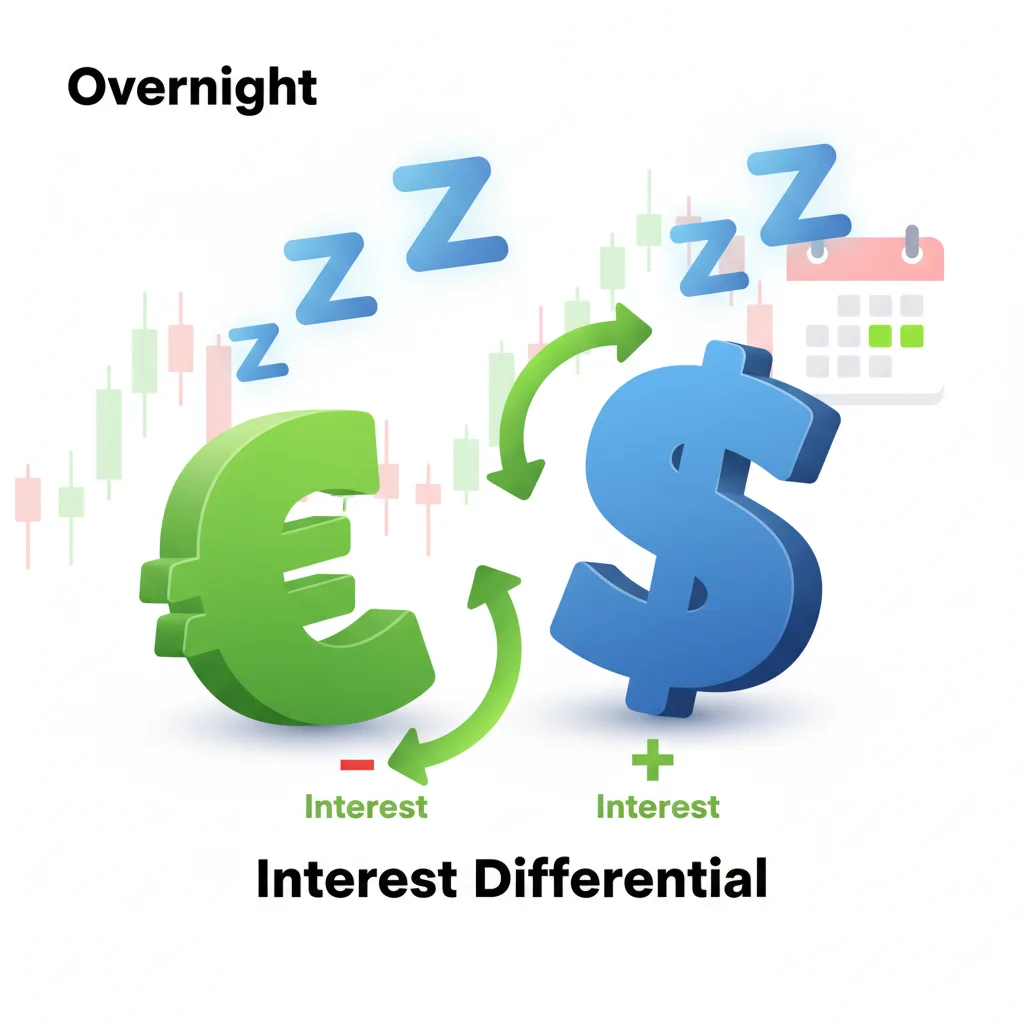
Okay, picture this: you're at a fancy international bank cocktail party. You've got euros in one pocket and dollars in the other. You decide to lend your euros to someone who really wants them, and in return, you borrow some dollars from someone else. Now, here's the thing - euros might come with a 0.5% interest rate tag, while dollars might have a 3% tag. That difference? That's the swap! It's basically the overnight 'rent' you pay or earn for borrowing one currency and lending another. Think of it like borrowing your friend's fancy sports car (high maintenance costs) while lending them your reliable sedan (low costs) - someone's going to owe someone some cash for that arrangement! When you hold a forex position overnight, you're doing exactly this currency borrowing/lending dance, and the swap is the music that determines who pays whom. Positive swap means you're earning interest (cha-ching!), negative swap means you're paying (ouch!). I've seen traders completely ignore this and then wonder why their long-term EUR/USD positions kept bleeding money - trust me, you don't want to be that trader!
§2The math (don't run away, it's friendlier than it looks!)
Alright, I know formulas can make your eyes glaze over, but stick with me - this is simpler than it seems! The core idea is: Swap = (How much you're trading) × (The price) × (The interest rate difference between the two currencies) ÷ 365. Yeah, that 365 is there because we're calculating daily interest - like dividing your annual salary by 365 to see what you earn per day. Your broker usually does this math for you and shows 'swap long' and 'swap short' values right in your platform. But understanding the pieces helps: contract size (are you trading 100,000 units or just 1,000?), the current exchange rate, and that all-important interest rate differential. If you're buying the currency with the higher interest rate and selling the lower one, you get positive swap. Flip it around? Negative swap. It's like getting paid to hold the 'expensive' currency and paying to hold the 'cheap' one. See? Not so scary!
§3Here's how it plays out in real life
Let's walk through this step-by-step with our friend EUR/USD. Say you buy €100,000 (that's one standard lot) at 1.1000. You're now long euros and short dollars. The European Central Bank's interest rate is 0.5%, while the Fed's is 3%. Uh-oh - you're buying the lower-yielding currency (euros at 0.5%) and selling the higher-yielding one (dollars at 3%). That interest rate differential is working against you! So each night you hold this position, you'll likely pay around $8.20 in negative swap. Now flip it: imagine going long AUD/JPY. Australia's rate might be 4.35%, Japan's is -0.1% (yes, negative!). You're borrowing cheap yen and lending higher-yielding Aussie dollars - cha-ching! You'd earn positive swap. This is the famous 'carry trade' strategy in action. The swap gets applied daily at your broker's rollover time (usually 5 PM EST), and it shows up in your account like clockwork.
§4The weird exceptions nobody warns you about
Alright, buckle up for some forex weirdness! First up: Triple Swap Wednesday. Sounds like a bad superhero movie, right? Here's what happens: forex has a T+2 settlement cycle (trade date plus 2 business days). Since markets are closed Saturday and Sunday, brokers can't charge daily swaps then. So on Wednesday, they charge THREE days' worth to cover Thursday, Friday, and the weekend. Yes, three times the normal amount! I remember my first triple swap Wednesday - I thought my platform was broken! Then there are swap-free (Islamic) accounts that don't charge overnight interest at all, following Islamic finance principles. JPY pairs are their own special category - with Japan's rates often near zero or negative, they're popular for carry trades (borrow cheap yen, invest elsewhere). And commodities? Some energy contracts don't even do the triple Wednesday thing. The forex world has its quirks, my friend!

§5
Let's look at three concrete scenarios that'll make this click. First, that negative EUR/USD swap we talked about: buying €100,000 at 1.1000 with EUR rate at 0.5% and USD at 3% means paying about $8.20 nightly. Over a month? That's around $246 coming out of your pocket! Second, the carry trade dream: long AUD/JPY with AUD at 4.35% and JPY at -0.1%. You're earning interest on that differential - maybe $5-10 nightly per standard lot, depending on exact rates. Third, what if you close before rollover? No swap at all! That's why day traders don't sweat this stuff. Here's a quick comparison:
| Scenario | Pair | Position | Interest Rate Diff | Daily Swap |
|---|---|---|---|---|
| Costly Hold | EUR/USD | Long | EUR 0.5% vs USD 3% | Pay ~$8.20 |
| Carry Trade | AUD/JPY | Long | AUD 4.35% vs JPY -0.1% | Earn ~$5-10 |
| Day Trade | Any | Closed before 5 PM EST | N/A | $0 |
See how direction and pair choice matter? That negative swap on EUR/USD can really eat into profits if you're holding for weeks!
§6Where this thing even came from
Let's take a quick history trip! The first official forex swap happened in 1981 between IBM and the World Bank - talk about corporate networking! The World Bank needed German marks and Swiss francs but had borrowing limits, while IBM needed to swap those currencies for dollars but faced high interest rates. They basically said 'Hey, let's trade!' and created a win-win. Central banks have used swaps forever to manage their currency reserves and influence markets. Switzerland's central bank? Big swap user. But the concept goes way back - ancient Babylonians were bartering goods, which is kind of the great-great-grandfather of currency swapping. The modern system really took off after the 1970s when currencies started floating freely. Before that, with fixed exchange rates under the Bretton Woods system, there wasn't as much need for these overnight adjustments. So next time you see a swap charge, remember you're participating in a financial tradition that's decades old!
§7Key takeaways
- Swap is the overnight 'rent' you pay or earn for holding currency positions - positive if you're buying the higher-interest currency, negative if you're buying the lower one.
- Triple swap Wednesday charges 3x the normal amount to cover weekend financing costs - a classic 'gotcha' for new traders!
- Carry trades (like long AUD/JPY) aim to profit from positive swap by borrowing low-interest currencies to buy high-interest ones.
- A negative swap on a standard EUR/USD position can cost you around $8.20 nightly - enough to seriously impact long-term holdings!
§8Frequently asked questions
QWhy is swap positive or negative?
QHow can I avoid swap fees?
QWhat is 'triple swap Wednesday'?
QIs swap good or bad in forex?
QDo all instruments have triple swap Wednesday?
§See also
§References
- Forex Swap Research Briefing — The Trading Mentor's Tradopedia
- Historical Forex Market Development — Financial History Sources