


I lost N450,000 in a single morning in 2015.

Olumide Adeyemi
Nhà tiên phong Giao dịch Tây Phi ·  Nigeria
☕ 9 phút đọc
Bạn sẽ học được:
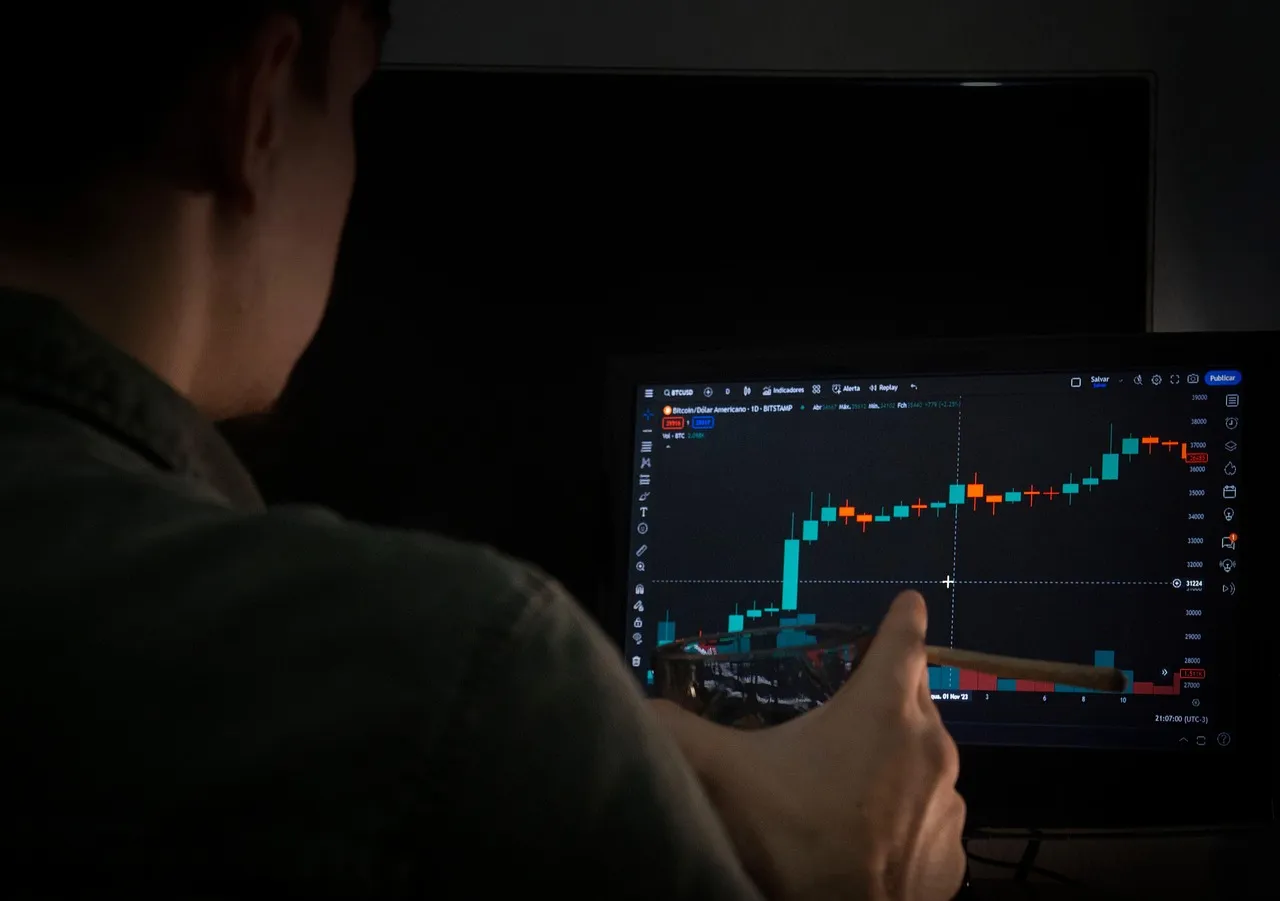
I lost N450,000 in a single morning in 2015. It wasn't a bad trade idea. EUR/USD was trending down, and I was short. My mistake? I used a 1:500 use account from a flashy offshore broker. A 30-pip spike against me, fueled by thin liquidity during Asian hours, triggered a margin call that wiped out 60% of my account before I even got a chance to react. That loss taught me the first brutal fact about forex: the market doesn't care about your analysis. It cares about your risk management, your broker's execution, and whether you understand the real numbers behind the screen.
This is the most misunderstood fact about forex trading in Nigeria. When you see '1:500 use' advertised, it's not free money. It's a loan from your broker. A very expensive, callable loan that can be demanded back at the worst possible time.
Let's get specific. If you deposit N100,000 and use 1:100 use, you control a N10,000,000 position. Sounds great, right? Here's the reality. If the market moves just 1% against you (100 pips on most pairs), you've lost N100,000. Your entire deposit is gone. That 1% move happens regularly. I've seen it during London open or after a US news release more times than I can count.

Warning: Nigerian traders are often targeted with insane use offers (1:1000, 1:2000). These are liquidation engines, not trading tools. No professional trader I know uses use above 1:30 for standard accounts.
The math is unforgiving. Use our position size calculator before every trade. For a N500,000 account, risking 2% per trade (N10,000) on EUR/USD with a 50-pip stop loss, your correct position size is roughly 2 mini lots (0.2 standard lots). Most beginners seeing that think, 'That's too small!' and quadruple it. That's the fast track to a margin call.
The Prop Firm Exception (And Its Trap)
Prop firms changed the game. They offer 'use' on a simulated balance, like a $100,000 challenge account. But here's the fact they don't highlight: your risk is still calculated on your real money - the challenge fee. If you pay a $300 fee for a $100k account, that's your real capital at risk. The 'use' is fictional. The 5-10% maximum daily loss rule is what actually matters. Blow that, and you're out. It forces discipline, which is good, but don't confuse it with having a real six-figure bankroll.

💡 Mẹo của Winston
use is like a chainsaw. Useful in skilled hands for specific jobs, catastrophic as a default tool. Never let a broker's marketing department set your risk parameters.
“use is a callable loan from your broker, demanded back at the worst possible time.”
Broker marketing in Nigeria is a masterclass in omission. They'll shout about spreads, bonuses, and instant withdrawals. The critical facts about forex execution? Often buried.
Fact: Your broker makes money when you lose on a CFD (Contract for Difference). This is the dealing desk model. They're your counterparty. This creates a fundamental conflict of interest. When you place a stop loss, they see it. In volatile markets, some less reputable firms engage in 'stop hunting' - pushing price to hit clusters of stops before reversing.
I learned this the hard way trading XAU/USD (gold). I had a tight stop at $1815.10. Price spiked to $1815.25, took me out, and immediately reversed to $1808. My trade idea was right, but I was executed out. This is why I only use true ECN/STP brokers now, like IC Markets or Pepperstone, where my trade is passed directly to liquidity providers. The spread might be slightly higher during news, but there's no incentive for them to see me fail.

Example: Compare these two scenarios for a NGN deposit:
| Broker Type | Model | Spread on EUR/USD (Avg) | Conflict? |
|---|---|---|---|
| Offshore 'Market Maker' | Dealing Desk | 0.9 pips (fixed) | High. They profit from client losses. |
| Regulated ECN Broker | Agency/STP | 0.1-0.3 pips (variable) | Low. They profit from volume/commission. |
Another brutal fact: 'Instant withdrawal' promises often hinge on your deposit method. If you fund with a bank transfer, withdrawals go back to the bank. If you use a crypto or gift card deposit, you'll likely be forced to withdraw via the same method, which can be a headache. Always read the payment terms.

“Your broker makes money when you lose on a CFD. This is the fundamental conflict they never advertise.”
You've heard the stat: '90% of traders lose money.' It's true. But the implication is wrong. It doesn't mean 90% are idiots. It means the market structure is designed to transfer wealth from the many (retail) to the few (institutions).
How? Let's break down a key fact about forex liquidity. The real market is the interbank market. When you buy EUR/USD, you're not buying from 'the market.' You're buying from your broker's liquidity pool. Large banks like JPMorgan or Citi see the aggregate flow of all retail orders. If 85% of retail traders are long GBP/USD (a common sentiment indicator), the big players know this. They can take the other side and have the capital to move price against the crowd, triggering a cascade of retail stop losses.
This is why contrarian strategies often work. When everyone on Twitter is screaming 'BUY!' because of an overbought RSI indicator, it's usually time to be cautious. I don't blindly go against the crowd, but I absolutely factor it in. My most profitable swing trading setups come when retail is exhausted and panicking out of a position.
“Technical analysis works because enough people believe it works. It's mass psychology, not physics.”
Here's a fact that will upset the guru-selling crowd: technical analysis works because enough people believe it works and act on it. It's mass psychology, not physics.
A support level isn't a magical force field. It's a price where a large number of traders have previously decided to buy. Because they remember that level, they're likely to buy there again. Because other traders see the same level on their charts, they also place buy orders there. This collective action creates the reaction.
The problem? When the fundamental story is strong enough, it bulldozes through all technical levels. I watched this in 2022 when USD/JPY blew through 125, a massive multi-year resistance. Everyone was looking to short there based on technicals. The Bank of Japan's yield curve control policy made the fundamental bid for USD so powerful it didn't even pause.

Pro Tip: Use technicals for entry and risk management, not for predicting the future. A trendline break isn't a prophecy. It's a signal that the balance of buy/sell orders has shifted. Pair it with fundamental context. For example, a break above a key MACD indicator level during a Fed interest rate decision week carries more weight than the same break in a quiet summer session.
“Technical analysis works because enough people believe it works. It's mass psychology, not physics.”
New traders obsess over entry price. Professionals obsess over costs: spread, commission, and swap. These are non-negotiable facts about forex profitability.
Let's say you're a scalping strategy aiming for 10 pips per trade on EUR/USD. If your broker's spread is 2 pips, you've immediately lost 20% of your target before the trade even moves. Add a commission, and you might be down 25%. Your win rate needs to be astronomically high just to break even.
Swap rates (overnight financing) are another Nigerian trader trap. If you're long on a currency with a lower interest rate than the one you're short (like being long JPY against USD), you pay swap. Holding that trade over a Wednesday night (when swap is tripled) can wipe out days of profits. I once made a 45-pip gain on AUD/JPY, held it for 5 days, and gave back 30 pips in swap because I got the direction wrong. My platform showed a green trade, but my account balance told a different story.
The Math of Survival: If your average win is 15 pips and your average loss is 10 pips (a good 1.5:1 ratio), you need a 40% win rate to be profitable... BEFORE costs. Add a 1.5-pip average cost (spread + commission), and your effective win becomes 13.5 pips, your loss becomes 11.5 pips. Your required win rate jumps to nearly 46%. That small cost change kills thousands of marginally profitable strategies.
💡 Mẹo của Winston
The spread isn't just a cost. It's the market's admission fee. If your strategy can't comfortably pay that fee and still profit, you're not in a business, you're gambling.
“You are your own worst enemy. Your brain is wired to chase dopamine wins and avoid cortisol losses.”
You are your own worst enemy. This isn't motivational fluff. It's a neurological fact. Winning triggers dopamine (pleasure). Losing triggers cortisol (stress). Your brain is wired to chase the dopamine hit and avoid the cortisol pain.
This leads to two fatal behaviors:
- Cutting winners short: You're in a profitable trade. Dopamine is flowing. The fear of losing that gain (cortisol) becomes overwhelming. You exit early, leaving 80% of the move on the table. I've done this countless times, snatching a 20-pip profit only to watch the pair run another 60 pips.
- Letting losers run: You're in a losing trade. Cortisol is high. Admitting the loss makes the pain real. So you avoid it. You move your stop loss further away, hoping for a miracle. This turns a 2% loss into a 10% account blow-up.
The only fix is a mechanical system. Your trading plan must remove emotion. It must say: 'If price hits X, I exit with loss Y. No question. If price hits Z, I take half profit and trail the rest.' You don't decide in the moment. You execute the plan. This is why automated tools or strict discipline are non-negotiable. You can't out-think your own biochemistry.
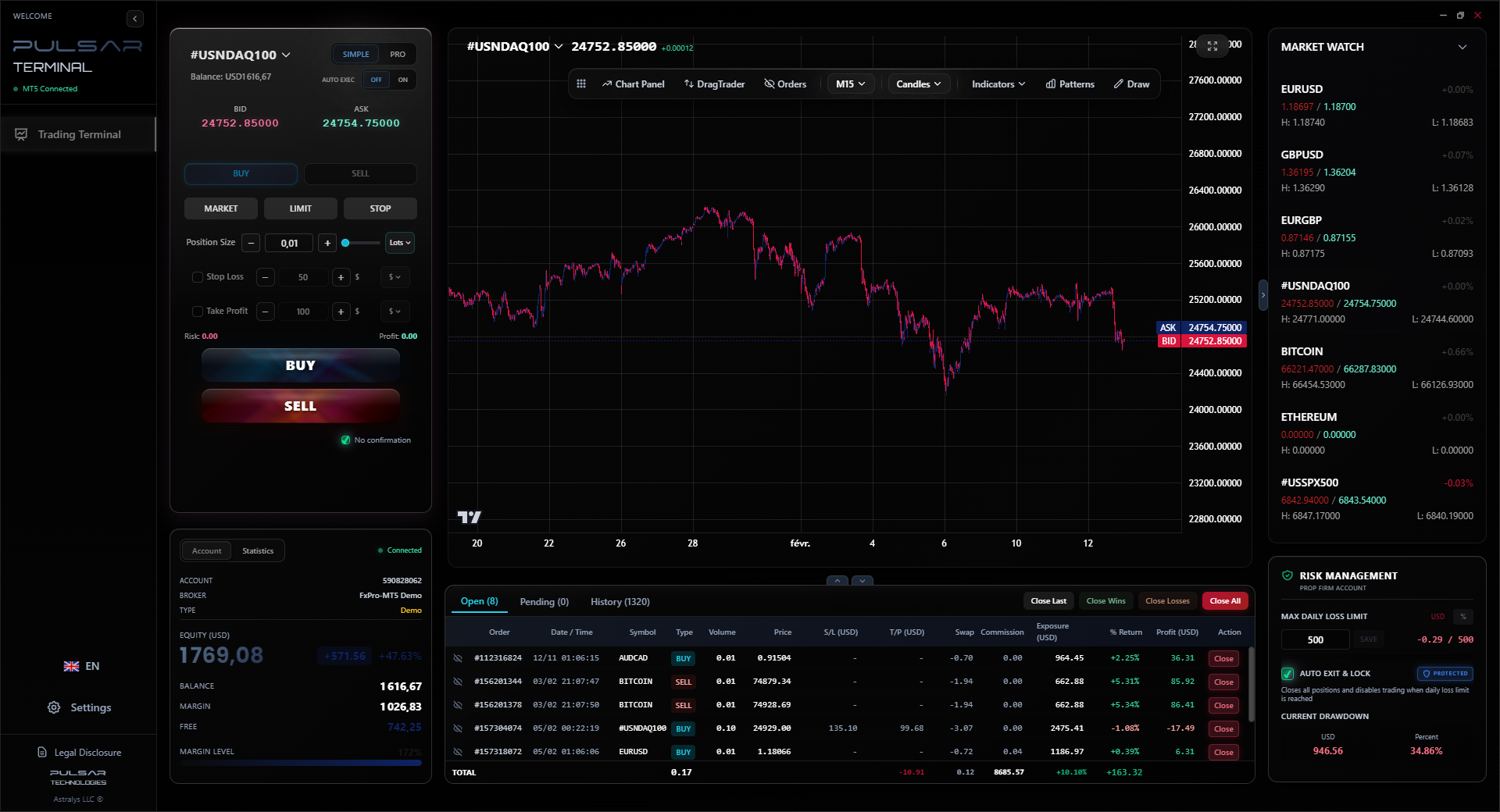
Since your psychology is your biggest threat, using a tool like Pulsar Terminal to set predefined multi-level take-profits and stop-losses automates your plan and removes emotional decision-making in the heat of the moment.
Pulsar Terminal
Công cụ MT5 tất-cả-trong-một: đặt lệnh kéo-thả, multi-TP/SL, trailing stop, grid trading, Volume Profile và bảo vệ prop firm. Hơn 1.000 trader sử dụng mỗi ngày.
“Sustainable trading is a boring business of consistent risk management. Anyone selling you a dream is selling a lie.”
Let's talk local facts about forex that affect you directly.
Regulation is a Grey Zone: The SEC Nigeria has made moves to regulate forex brokers, but the landscape is still developing. Many 'international' brokers serving Nigerians are regulated in offshore jurisdictions (Cyprus, Mauritius, St. Vincent). This isn't inherently bad, but it changes your recourse if something goes wrong. Your primary protection becomes the broker's own reputation. This is why broker reviews from real Nigerian users on sites like ours are critical. Check our deep dives on Exness and XM for local deposit/withdrawal experiences.
Funding is a Cost Center: Depositing and withdrawing Naira is a major friction point. Bank transfers can be slow and attract questions. Crypto funding is popular but adds volatility risk (converting NGN to USDT, then to USD). Card deposits often fail due to bank forex restrictions. Factor in these costs and hassles. They're part of your business overhead.
The 'Get-Rich-Quick' Culture is Your Biggest Threat: WhatsApp groups, Instagram gurus selling signals for N50,000, promises of turning N100k into N5 million in a month. This environment preys on hope. The real fact is this: sustainable trading is a boring business of consistent risk management. It's about preserving capital on bad days and grinding out gains on good ones. Anyone selling you a dream is selling you a lie.
💡 Mẹo của Winston
In Nigeria, your biggest edge isn't a secret indicator. It's the discipline to ignore the 'get-rich-today' noise that drowns out every other trader. Be boring. Be consistent. Be solvent.

FAQ
Q1Is forex trading legal in Nigeria?
Yes, trading forex through internationally regulated brokers is legal for individuals. However, it's an unregulated activity within Nigeria itself, meaning Nigerian authorities don't oversee the brokers. You are responsible for vetting your broker's overseas license (like FCA, ASIC, CySEC). The CBN restricts banks from facilitating payments for margin trading, which is why funding brokers can be tricky.
Q2What is a realistic monthly return from forex trading?
A professional, risk-focused trader targets 5-10% per month on their capital. Anything above 20% monthly is usually unsustainable and involves extreme risk. Remember, if you could make 20% monthly, you'd turn N500,000 into over N15 million in two years. That doesn't happen without lottery-level risk. Aim for consistency, not moonshots.
Q3Which forex pair is best for beginners in Nigeria?
Stick to major pairs with high liquidity and lower spreads: EUR/USD, GBP/USD, USD/JPY. They have the most available analysis and move predictably around major economic news. Avoid exotic pairs like USD/NGN or EUR/TRY that brokers offer. Their spreads are massive and moves can be erratic. Start with our EUR/USD guide to understand the dynamics.
Q4How much money do I need to start forex trading in Nigeria?
You can start with as little as N50,000 with some brokers. But realistically, to practice proper risk management (not risking more than 2% per trade), you need enough capital so that your position size is meaningful. I'd recommend a minimum of N200,000-N300,000. This allows you to trade 0.01 lots (micro lots) and withstand normal drawdown without blowing up from a few losses.
Q5What's the difference between a demo account and a live account?
A demo account uses virtual money. It's for learning the platform and testing strategies. The critical difference is psychology. There's no fear or greed with virtual money. You'll hold trades you'd never hold live, and take risks you'd never take. The slippage, rejection of orders, and emotional pressure of a live account are absent. Use a demo to learn buttons, then move to a small live account to learn yourself.
Q6Can I trade forex with my phone in Nigeria?
Yes, almost all brokers have mobile apps. But I strongly advise against it for serious trading. Screen size limits your view of the full market context. It's too easy to make impulsive, emotional trades. Use your phone for monitoring open positions or closing trades in an emergency. Do your analysis and place new trades on a computer with a proper charting setup.
Bài học của Prof. Winston
Điểm chính:
- ✓use above 1:30 is a liquidation tool for most.
- ✓Broker conflict of interest is a real, hidden cost.
- ✓Market structure transfers wealth from retail to institutions.
- ✓Trading costs determine if your strategy is viable.
- ✓Your psychology is a system to be managed, not trusted.
Bài viết này hữu ích thế nào?
Nhấp vào ngôi sao để đánh giá
Nhận định giao dịch hàng tuần
Phân tích & chiến lược miễn phí hàng tuần. Không spam.
Về tác giả
Olumide Adeyemi
Nhà tiên phong Giao dịch Tây Phi
Một trong những nhà đào tạo forex tích cực nhất tại Nigeria. 8 năm kinh nghiệm giao dịch từ Lagos. Chuyên về chiến lược vốn thấp và thử thách prop firm dành cho trader châu Phi.
Bình luận
Cảnh báo rủi ro
Giao dịch các công cụ tài chính tiềm ẩn rủi ro đáng kể và có thể không phù hợp với tất cả nhà đầu tư. Hiệu suất trong quá khứ không đảm bảo kết quả trong tương lai. Nội dung này chỉ mang tính chất giáo dục và không nên được coi là lời khuyên đầu tư. Hãy luôn tự nghiên cứu trước khi giao dịch.
Bạn cũng có thể thích

Cara Trading Forex Sukses: 7 Prinsip dari Trader Profesional
Cara trading forex sukses dengan 7 prinsip trader pro: manajemen modal, disiplin, journal trading, backtest. Data nyata, bukan janji profit palsu.
Jam Trading Forex Terbaik untuk Trader Indonesia: Panduan Lengkap dengan Tabel Waktu
Panduan jam trading forex untuk trader Indonesia. Tabel 4 sesi dunia, jam emas 20:00-00:00, sesi mana yang harus dihindari. Data akurat + tips dari trader berpengalaman.
Top 5 Sàn Forex Uy Tín Nhất 2026: Review Jujur dari Trader Indonesia
Top 5 sàn forex uy tín 2026 untuk trader Indonesia. Review jujur: spread, deposit, withdraw, dukungan lokal. Exness, XM, IC Markets & lebih.
Tải Pulsar Terminal
Tất cả các công cụ tính này được tích hợp trong Pulsar Terminal với dữ liệu thời gian thực từ tài khoản MT5 của bạn.
Tải Pulsar Terminal