


Let's be brutally honest.

Olumide Adeyemi
Nhà tiên phong Giao dịch Tây Phi ·  Nigeria
☕ 11 phút đọc
Bạn sẽ học được:

Let's be brutally honest. Most of the 'currency strength meter' hype you see online is garbage. It's sold as a magic bullet, a way to see which currency is 'strong' so you can just buy it against a 'weak' one. If it were that easy, we'd all be driving Bentleys in Lekki. I fell for that dream years ago, and it cost me. Today, I'm breaking down the Finviz Forex Currency Strength Meter specifically for Nigerian traders. I'll show you what it actually is, how I've used it (and lost money with it), and the crucial context you need from our unique market perspective. This isn't a promo piece. It's a reality check.
First things first. Finviz.com is primarily a stock screener and visualization platform based in the US. It's fantastic for equities. Their forex section is more of a side feature. The 'Currency Strength Meter' you'll find there isn't some proprietary, complex algorithm. It's a visual heat map.
It shows you the performance of major currencies (USD, EUR, GBP, JPY, CHF, CAD, AUD, NZD) against each other over a chosen timeframe - like the last hour, day, or week. Green means it's gained value on average against the others. Red means it's lost. The deeper the color, the stronger the move.
Here's the critical part most tutorials miss: it's a relative strength indicator, not an absolute one. It tells you the USD is strong relative to the other seven majors in the basket. It doesn't tell you if the USD is strong because of Fed policy or if the others are just weak because of their own problems. That distinction cost me a trade in 2022. I saw EUR deep red and USD deep green, so I shorted EUR/USD. What I missed was that the CHF and JPY were even greener than the USD on that day - it was a risk-off flight to safety, not pure dollar strength. The pair didn't move as I expected, and I got stopped out for a 1.5% account loss.

Warning: A currency can be 'strong' on the Finviz meter simply because all the others are collapsing slightly faster. Don't treat the reading as a standalone trade signal. Ever.
The tool is free and accessible, which is its biggest advantage for a Nigerian trader starting out. You don't need a funded account or fancy software. But remember, free tools often come with hidden costs in misunderstood context.

💡 Mẹo của Winston
A green box on Finviz doesn't mean 'buy.' It means 'this currency has been less bad than its peers recently.' Trade the chart in front of you, not the colored square on a website.
“The Finviz meter reflects past performance, not future guarantee.”
So, if it's not a trade signal, what's the point? I use it for two things: context and filtering.
For Market Context
Before I even look at my charts, I check the Finviz meter on the 1-day and 1-week settings. It's a 10-second ritual. I'm not looking for a trade. I'm answering: "What is the broad theme today?" Is there a clear, uniform theme (e.g., all commodities currencies red, all safe-havens green)? Or is it a messy, mixed picture? A clear theme tells me to be cautious trading against that trend. A messy picture suggests range-bound, pair-specific action might be better, perfect for a scalping strategy.
For Pair Selection
Let's say the meter shows AUD is the weakest (deep red) and USD is the strongest (deep green). My instinct might be to look at AUD/USD. But here's my Nigerian twist: I then check the liquidity and spreads. AUD/USD might have a wider spread with my broker during my trading hours (late Lagos night/early morning). That eats into profit. Instead, I might look at EUR/AUD. If the EUR is neutral or slightly green, and AUD is the weakest, that pair might offer a cleaner trend with a better spread. The meter helped me filter for the weakest currency, then I choose the pairing smartly.

Pro Tip: Never use the meter on timeframes below 1 hour. The noise is meaningless. Stick to 1-hour, daily, and weekly views for genuine thematic insights.
One personal rule: I never place a trade based solely on the Finviz meter. It must align with my technical analysis on the actual chart - support/resistance, RSI indicator levels, candle patterns. The meter is the 'why' behind a potential move; the chart tells me the 'when' and 'where'.
“A crashing Naira can be a leading indicator for strength in the USD and CHF on the Finviz meter.”
I wish someone had sat me down with a bottle of Chapman and told me this years ago. Here’s where I blew up.
Mistake 1: Ignoring the Naira Completely. The Finviz meter doesn't include the NGN. Our currency's wild swings, driven by CBN policy, fuel price changes, and local liquidity, are a universe away from the relative stability of those eight majors. In early 2024, when the CBN was unifying rates, the NGN was in freefall. I was happily buying a 'strong' GBP against a 'weak' USD on Finviz, while the real money move was in GBP/NGN on the parallel market. I was playing checkers while the currency speculators were playing 3D chess. The lesson? The meter shows you a tiny, developed-market slice of the forex world. Your reality as a Nigerian is bigger.
Mistake 2: Chasing the Color. I'd see a currency turn bright green on the 5-minute change and jump in, thinking I was early on a trend. That's not trading; it's gambling. The meter updates constantly. That bright green could fade to yellow in 10 minutes. I got caught in false moves more times than I can count, each time paying the spread definition and often a loss. The meter reflects past performance, not future guarantee.
Mistake 3: Overcomplicating with Multiple Timeframes. I used to have the 5-min, 1-hour, and daily meters open. When they disagreed (which was often), I was paralyzed. Analysis paralysis is a real account killer. Now, I only use the daily for the overarching theme. Simplicity wins.
These mistakes taught me that discipline is more important than any tool. A tool like this only works within a strict system that includes a position size calculator and clear stop-loss rules to prevent a margin call.
💡 Mẹo của Winston
If you find yourself refreshing the Finviz heatmap every 5 minutes, close the tab. You're now spectating, not analyzing. Go for a walk.
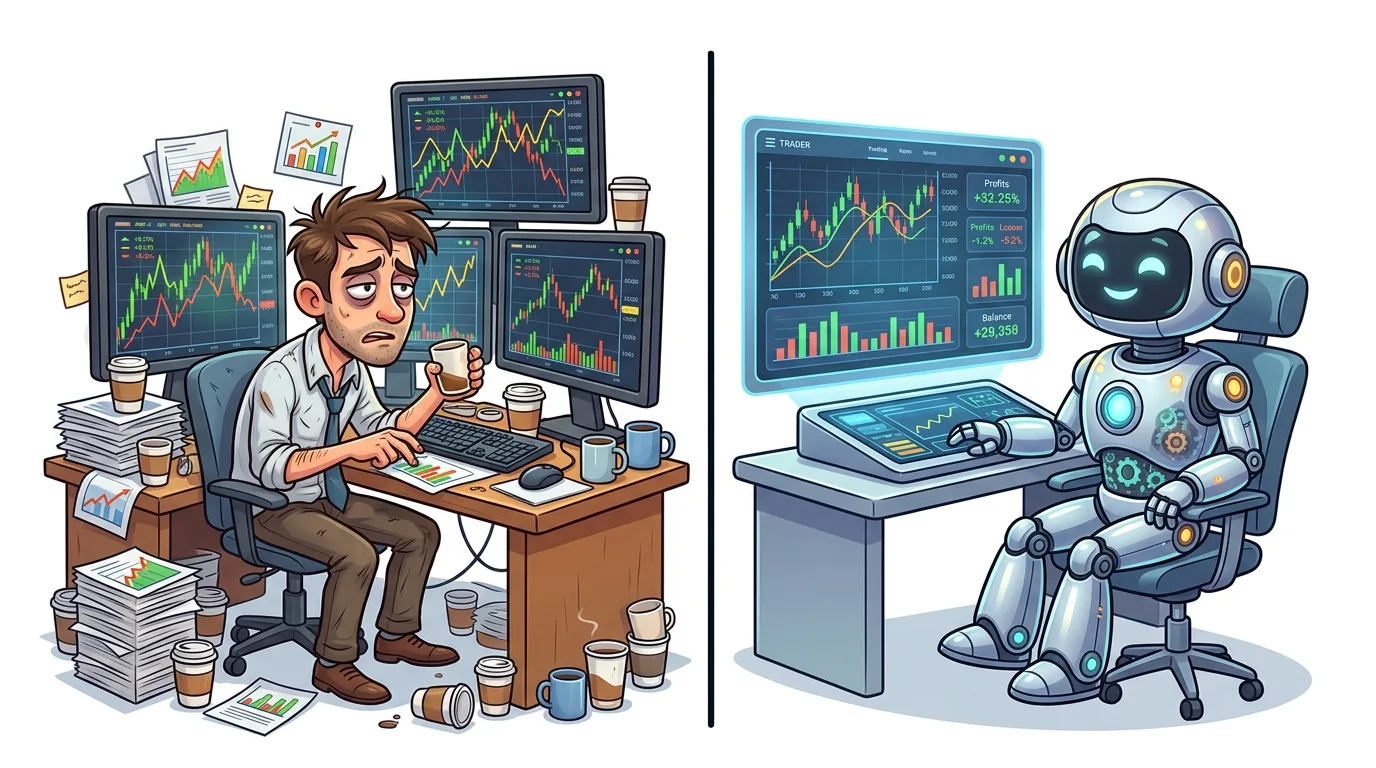
“It's a context tool, not a crystal ball.”
As you grow, you'll need more than Finviz. Here's what I moved to, and why.
1. MT5's Built-in 'Currency Strength' Indicators: If you use XM review or IC Markets review, you're probably on MT5. The platform has custom 'Currency Strength' indicators you can download for free from the MQL5 community. These are better because they plot a moving line for each currency, so you can see the strength trend, not just a snapshot. You can also customize which pairs are in the calculation. This was a game-changer for my swing trading approach.
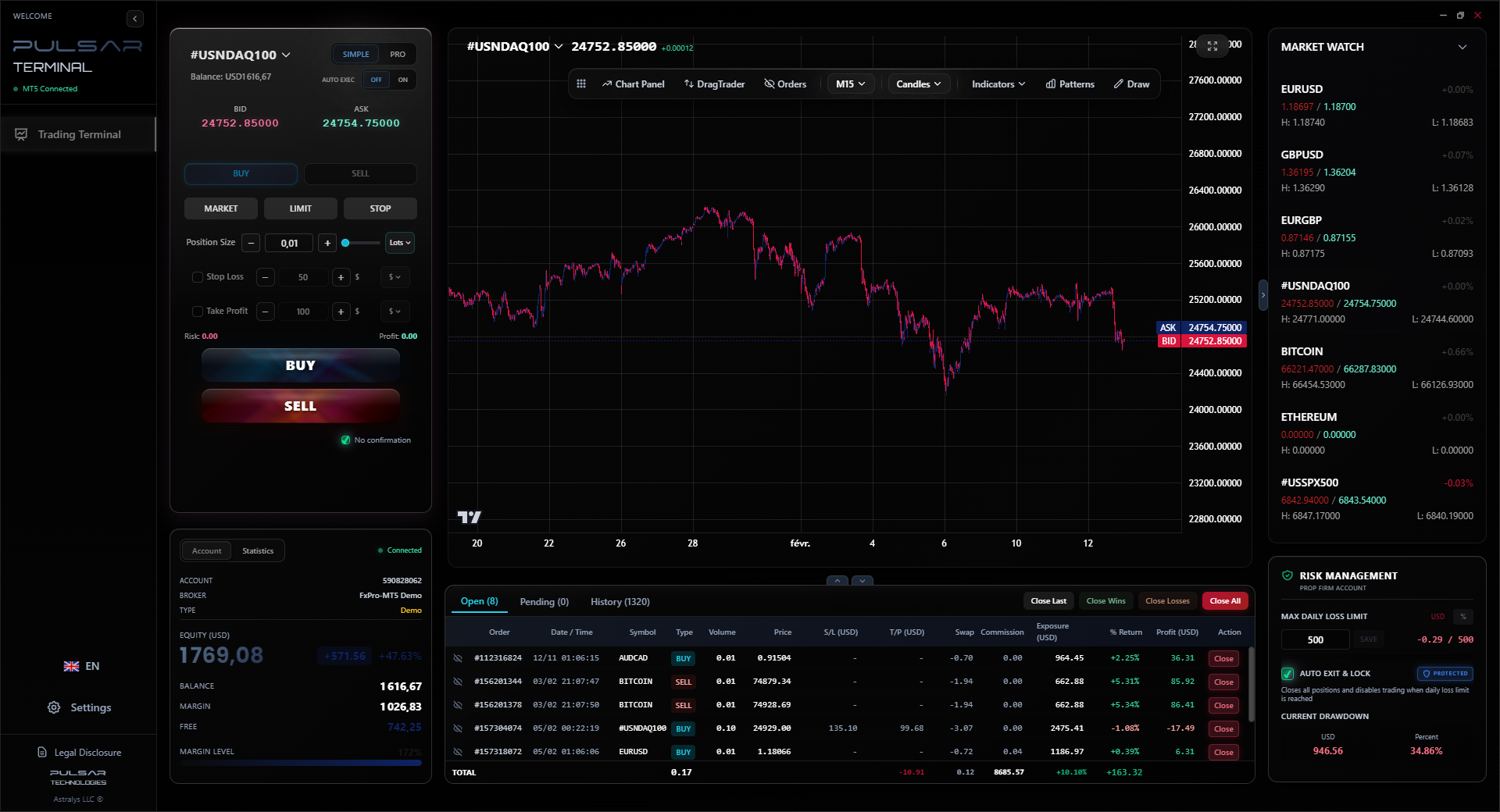
2. Specialized Software (Like Pulsar Terminal): This is where professional-grade analysis lives. While Finviz gives you a static heatmap, a tool like Pulsar Terminal (which works inside MT5) can provide dynamic, chart-based strength analysis. You can visualize strength divergences directly on your EUR/USD chart, for instance. The ability to combine this with advanced order types (like multi-level take-profits) means your analysis and trade execution are seamlessly connected. No more switching browser tabs.
3. The 'Manual' Method (The Best Teacher): This is old-school but useful. Create a simple Excel sheet. List the major pairs. Manually calculate the average performance of each currency. For example, to calculate USD strength: look at EUR/USD, GBP/USD, USD/JPY, USD/CHF, USD/CAD. Is the USD going up in most of them? Doing this manually, even once a week, gives you a deeper, intuitive feel for intermarket dynamics that no colored box ever will.
Comparison Table: Finviz vs. Advanced Tools
| Feature | Finviz Forex Meter | MT5 Custom Indicator | Advanced Terminal (e.g., Pulsar) |
|---|---|---|---|
| Cost | Free | Free (usually) | Paid Subscription |
| Customization | None (Fixed 8 currencies) | High (Choose pairs, formulas) | Very High (Integrated charts, alerts) |
| Real-time Analysis | Yes, but basic | Yes, on your chart | Yes, with advanced visualization |
| Best For | Beginners, quick context check | Intermediate traders, trend analysis | Serious/Professional traders, system integration |
The bottom line? Finviz is a great starting point, but it's the training wheels. You'll need to graduate to more integrated tools to build a consistent edge, especially when trading volatile pairs like XAU/USD guide (Gold).
Manually tracking currency strength across multiple charts is inefficient; Pulsar Terminal integrates live strength analysis directly into your MT5 workspace, turning thematic insight into executable trades with one-click order tools.
Pulsar Terminal
Công cụ MT5 tất-cả-trong-một: đặt lệnh kéo-thả, multi-TP/SL, trailing stop, grid trading, Volume Profile và bảo vệ prop firm. Hơn 1.000 trader sử dụng mỗi ngày.
“It's a context tool, not a crystal ball.”
This is the most important section for you reading this in Lagos, Abuja, or Port Harcourt. The Finviz meter exists in a vacuum of major, liquid, freely-traded currencies. Nigeria's forex market is different. Here’s how to bridge that gap.
Understanding the NAFEM Rate: Since the CBN's unification drive, the Nigerian Autonomous Foreign Exchange Market (NAFEM) rate is the official benchmark. While you can't directly trade NGN pairs on most international brokers like Exness review or Pepperstone review, the NAFEM rate is a giant clue. If the NGN is weakening rapidly on the official market, what happens? Foreign investors might pull out of Nigerian assets. That can trigger a sell-off in emerging market currencies broadly and a flight to safety. That flight? It goes to the USD, CHF, and JPY - the very currencies on the Finviz meter.
So, a crashing Naira (something we're too familiar with) can be a leading indicator for strength in the USD and CHF on the Finviz meter. I use local financial news not to trade the Naira, but to anticipate movements in the majors I can actually trade.
Payment Method Implications: Your funding method affects your psychology. If you deposit via a domiciliary account when the NGN is at 1400/$, and the NGN weakens to 1600/$, your dollar-denominated account is instantly 'worth more' in Naira terms. That can make you reckless. Conversely, a strengthening Naira can make you feel poorer and trade scared. The Finviz meter shows pure forex moves. Your P&L feels the combo of forex moves + NGN volatility. Separate the two in your mind. Trade the charts on your screen, not the conversion rate in your bank app.
Taxes Are Real: Remember, that 10% capital gains tax to the FIRS applies to your profits in Naira terms. A successful trade on EUR/USD guide using the Finviz meter for direction is great. But if you made $1000 and the NGN has moved significantly between trade entry and profit withdrawal, your tax liability in Naira can be unexpectedly higher or lower. Factor this into your profit calculations. It's part of the Nigerian trader's overhead.
💡 Mẹo của Winston
The real 'currency strength' you need to monitor is your own emotional resilience after a loss. No meter can measure that.
“Trade the charts on your screen, not the conversion rate in your bank app.”
Here's exactly how I incorporate the Finviz Forex Currency Strength Meter into my daily routine as a Nigerian swing trader. This routine has kept me profitable for the last 18 months.
Step 1: The Macro Check (8:00 AM WAT).
- Open Finviz.com/forex/heatmap.
- Set it to '1-day' and '1-week'. I ignore the 'current' view.
- I ask: Is there a clear, dominant color theme? (e.g., USD green across the board). I note it mentally. This tells me if I should be primarily looking for longs or shorts on USD pairs.
Step 2: The News Filter.
- I check the calendar for major economic events from the currencies showing extreme strength/weakness. If the USD is strong and Fed Chair Powell is speaking in 2 hours, I know the meter's reading is volatile and I should avoid new positions until after the event.
Step 3: Technical Analysis on MT5.
- I open my charts on MT5. I only look at 2-3 pairs where the Finviz theme and my technical setup align. For example, if USD is strong and EUR is weak, I'll look at EUR/USD. But I only enter if the price is at a key resistance level on the 4-hour chart and the MACD indicator is showing bearish momentum. The meter gave me the bias; the chart gives me the trigger.
Step 4: Risk Management.
- Before any entry, I calculate my position size using my position size calculator. My stop-loss is always based on chart structure (e.g., above the recent swing high), never on how 'strong' the Finviz meter says the currency is.
- I set my take-profit levels. Here's where better tools help. Instead of a single TP, I use a multi-TP strategy to bank partial profits.
Step 5: Review & Journal.
- At the week's end, I review my trades. Did the initial Finviz strength/weakness theme play out? How often was it correct? My journal shows it's about 60-65% accurate as a thematic guide over a week - good for context, terrible as an entry signal.
This routine forces the tool to serve my system, not the other way around. It prevents me from becoming a slave to the changing colors.

FAQ
Q1Is the Finviz Forex Currency Strength Meter free for Nigerian traders?
Yes, it's completely free. You just go to Finviz.com, click the 'Forex' tab, and select 'Heatmap'. No registration or account is needed. This makes it one of the most accessible tools for beginners here in Nigeria.
Q2Why doesn't the Finviz meter include the Nigerian Naira (NGN)?
The Finviz meter tracks the eight major, highly liquid, and freely convertible currencies that form the core of the global forex market (USD, EUR, JPY, etc.). The NGN, while important to us, is not considered a major global currency and has capital controls and a less liquid international market. Its price is heavily influenced by local CBN policy, not just pure market flows.
Q3Can I use the Finviz meter for scalping?
I strongly advise against it. The meter on short timeframes (like 5-minute change) is extremely noisy and reactive. You'll be chasing ghosts and getting whipsawed. The spread and commission costs will kill your profits. It's designed for identifying broader daily or weekly themes, not for quick, in-and-out scalping strategy decisions.
Q4What is a good broker for Nigerians to use alongside tools like Finviz?
You need a broker with stable MT4/MT5 platforms, good liquidity, and reliable deposit/withdrawal methods for Nigeria. Internationally regulated brokers like XM, IC Markets, and Exness are popular choices. They offer competitive spreads on major pairs, which is what the Finviz meter tracks. Always check their specific NGN funding options and local support.
Q5How accurate is the Finviz currency strength meter?
It's 100% accurate at showing what has already happened to those currency pairs over the selected period. Its accuracy as a predictive tool, however, is low. In my experience, a strong daily reading might continue for a few hours or reverse immediately. Don't confuse historical description with a future forecast. It's a context tool, not a crystal ball.
Q6Do professional traders in Nigeria use Finviz?
Some might glance at it for a quick macro sense, just like I do. But no serious professional relies on it. They use more sophisticated, integrated strength analysis tools within their trading platforms (like custom indicators or advanced terminals), combined with deep fundamental analysis and proprietary models. Finviz is a convenient public starting point, not the professional's primary weapon.
Q7Are there any Nigerian platforms with a similar currency strength tool?
Not that I'm aware of. Most local trading platforms or fintech apps focus on stock trading or crypto. The forex analysis tools for the international majors are still dominated by global platforms like Finviz, TradingView, and MetaTrader suites. Our local innovation is more in payment processing and access, not in advanced forex analytics.
Bài học của Prof. Winston
Điểm chính:
- ✓Finviz shows relative, not absolute, strength.
- ✓Never use it on timeframes below 1 hour.
- ✓It must align with technical chart signals.
- ✓Factor in 10% Nigerian capital gains tax on profits.
- ✓Graduate to integrated platform tools as you grow.
Bài viết này hữu ích thế nào?
Nhấp vào ngôi sao để đánh giá
Nhận định giao dịch hàng tuần
Phân tích & chiến lược miễn phí hàng tuần. Không spam.
Về tác giả
Olumide Adeyemi
Nhà tiên phong Giao dịch Tây Phi
Một trong những nhà đào tạo forex tích cực nhất tại Nigeria. 8 năm kinh nghiệm giao dịch từ Lagos. Chuyên về chiến lược vốn thấp và thử thách prop firm dành cho trader châu Phi.
Bình luận
Cảnh báo rủi ro
Giao dịch các công cụ tài chính tiềm ẩn rủi ro đáng kể và có thể không phù hợp với tất cả nhà đầu tư. Hiệu suất trong quá khứ không đảm bảo kết quả trong tương lai. Nội dung này chỉ mang tính chất giáo dục và không nên được coi là lời khuyên đầu tư. Hãy luôn tự nghiên cứu trước khi giao dịch.
Bạn cũng có thể thích

Cara Trading Forex Sukses: 7 Prinsip dari Trader Profesional
Cara trading forex sukses dengan 7 prinsip trader pro: manajemen modal, disiplin, journal trading, backtest. Data nyata, bukan janji profit palsu.
Jam Trading Forex Terbaik untuk Trader Indonesia: Panduan Lengkap dengan Tabel Waktu
Panduan jam trading forex untuk trader Indonesia. Tabel 4 sesi dunia, jam emas 20:00-00:00, sesi mana yang harus dihindari. Data akurat + tips dari trader berpengalaman.
Top 5 Sàn Forex Uy Tín Nhất 2026: Review Jujur dari Trader Indonesia
Top 5 sàn forex uy tín 2026 untuk trader Indonesia. Review jujur: spread, deposit, withdraw, dukungan lokal. Exness, XM, IC Markets & lebih.
Tải Pulsar Terminal
Tất cả các công cụ tính này được tích hợp trong Pulsar Terminal với dữ liệu thời gian thực từ tài khoản MT5 của bạn.
Tải Pulsar Terminal