


I was short on EUR/USD on March 20th, 2024.

Olumide Adeyemi
Nhà tiên phong Giao dịch Tây Phi ·  Nigeria
☕ 10 phút đọc
Bạn sẽ học được:
- 1What Exactly Is a Forex News Calendar? (It's Not Just a List)
- 2Events That Actually Move the Naira (Forget the Noise)
- 3Practical News Trading Strategies That Don't Get You Killed
- 4The 5 Costliest Mistakes Nigerian Traders Make with News
- 5Setting Up Your Trading Desk: Calendars, Alerts, and Brokers
- 6The Mental Game: News Trading is 80% Psychology
I was short on EUR/USD on March 20th, 2024. The pair was drifting lower, and I was up about 25 pips. Then, at 1:30 PM WAT, the US Federal Reserve's interest rate decision hit. No change, as expected. But Jerome Powell's press conference started, and within two minutes, the chart looked like a seismograph during an earthquake. A 70-pip spike wiped my stop-loss and reversed. I sat there, stunned, realizing I'd been ambushed by an event I knew was coming but didn't respect. That's the power of the forex news calendar. It's not a suggestion; it's the market's schedule. And if you're trading from Nigeria, ignoring it is a fast track to turning your capital into 'chop money.'
Think of a forex news calendar as the market's itinerary. It lists scheduled economic announcements, political events, and speeches from central bankers that have the potential to move currency prices. For you, the Nigerian trader, it's your early warning system.
Most calendars you'll find online (like Forex Factory or Investing.com) show the event, the time (usually in GMT or EST), the currency affected, and most importantly, the forecasted figure versus the actual result when it's released. The real magic, and the source of volatility, is in that difference between expectation and reality.

Warning: Don't just glance at the calendar. The devil is in the details. An event marked as 'medium impact' can become a monster if the actual data is a huge surprise. I've seen 'medium' US Retail Sales data trigger bigger moves than some 'high' impact events because it came in wildly off forecast.
For us trading from Lagos or Port Harcourt, timing is everything. You need to convert those event times to West Africa Time (WAT). A US Non-Farm Payrolls report at 8:30 AM EST is 1:30 PM WAT. If you're trading during your lunch break, you better know what's on the docket.
“The forex news calendar isn't a suggestion; it's the market's schedule. Ignoring it is a fast track to turning your capital into 'chop money.'”
Trading USD/NGN or other Naira pairs? You need a hyper-local lens. The international forex news calendar matters, but Nigerian-specific events often dictate the Naira's fate.
CBN Monetary Policy Committee (MPC) Meetings
This is our Super Bowl. The Central Bank of Nigeria's decision on the Monetary Policy Rate (MPR) is the single biggest driver. In 2024, the CBN hiked rates by a cumulative 875 basis points to 27.50%. Each announcement caused massive volatility. You don't trade during this. You either have a position based on a solid forecast going in, or you wait for the chaos to settle.
CBN FX Market Interventions & Circulars
The CBN doesn't just set rates; it actively buys and sells dollars. News of a large intervention (like the $7.8 billion they spent on liquidity management in 2025) can strengthen or weaken the Naira instantly. Follow CBN press releases and credible financial news.
Monthly FAAC Allocations & Oil Price Data
Nigeria's lifeblood is oil. The monthly Federation Account Allocation Committee (FAAC) figures tell you how much money is flowing to states. Low allocations often pressure the Naira. Similarly, a sharp drop in Brent Crude prices is almost always bad news for USD/NGN. You can use a tool like our position size calculator to adjust your lot size for the increased volatility around these events.
Inflation Data (CPI)
With inflation persistently high, the monthly Consumer Price Index report from the National Bureau of Statistics is a key gauge for what the CBN might do next. A higher-than-expected print can spark speculation of another rate hike, which might temporarily support the Naira.
The table below breaks down the key local vs. international events:
| Event Type | Example | Why It Matters to a Nigerian Trader | Typical Volatility |
|---|---|---|---|
| Local (NGN) | CBN MPC Rate Decision | Directly sets cost of Naira, affects all USD/NGN pricing | Extreme |
| Local (NGN) | CBN FX Intervention News | Direct supply/demand shock to the dollar supply | Very High |
| International (USD) | US Non-Farm Payrolls | Drives global USD strength/weakness, affects all pairs | Very High |
| International (EUR) | ECB Interest Rate Decision | Moves EUR/USD, which influences global dollar flows | High |
| Commodity | OPEC Meeting / Oil Inventory Data | Impacts Nigeria's primary export revenue | Medium to High |

💡 Mẹo của Winston
The 'forecast' on your calendar is just the public consensus. The real money moves on the difference between that number and the 'whisper' circulating among institutional desks. If you're not plugged into quality analysis, you're trading blind.
“Trading during low-liquidity news is like playing poker at an empty table. You're just trading against the house (your broker).”
There are three main ways to play the news. I've lost money with all of them before figuring out the right approach.
1. The Pre-News Positioning (The High-Conviction Play) This is where you analyze the forecasts, economic trends, and central bank rhetoric before the event and take a position. For example, if inflation is raging and the CBN has been hawkish, you might buy USD/NGN before an MPC meeting expecting a big rate hike. The risk? You're wrong on the outcome. I did this in Q1 2024, shorting GBP/NGN before a Bank of England meeting. I was right on the BoE holding rates, but a surprise dovish statement sent the pound soaring globally. I took a 1.5% account loss. The lesson? Your analysis must be rock-solid, and your stop-loss must be tighter.
2. The Post-News Breakout (The Patient Play) This is my preferred method now. You do NOT trade the initial 5-10 second spike. That's algorithmic chaos. You wait. Let the news release, let the initial panic buy/sell orders clear, and then look for a clear breakout from the established pre-news range. It requires patience, but it filters out a lot of the fake volatility. This works well on pairs like EUR/USD after major US data.
3. The Straddle/Volatility Play (The Advanced Play) This involves using options or a strategy that profits from a big move in either direction. For most retail traders in Nigeria, this is complex and broker-dependent. I'd avoid it until you're very experienced.

Pro Tip: Whatever your strategy, reduce your position size by at least 50% for news trades. The volatility is higher, so your risk per trade should be lower. A normal trade might risk 1% of your account. A news trade should risk 0.5% or 0.25%. Surviving is more important than the size of any single win.
Also, understand the concept of a 'margin call' intimately. A news-driven spike can blow through your stop-loss if there's a gap or extreme slippage, potentially triggering a margin call if you're over-leveraged. It's brutal.
“Your job isn't to win every news trade. Your job is to have a process that keeps you in the game.”
I've coached enough traders from Abuja to Enugu to see the same errors repeated. Let's kill these habits now.
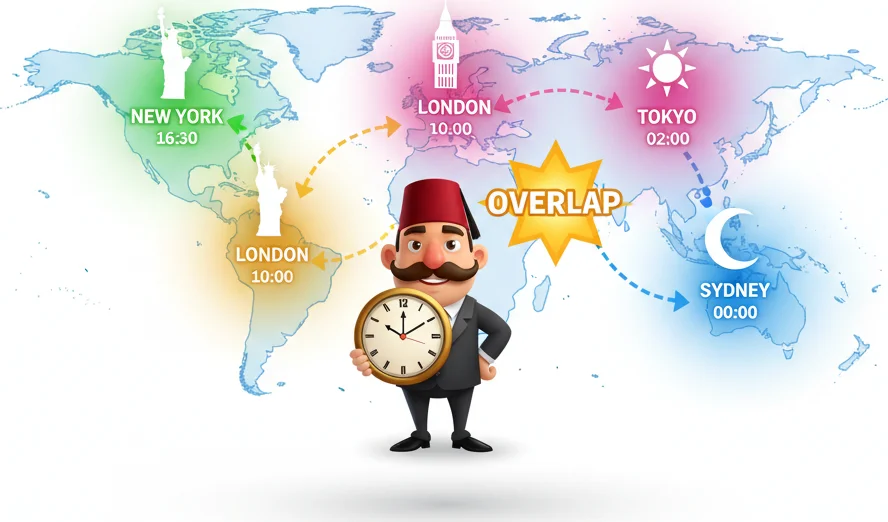
1. Trading During Low-Liquidity News. You're up at 2 AM WAT trading a New Zealand GDP report because it's 'high impact.' Who are you trading against? Other night owls and algorithms. The spreads will widen monstrously, and the price action can be jerky and unreliable. Focus on high-liquidity sessions that overlap with major news (London & New York sessions).
2. Ignoring the 'Whisper Number.' Sometimes, the market consensus (the 'forecast') is outdated. A last-minute leak or expert analysis creates a 'whisper number' - what the big banks really expect. If the actual data beats the forecast but misses the whisper number, the price can still fall. You need to read quality analysis, not just the calendar number.
3. Not Accounting for Slippage. You place a stop-loss 20 pips away. The news hits, and your order gets filled 35 pips away. That's slippage. During major events like the US NFP, it's guaranteed. Always use a guaranteed stop-loss if your broker offers it (it costs a small premium), or accept that your actual risk might be much larger than planned.
4. Chasing the News After the Move. You see USD/NGN rip 500 pips higher on a CBN hike. FOMO kicks in, and you buy at the top. Nine times out of ten, you're buying the exhaustion. The smart money is taking profits, and you're left holding the bag. This is where a tool for swing trading analysis can help you identify if the trend has legs or is just a spike.
5. Using Excessive use. This is the killer. A broker like Exness or HF Markets might offer you 1:1000 use. Using that around news is suicide. A 0.1% move against you wipes out your entire margin. With the volatility we saw in the Naira in 2024 (40.9% annual move), high use is a one-way ticket to a zero account balance. Treat use like pepper - a little goes a long way.
💡 Mẹo của Winston
Your first loss is your best loss. If a news trade goes against you immediately, your analysis was wrong. Taking the small, planned loss is professional. Defending it by moving your stop is how amateurs turn a $50 problem into a $500 disaster.
“Your job isn't to win every news trade. Your job is to have a process that keeps you in the game.”
You need the right tools. Here’s my setup.
Primary Calendar: Forex Factory. It's free, reliable, and customizable. You can filter for the currencies you care about (USD, EUR, GBP, NGN). Set the time zone to GMT+1 (WAT).
Secondary Source: Investing.com's Economic Calendar. I cross-reference here, especially for Nigerian data like inflation and GDP. Their NBS data is usually prompt.
Broker Integration: Choose a broker whose platform integrates the calendar. Many, like the ones reviewed on our site (XM, Pepperstone), have economic calendars built into their platforms or trading apps with push notifications. This is crucial. You shouldn't have to switch windows to see what's coming.
The Alert System: You can't stare at the calendar all day. Set phone alerts for the 3-5 events per week that truly matter to your open positions or watchlist. For everything else, a quick glance in the morning is enough.
Regarding Nigerian Brokers & News: If you're using a local platform or a broker with NGN accounts, verify their data feed speed. During a major CBN announcement, prices on a slow platform can be dangerously outdated. This is one reason many serious traders use internationally regulated brokers with strong infrastructure, even if they deposit in Naira. You can compare some top options in our Exness review and IC Markets review.
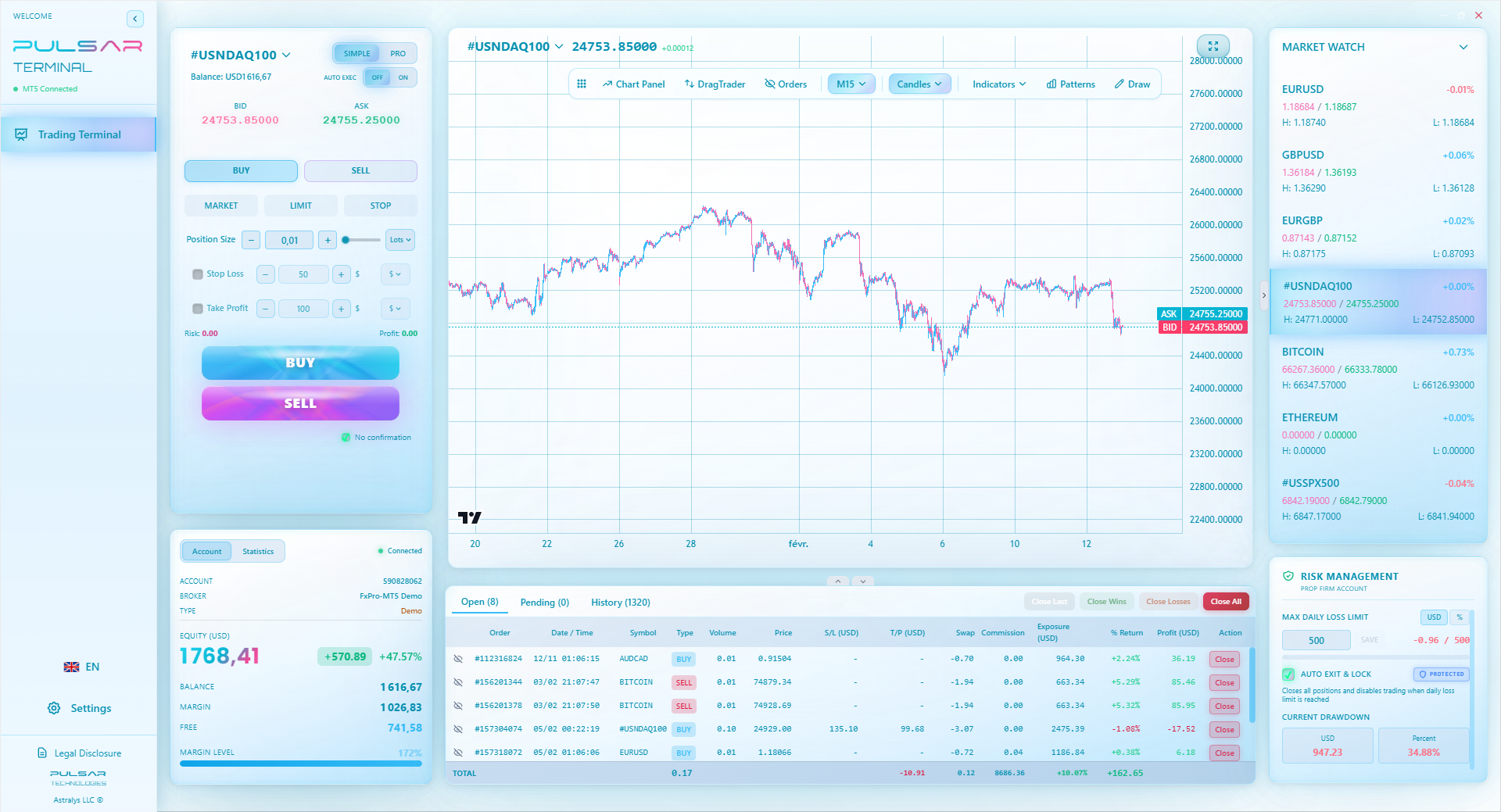
Managing multiple take-profit and stop-loss levels during volatile news events is critical, and Pulsar Terminal lets you set them all with a single drag-and-drop directly on your MT5 chart.
Pulsar Terminal
Công cụ MT5 tất-cả-trong-một: đặt lệnh kéo-thả, multi-TP/SL, trailing stop, grid trading, Volume Profile và bảo vệ prop firm. Hơn 1.000 trader sử dụng mỗi ngày.
“The most profitable trade is often the one you don't take.”
The forex news calendar doesn't just show economic events; it highlights your own greed and fear. Here’s the reality check.
You will have losses from news trades. It's inevitable. A surprise geopolitical headline, a data revision, a 'black swan.' Your job isn't to win every time. Your job is to have a process that keeps you in the game. That means strict risk management on every single news trade, no exceptions.
I had a student in Ibadan who was brilliant at analyzing pre-MPC trends. He'd get the direction right 7 out of 10 times. But he kept blowing accounts. Why? On the 3 losing trades, he'd refuse to accept he was wrong. He'd move his stop-loss, double down, and turn a 0.5% loss into a 15% disaster. The calendar gave him the opportunity, but his psychology destroyed him.
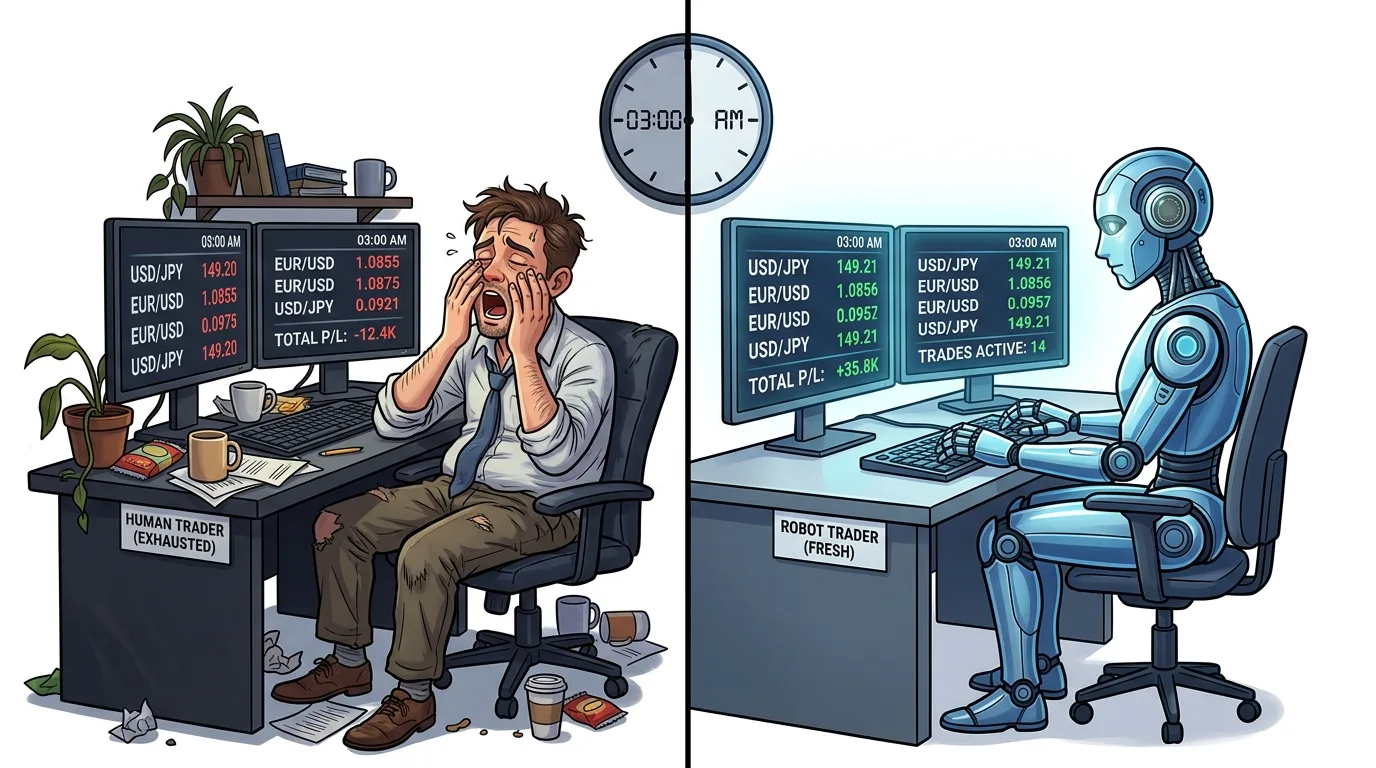
Set your rules before the event: entry price, stop-loss, take-profit. When the news hits, you are not a trader; you are a robot executing a pre-programmed mission. Do not touch the controls unless your original thesis is fundamentally broken (which is rare).
Finally, know when to stay out. If you're unsure, if the forecasts are murky, or if you're emotionally tired, just close your charts and watch. There is no rule that says you must trade every high-impact event. The most profitable trade is often the one you don't take. Sometimes, the best action after consulting your forex news calendar is to walk away and preserve your capital for a clearer setup.
💡 Mẹo của Winston
The most important column on the news calendar isn't 'Impact' or 'Event.' It's the blank space next to it where you write your plan: 'If data > X, I do Y. If data < Z, I do nothing.' No plan, no trade.
FAQ
Q1What time zone should I set my forex news calendar to in Nigeria?
Always set it to West Africa Time (WAT), which is GMT+1. Most calendars default to Eastern Time (ET) or GMT. If you don't change this, you will absolutely miss critical events or trade at the wrong time. A US event at 8:30 AM ET is 1:30 PM WAT.
Q2Is it safe to trade USD/NGN around CBN announcements?
Safe? No. It's extremely volatile. It can be profitable if you have a clear strategy and iron-clad risk management, but 'safe' is the wrong word. Expect massive spreads, severe slippage, and unpredictable spikes. Use tiny position sizes and consider waiting 15-30 minutes after the announcement for the market to find its true direction.
Q3How can I find a reliable forex news calendar that includes Nigerian data?
Use a combination. Forex Factory is best for global events. For Nigerian data (CPI, MPC dates, FAAC), you need to monitor the Central Bank of Nigeria website, the National Bureau of Statistics site, and financial news platforms like Investing.com or Nairametrics, which often list local economic events alongside global ones.
Q4What's the difference between 'High Impact' and 'Medium Impact' news?
Impact ratings predict the potential for market volatility. 'High Impact' events (US NFP, CBN MPC, ECB Rate Decision) almost always cause significant, immediate price movement. 'Medium Impact' events (US Durable Goods, German IFO) can cause decent moves, especially if the actual data is a big surprise. Never ignore a medium-impact event if you have an open position in that currency.
Q5Should I close all my trades before major news?
It depends on your strategy and risk tolerance. If you are a swing trader holding for days or weeks, a news event might just be a blip in your trend. But you must ensure your stop-loss is wide enough to survive the volatility. If you are a short-term or day trader, yes, closing trades before major, unpredictable news is a prudent way to avoid being a victim of random volatility. There's no shame in sitting out.
Q6Can I make money just by trading the news?
Some traders specialize in it, but it's a high-stress, high-risk niche. It requires incredible discipline, fast execution, and the emotional strength to accept many small losses for a few big wins. For most Nigerian retail traders, I recommend using the news calendar primarily as a risk management tool - to know when not to trade or when to reduce position size - rather than basing your entire strategy on it.
Q7Do all forex brokers have the same news feed speed?
No, they don't. This is critical. Brokers with better technology and liquidity providers will have faster, more accurate price feeds during news events. A slower broker means your orders (especially stop-losses) may be executed at a worse price (slippage). Always choose a broker known for good execution, especially if you trade around news.
Bài học của Prof. Winston
Điểm chính:
- ✓Convert all calendar times to WAT (GMT+1) without fail.
- ✓For news trades, cut your normal position size by at least 50%.
- ✓The CBN MPC decision is the Super Bowl for Naira volatility.
- ✓Slippage during major news is guaranteed, not a possibility.
- ✓Use the calendar more to manage risk than to find entries.
Bài viết này hữu ích thế nào?
Nhấp vào ngôi sao để đánh giá
Nhận định giao dịch hàng tuần
Phân tích & chiến lược miễn phí hàng tuần. Không spam.
Về tác giả
Olumide Adeyemi
Nhà tiên phong Giao dịch Tây Phi
Một trong những nhà đào tạo forex tích cực nhất tại Nigeria. 8 năm kinh nghiệm giao dịch từ Lagos. Chuyên về chiến lược vốn thấp và thử thách prop firm dành cho trader châu Phi.
Bình luận
Cảnh báo rủi ro
Giao dịch các công cụ tài chính tiềm ẩn rủi ro đáng kể và có thể không phù hợp với tất cả nhà đầu tư. Hiệu suất trong quá khứ không đảm bảo kết quả trong tương lai. Nội dung này chỉ mang tính chất giáo dục và không nên được coi là lời khuyên đầu tư. Hãy luôn tự nghiên cứu trước khi giao dịch.
Bạn cũng có thể thích

Cara Trading Forex Sukses: 7 Prinsip dari Trader Profesional
Cara trading forex sukses dengan 7 prinsip trader pro: manajemen modal, disiplin, journal trading, backtest. Data nyata, bukan janji profit palsu.
Jam Trading Forex Terbaik untuk Trader Indonesia: Panduan Lengkap dengan Tabel Waktu
Panduan jam trading forex untuk trader Indonesia. Tabel 4 sesi dunia, jam emas 20:00-00:00, sesi mana yang harus dihindari. Data akurat + tips dari trader berpengalaman.
Top 5 Sàn Forex Uy Tín Nhất 2026: Review Jujur dari Trader Indonesia
Top 5 sàn forex uy tín 2026 untuk trader Indonesia. Review jujur: spread, deposit, withdraw, dukungan lokal. Exness, XM, IC Markets & lebih.
Tải Pulsar Terminal
Tất cả các công cụ tính này được tích hợp trong Pulsar Terminal với dữ liệu thời gian thực từ tài khoản MT5 của bạn.
Tải Pulsar Terminal