


Here's a hard truth most 'gurus' won't tell you: over 80% of retail forex options traders lose their entire initial deposit within the first year.

Olumide Adeyemi
Nhà tiên phong Giao dịch Tây Phi ·  Nigeria
☕ 10 phút đọc
Bạn sẽ học được:
- 1What Are Forex Options, Really? (It's Not Gambling... Exactly)
- 2Why Nigerian Traders Get Burned by Forex Options
- 3Practical Strategies That Actually Work (For The Patient)
- 4Brokers and Platforms: Navigating the Murky Waters
- 5The Hidden Costs and Risks You Absolutely Must Know
- 6My Straight Advice for Beginners in Nigeria
- 7The Bottom Line: Are Forex Options Worth It?

Here's a hard truth most 'gurus' won't tell you: over 80% of retail forex options traders lose their entire initial deposit within the first year. I was nearly part of that statistic. In Nigeria, where the promise of quick money from binary options and 'turbo' trades floods social media, understanding the real mechanics of forex options isn't just helpful, it's survival. This isn't about get-rich-quick schemes. It's about understanding a complex derivative that can wipe out an account faster than a bad spot trade.
Let's clear this up first. A forex option is a contract. It gives you the right, but not the obligation, to buy or sell a currency pair at a specific price (the strike price) on or before a certain date (the expiration). You pay a premium for this right. If the market moves in your favor, you profit. If it doesn't, your maximum loss is that premium you paid. Sounds safer than regular forex, right? That's the hook.
The two main types are Calls and Puts. A Call option is a bet the price will go UP. A Put option is a bet it will go DOWN. The big difference from just buying EUR/USD is that with an option, you're not just betting on direction. You're betting on direction, magnitude, AND time. That third element, time, is what makes it so tricky. It's called time decay. Every day that passes with the market not moving, your option loses value. It's like buying a melting ice cube.

Warning: The 'binary options' heavily marketed in Nigeria are often a simplified, predatory version of this. They typically have fixed payouts (e.g., 80% if you win) and are structured so the provider makes money even if you're right half the time. Many are unregulated. Treat them with extreme caution.
My first foray was with a binary option on USD/NGN. I paid a $50 premium for a 'Call' expiring in one hour. The pair spiked, and I got an $80 payout. I felt like a genius. What I didn't realize was I'd just won a 50/50 bet with terrible odds, not executed a strategic trade. That false confidence cost me dearly later.
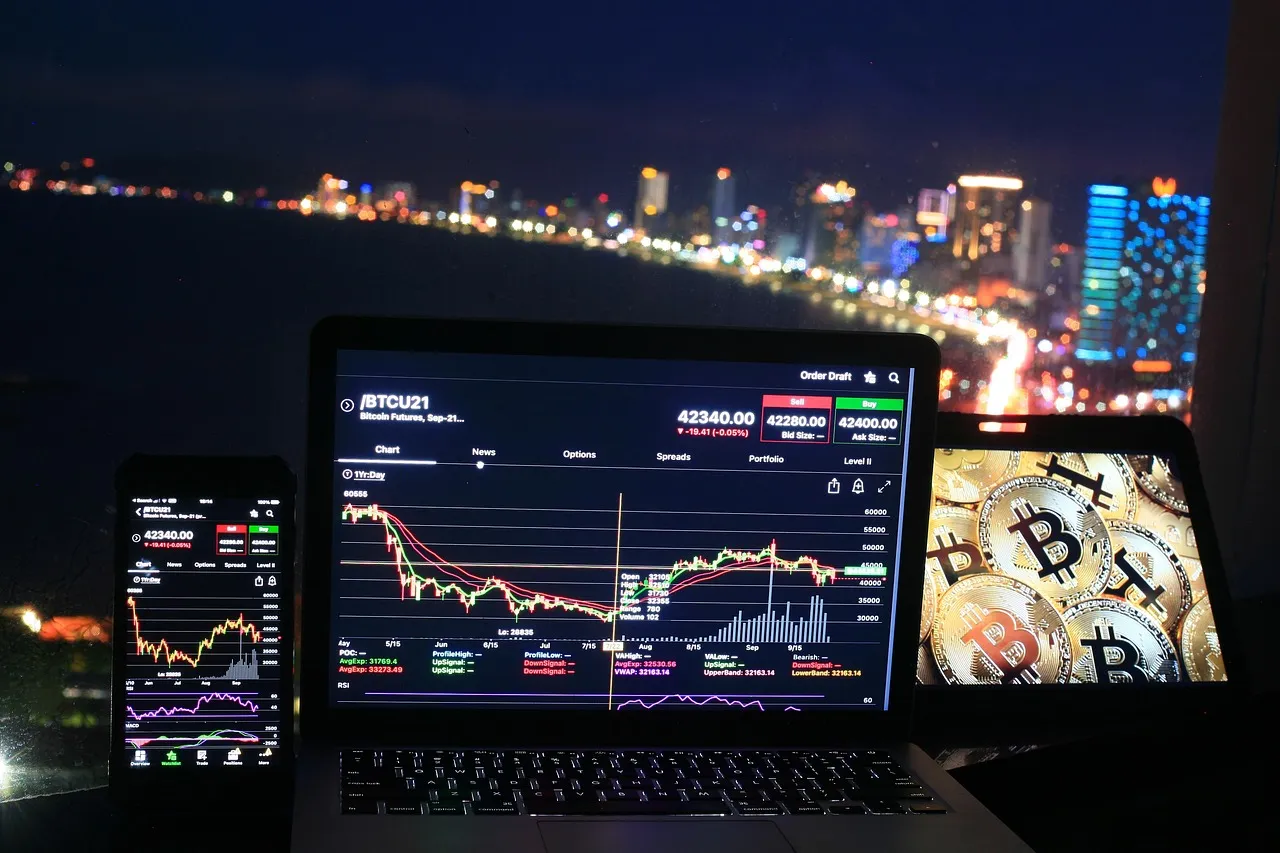
The appeal is obvious, especially with our economic pressures. The idea of risking a small, known amount (the premium) for a potentially large, uncapped return is magnetic. But here's where the disconnect happens.
The Marketing vs. The Math
Social media ads show screenshots of 500% returns in minutes. They never show the 100 consecutive losses required to get one of those wins. The math is brutal. Let's say you have a strategy that wins 60% of the time - which is excellent. If your average win is $80 on a $50 premium and your average loss is that full $50, your expected profit per trade is just $2. (0.6*$80 - 0.4*$50 = $48 - $20 = $28? Wait, let's recalc...). Actually, your profit on a win is $30 ($80 payout minus $50 cost). So expected value is (0.6*$30) - (0.4*$50) = $18 - $20 = -$2. You're losing $2 per trade on average, even winning 60% of the time. That's the hidden trap.
The Time Pressure Problem
Nigerian traders, myself included, often juggle trading with other jobs. Options, especially short-term ones, demand constant screen time. You can't just set a stop loss and walk away. You're fighting the clock. I missed a family dinner watching a 15-minute EUR/GBP option expire worthless. The mental toll is immense.
The Liquidity Illusion
We trade major pairs like EUR/USD thinking they're always liquid. For spot forex, yes. For certain options, especially on offshore platforms popular here, the spread between the bid and ask price for the option itself can be huge. You might need the underlying pair to move significantly just to break even on the option price. I once bought a GBP/USD Put, saw GBP drop, but still couldn't sell my option for a profit because the bid had collapsed. The underlying market was right, my option was right, but I still lost. That was a brutal lesson in derivative liquidity.

💡 Mẹo của Winston
Theta (time decay) is not your friend if you're buying options. It's a silent tax. For every day the market sits still, it takes a bite. Buy options only when you expect a move *soon*.
“Options can create a lottery mentality. The occasional 300% win rewires your brain to seek that hit again, blinding you to the steady drain of small losses.”
After blowing up a small account on binary nonsense, I went back to the drawing board. I learned that profitable options trading is less about predicting explosions and more about selling probability.
1. The Covered Call (For Existing Forex Positions): This is the first strategy I used that felt like real investing, not gambling. Let's say you're long 1 lot of XAU/USD (gold) at $1850, expecting a slow rise. You can sell a Call option above your entry (e.g., at a $1900 strike). You collect the premium immediately. If gold stays below $1900, you keep the premium, which adds to your profit on the spot trade. If it rockets past $1900, your gold position gets sold at that price (plus you keep the premium). You cap your upside but get paid to wait. It's a conservative income strategy.
2. Using Options as Insurance (The Protective Put): This is my favorite use now. Imagine you have a large swing trading position in USD/CAD. You're worried about a potential news event but don't want to exit. You can buy a Put option as insurance. The premium is your insurance cost. If USD/CAD crashes, your Put option's value soars, offsetting the loss on your main trade. If nothing happens, you're only out the premium. This is how institutions use options.
3. Straddles for High-Volatility Events: This is for major events like the US Non-Farm Payrolls or a CBN announcement. You buy both a Call and a Put at the same strike price, just before the news. You're not betting on direction, you're betting on a big move in either direction. The catch? The move has to be bigger than the total cost of both premiums. It's high-risk, but it's a defined-risk strategy for chaos.

Pro Tip: Never use more than 5% of your total trading capital for options premiums. Treat it like a speculative side bet, not your main strategy. Always use a position size calculator to work out the premium cost as a percentage of your risk capital.
This is the minefield. Finding a legitimate, well-regulated broker that offers real forex options (not just binaries) to Nigerian clients is tough. Many of the international giants restrict options trading for clients from certain regions due to regulatory complexities.
You'll typically encounter three types:
- International CFD/Options Brokers: Some brokers like Exness or IC Markets offer options or options-like derivatives (like digital options). Scrutinize their license. Is it CySEC, FCA, ASIC? Be aware that client funds for non-EU residents are often held in offshore entities, even if the broker has a top-tier license.
- Offshore Binary Platforms: These are the ones with flashy ads. They're often registered in Cyprus, the Caribbean, or Mauritius. They accept Naira deposits via bank transfer and crypto. Their 'regulation' is frequently a weak financial services license that doesn't cover client fund protection. Avoid.
- Prop Firms Offering Options: A newer trend. Some proprietary trading firms are including options challenges. The rules are even more stringent. You must understand their specific profit target and drawdown rules, which often include the premium paid as part of your loss.
My advice? Start with a demo account on a major platform that offers vanilla options. Get a feel for the pricing, the Greeks (Delta, Gamma, Theta, Vega), and the interface before risking a kobo. The platform's tools are half the battle. Can you easily set multi-leg strategies? Does it show your theoretical profit/loss in real-time? If the platform feels clunky and geared towards quick 'BUY/SELL' buttons, it's designed for gamblers, not traders.
💡 Mẹo của Winston
The best first options trade isn't a directional bet. It's selling a covered call on a spot position you already own and wouldn't mind selling at a higher price. You get paid to wait.

“For 95% of retail traders in Nigeria, forex options are not worth it. The odds, costs, and psychological pressures are stacked heavily against you.”
The premium isn't your only cost. Here’s what eats into returns, based on my painful ledger.
| Cost/Risk | What It Is | My Experience |
|---|---|---|
| The Spread (Bid/Ask) | Difference between buying & selling price of the option itself. | On a short-term option, this could be 20-30% of the premium. A terrible deal. |
| Time Decay (Theta) | The loss in option value as time passes. | Accelerates massively in the final 48 hours. I've seen options lose 70% of value in a day with no price movement. |
| Volatility Crush (Vega) | Drop in option value when expected volatility decreases. | After a major news event passes, even if the price is right, your option can plummet in value. |
| Low Liquidity | Inability to exit at a fair price. | More common on exotic pairs or far-from-expiry options. You get stuck. |
| Assignment Risk | For sellers, being forced to fulfill the contract. | If you sell a 'Naked' Call and the market gaps, your loss is theoretically unlimited. This is how margin calls turn into debt. |
The biggest risk is psychological. Options can create a lottery mentality. The occasional 300% win feels incredible and rewires your brain to seek that hit again, blinding you to the steady drain of small losses. I had to take a month off after a period of obsessive short-term option trading. I was glued to screens, emotional, and my analysis of the underlying MACD indicator or RSI on the spot market became secondary to the ticking clock.
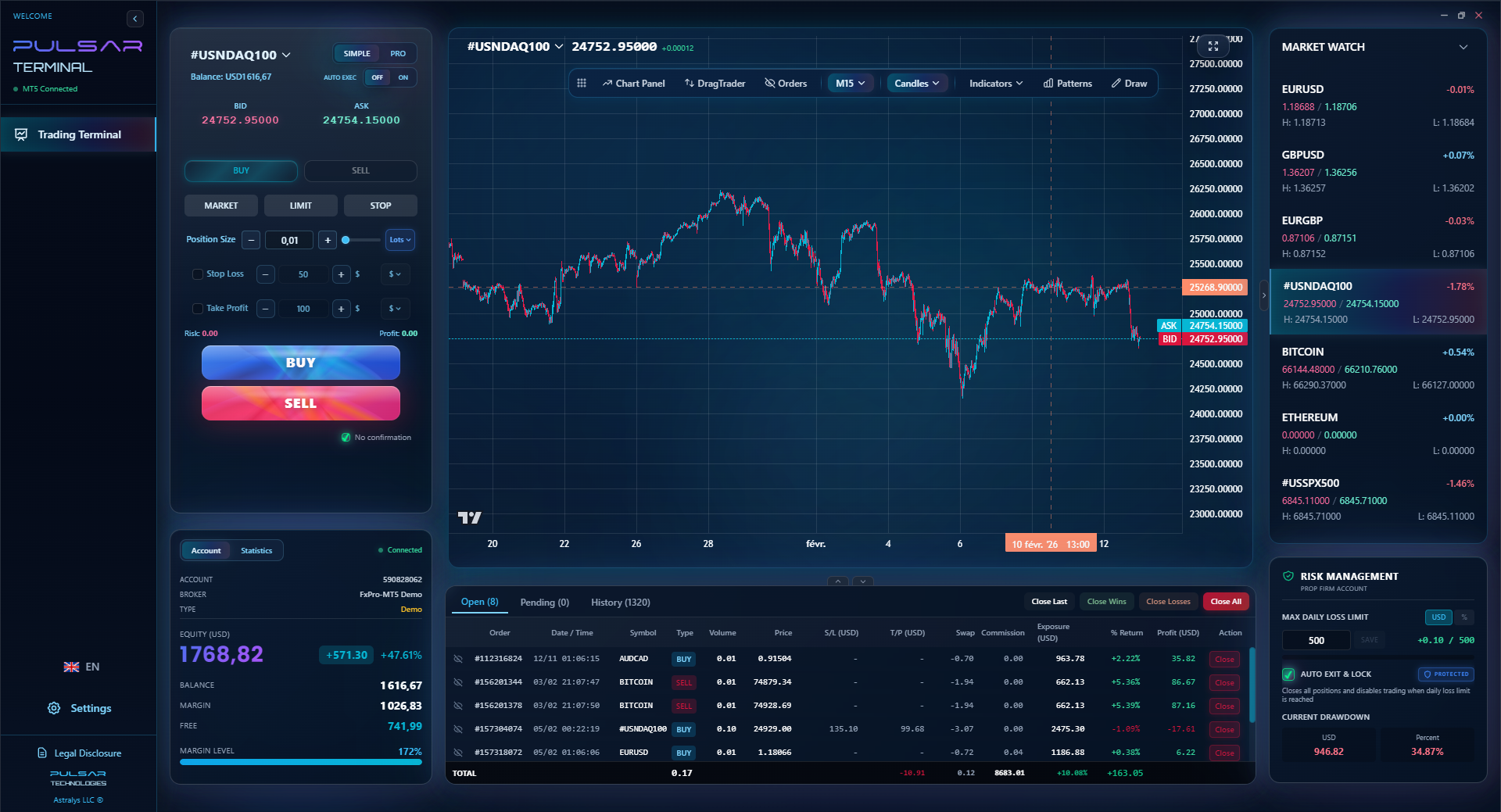
Managing complex multi-leg option strategies and their associated spot hedges requires precise order tools, which platforms like Pulsar Terminal provide directly on your MT5.
Pulsar Terminal
Công cụ MT5 tất-cả-trong-một: đặt lệnh kéo-thả, multi-TP/SL, trailing stop, grid trading, Volume Profile và bảo vệ prop firm. Hơn 1.000 trader sử dụng mỗi ngày.
If you're new to trading, hear this: Start with spot forex. Full stop. Learn what makes a currency pair move. Master your emotions with real, flowing P&L. Get comfortable with a basic scalping strategy or swing trade before you even think about derivatives.
Build a track record of six months of consistent, disciplined spot trading. Then, and only then, consider using options strategically for the two purposes I mentioned earlier: as insurance for your spot positions (Protective Put) or to generate modest income from them (Covered Call).
Never, ever trade options based on a 'signal' from Telegram or because someone posted a screenshot. The complexity is too high. You need to understand the 'Greeks' - how sensitivity to price (Delta), time (Theta), and volatility (Vega) affect your position. It's a three-dimensional chess game while spot forex is checkers.
Finally, keep careful records. Note the underlying asset price, the strike, the expiration, the premium paid, and the rationale. Review your losing trades ruthlessly. Was the underlying analysis wrong? Was the timing off? Was the premium too expensive? This logbook is what pulled me from a gambler's mindset to a trader's.
“My journey cost me about ₦450,000 in lost premiums before I learned to use options as a scalpel, not a hammer.”
For 95% of retail traders in Nigeria, the answer is no. The odds, costs, and psychological pressures are stacked heavily against you. They are a sophisticated tool for hedging and specific, high-conviction speculative plays, not a primary vehicle for wealth creation.
For the 5% with experience, discipline, and a solid spot trading foundation, they offer unique strategic advantages. They let you define your risk precisely, profit from volatility, and protect your capital in ways a simple stop loss can't.
My journey cost me about ₦450,000 in lost premiums and missed opportunities before I found my footing. The lesson wasn't cheap, but it was clear: master the underlying market first. Respect the complexity. Use options as a scalpel, not a hammer. In a market full of noise and get-rich-quick promises, that patience and respect for the craft is what separates a survivor from a statistic.
FAQ
Q1Are forex options legal in Nigeria?
Trading forex derivatives like options with international brokers is not explicitly illegal for individuals, but it operates in a regulatory grey area. The SEC Nigeria has warned against unlicensed investment platforms. The key is the broker's regulation, not the instrument itself. Always use brokers regulated by reputable foreign authorities (like FCA, CySEC, ASIC), but understand that as a Nigerian client, you may not have the same legal recourse as a resident in that regulator's country.
Q2What's the minimum capital needed to trade forex options?
It varies wildly by broker. Some binary platforms allow you to start with as little as $10 (₦15,000). For proper options on major platforms, you might need $500-$2000 (₦750k-₦3M) to trade sensibly and manage risk across multiple positions. My advice? Don't start with the minimum. Start with an amount you can afford to lose completely without affecting your life, and treat it purely as tuition for learning.
Q3What's the difference between forex options and binary options?
A standard forex option has a continuously changing value linked to the underlying asset. You can sell it before expiry, and your profit/loss can vary. A binary option (common in Nigeria's adverts) has a fixed payout (e.g., 80% return) if your prediction is correct at expiry, and a total loss of your premium if it's wrong. It's an all-or-nothing bet with terrible odds, often structured in the platform's favor.
Q4Can I use my MT4/MT5 for options trading?
The standard MetaTrader 4 or 5 platform from most retail brokers does not support true options trading. You might find some brokers offering 'digital options' or 'turbo options' as a plugin, but these are often binary-style products. For vanilla options, you typically need a broker's proprietary web platform or a specialized trading platform like Thinkorswim or Tradier.
Q5Which currency pairs are best for options trading?
Stick to the major pairs with high liquidity and tight spreads on the underlying market: EUR/USD, GBP/USD, USD/JPY, and XAU/USD (gold). These pairs will have the most liquid options markets (narrower bid/ask spreads on the options themselves). Avoid exotic pairs like USD/NGN for options - the lack of liquidity will make costs prohibitive.
Q6How do I manage risk with forex options?
- Define Risk Upfront: Your maximum loss is the premium paid. Never risk more than 2-5% of your capital on a single option premium. 2. Avoid Selling 'Naked' Options: Selling options without a hedge (like a covered call) carries unlimited risk. 3. Mind the Expiry: Shorter expiries decay faster. Don't buy weekly options unless you expect an immediate move. 4. Use Them as a Tool, Not a System: Integrate options into a broader strategy based on spot forex analysis, don't let options dictate your market view.
Bài học của Prof. Winston
Điểm chính:
- ✓Time decay accelerates in an option's final 48 hours.
- ✓A 60% win rate can still mean losing money on options.
- ✓Never risk more than 5% of capital on option premiums.
- ✓Use options for hedging, not as a primary strategy.
Bài viết này hữu ích thế nào?
Nhấp vào ngôi sao để đánh giá
Nhận định giao dịch hàng tuần
Phân tích & chiến lược miễn phí hàng tuần. Không spam.
Về tác giả
Olumide Adeyemi
Nhà tiên phong Giao dịch Tây Phi
Một trong những nhà đào tạo forex tích cực nhất tại Nigeria. 8 năm kinh nghiệm giao dịch từ Lagos. Chuyên về chiến lược vốn thấp và thử thách prop firm dành cho trader châu Phi.
Bình luận
Cảnh báo rủi ro
Giao dịch các công cụ tài chính tiềm ẩn rủi ro đáng kể và có thể không phù hợp với tất cả nhà đầu tư. Hiệu suất trong quá khứ không đảm bảo kết quả trong tương lai. Nội dung này chỉ mang tính chất giáo dục và không nên được coi là lời khuyên đầu tư. Hãy luôn tự nghiên cứu trước khi giao dịch.
Bạn cũng có thể thích

Cara Trading Forex Sukses: 7 Prinsip dari Trader Profesional
Cara trading forex sukses dengan 7 prinsip trader pro: manajemen modal, disiplin, journal trading, backtest. Data nyata, bukan janji profit palsu.
Jam Trading Forex Terbaik untuk Trader Indonesia: Panduan Lengkap dengan Tabel Waktu
Panduan jam trading forex untuk trader Indonesia. Tabel 4 sesi dunia, jam emas 20:00-00:00, sesi mana yang harus dihindari. Data akurat + tips dari trader berpengalaman.
Top 5 Sàn Forex Uy Tín Nhất 2026: Review Jujur dari Trader Indonesia
Top 5 sàn forex uy tín 2026 untuk trader Indonesia. Review jujur: spread, deposit, withdraw, dukungan lokal. Exness, XM, IC Markets & lebih.
Tải Pulsar Terminal
Tất cả các công cụ tính này được tích hợp trong Pulsar Terminal với dữ liệu thời gian thực từ tài khoản MT5 của bạn.
Tải Pulsar Terminal