


Thinking about signing up for a forex trading course in Chennai? You're probably wondering if it's worth the money, if you'll actually learn to trade, and most importantly, if you'll even be allowed to trade legally.
Rajesh Sharma
Chuyên gia Phân tích Forex Cao cấp ·  India
India
☕ 11 phút đọc
Bạn sẽ học được:
Thinking about signing up for a forex trading course in Chennai? You're probably wondering if it's worth the money, if you'll actually learn to trade, and most importantly, if you'll even be allowed to trade legally. I get it. The ads promise freedom and wealth, but the reality for Indian traders is wrapped in complex regulations and real financial danger. I've seen too many friends in Chennai lose money twice: first on a useless course, then in the markets. Let's cut through the hype. I'll walk you through what a good course should teach you, the strict legal boundaries you must respect, and how to separate education from exploitation.
Before we talk about a single pip or indicator, we have to talk about the law. This isn't boring paperwork; it's the difference between building a career and facing serious penalties. In India, forex trading isn't a free-for-all. It's tightly controlled by the Reserve Bank of India (RBI) and SEBI under the Foreign Exchange Management Act (FEMA).
Here’s the non-negotiable rule: As an Indian resident, you are only permitted to trade currency pairs that include the Indian Rupee (INR) on SEBI-regulated exchanges like the NSE or BSE. That means pairs like USD/INR, EUR/INR, GBP/INR, and JPY/INR are your legal playground. SEBI has also approved some cross-currency futures like EUR/USD on these exchanges.
The big trap? Trading the popular global pairs (EUR/USD, GBP/JPY, etc.) through an international broker like Exness or IC Markets. This is strictly prohibited. Those brokers aren't regulated by SEBI for this activity, and using them violates FEMA. The RBI maintains an 'Alert List' of such unauthorized entities. I've known traders who funded accounts with international brokers only to have their bank freeze the transaction and ask uncomfortable questions. It's not worth the risk.
A legitimate forex trading course in Chennai must start with this foundation. If an instructor glosses over this or suggests ways to 'work around' these rules using the Liberalised Remittance Scheme (LRS), walk away immediately. The LRS explicitly excludes margin trading for forex. Using it for that purpose can lead to penalties up to three times the transaction amount.

Warning: Any course or 'mentor' that encourages you to trade non-INR pairs via an offshore platform is leading you into illegal activity. Your first lesson in trading should be risk management, and the biggest risk in India is ignoring these regulations.

💡 Mẹo của Winston
The cost of your education is your first trade. Set a strict budget for any course as if it were a stop-loss. If the course can't demonstrate value within that 'risk capital,' cut the loss and move on.
So, what should you be paying for? A proper education builds from the ground up, focusing on survival first, profits second. Here’s the curriculum a worthwhile forex trading course in Chennai must cover.
The Absolute Fundamentals
This isn't just about defining a pip or a spread. It's about understanding how these costs eat into your returns on the low-volatility INR pairs you're allowed to trade. You need to learn how to calculate your position size for every single trade based on your account balance and risk tolerance. I can't stress this enough. Early in my career, I blew up a small account because I didn't use a position size calculator and traded too large on a USD/INR move that went against me.
Technical Analysis That Works
Forget about magical indicators. A good course teaches price action: support and resistance, trend lines, and basic chart patterns. It should show you how to use one or two indicators properly, like the RSI indicator for spotting overbought/oversold conditions or the MACD indicator for trend confirmation. The goal is to have a clear, repeatable process for finding trades, not a confusing mess of lines on a screen.
Risk and Psychology
This is where most courses fail, and it's the most important part. You must be taught:
- How to set a stop-loss on EVERY trade, no exceptions.
- The 1% rule (never risk more than 1% of your account on a single trade).
- How to handle a losing streak emotionally.
- The journaling process to review your trades.
A course that only shows you 'winning setups' is selling you a fantasy. Trading is about managing losses. I learned this the hard way after taking 7 losses in a row on EUR/INR futures. I was ready to quit. My journal showed me I was following my rules, but variance was against me. The next 5 trades were winners. Without that psychological foundation, I would have blown up my account in frustration.
Strategy and Execution
Finally, you should be taught a complete strategy. Will it be scalping the small moves in the INR markets, or swing trading over a few days? You need to know the entry, exit, and management rules cold. A pro tip from my experience: On Indian exchanges, liquidity can thin out at certain times, widening spreads. A good course will teach you the best market hours to trade USD/INR to avoid getting caught by this.

Pro Tip: Ask any course provider for a detailed syllabus. If it's heavy on 'secret formulas' and light on concrete topics like 'position sizing' and 'trade journaling,' it's a red flag. You're buying education, not hope.
“A course that only shows you 'winning setups' is selling you a fantasy. Trading is about managing losses.”
Let's talk numbers. In Chennai, you'll see a wild range. You can find a basic 5-day workshop for as low as ₹2,950. On the other end, 'premium mentorship' programs can run from ₹10,000 to a staggering ₹50,000. One-on-one coaching might charge ₹700 to ₹1,000 per hour.
Here’s my blunt take: A higher price does not mean better education. I once paid ₹25,000 for a 'masterclass' that was 80% motivational speeches and 20% recycled YouTube content. The real value isn't in the price tag; it's in the structure and post-course support.
What you should get for your money:
- Structured, progressive lessons (not just a video dump).
- Access to a mentor for Q&A, not just a pre-recorded lecture.
- Practical assignments where you analyze charts and plan trades without risking money.
- A clear explanation of the legal Indian framework.
What is often a waste of money:
- 'Signal groups' that come with the course. If you're paying to learn, you shouldn't be paying for someone else's trades. This creates dependency.
- Guarantees of profit. This is impossible and unethical.
- Overemphasis on proprietary software or tools you have to keep paying for.
A better investment than many expensive courses? Start with a demo account on a SEBI-regulated broker's platform. Use free resources to learn the basics of EUR/USD guide principles (which apply to trends in any pair), then apply that knowledge to USD/INR. Practice for 3-6 months. You'll learn more from your own documented mistakes than from most generic courses. After that, if you need guidance, a focused mentorship on your specific weaknesses will give you more bang for your buck than a generic beginner course.
Your course should teach you how to use the platforms you're actually allowed to trade on. Forget MetaTrader for a second (though it's useful for learning concepts). For legal forex trading in India, you're looking at SEBI-registered stockbrokers. These are familiar names:
| Broker | Key Feature | Best For |
|---|---|---|
| Zerodha Kite | Low brokerage, clean interface | Beginners for its simplicity |
| Upstox Pro | Competitive pricing | Active traders |
| Angel One | Extensive research tools | Traders who want fundamental analysis |
| ICICI Direct / HDFC Securities | Integrated banking | Those who want everything in one place |
These platforms offer currency derivatives (futures and options) on INR pairs. The trading experience is different from spot forex. You're dealing with contracts with expiry dates. The spreads and fees are structured differently. A quality forex trading course in Chennai must dedicate time to explaining these instruments and how to trade them on these specific Indian platforms.
Now, you'll hear about international brokers like XM review (min. deposit $5) or IC Markets review (tight spreads). They offer MT4/MT5, which are excellent platforms. However, remember the legal warning. Using them to trade non-INR pairs is illegal for you as an Indian resident. Some might offer INR accounts, but they are not regulated by SEBI for forex trading. Your funds are not protected under Indian law. The convenience and low spread definition are not worth the regulatory risk and potential for a margin call from your bank.
Stick to the regulated path. Learn on a demo of MT5 to understand global platforms, but execute your live trades only through your Zerodha or Upstox account on the permitted pairs. This separation is crucial for your long-term safety in the market.
💡 Mẹo của Winston
Before paying for a course, demand to see the instructor's real, long-term trade journal (with losses included). If they only show perfect wins, they're an actor, not a trader.
“In India, the biggest trading risk isn't the market - it's ignoring the RBI and SEBI regulations.”
Chennai has great educators, but it also has its share of opportunists. Here’s how to spot the bad ones.
1. The 'Get Rich Quick' Vibe: Any marketing that focuses on luxury cars, vacations, or 'quitting your job in 3 months' is selling a dream, not a skill. Real trading is a grind.
2. No Discussion of Risk or Losses: If every chart shown is a perfect winner, they're lying. I’ll show you one of my old trades: I went long on GBP/INR at 102.35, expecting a bounce. It didn't. My stop-loss was at 102.15. I lost 20 pips. A good course uses losses as teaching moments.
3. Pressure to Trade Live Immediately: You should be encouraged to demo trade for months. A course that pushes you to fund an account quickly, especially with a specific (often offshore) broker, may be getting a kickback. Your readiness isn't determined by their sales target.
4. Over-Complex 'Proprietary' Systems: If it requires 10 custom indicators and looks like a spaceship dashboard, it's probably designed to confuse you into thinking it's valuable. Simple strategies are strong strategies.
5. Lack of Transparency on Legality: This is the biggest one. If they avoid direct questions about FEMA, SEBI, and which brokers to use, run. A responsible educator's first duty is to keep you on the right side of the law.
Warning: Be wary of courses that are really just funnels for unregulated broker referrals or 'prop firm' challenges that require you to trade illegal instruments. The structure might seem exciting, but the foundation is rotten.
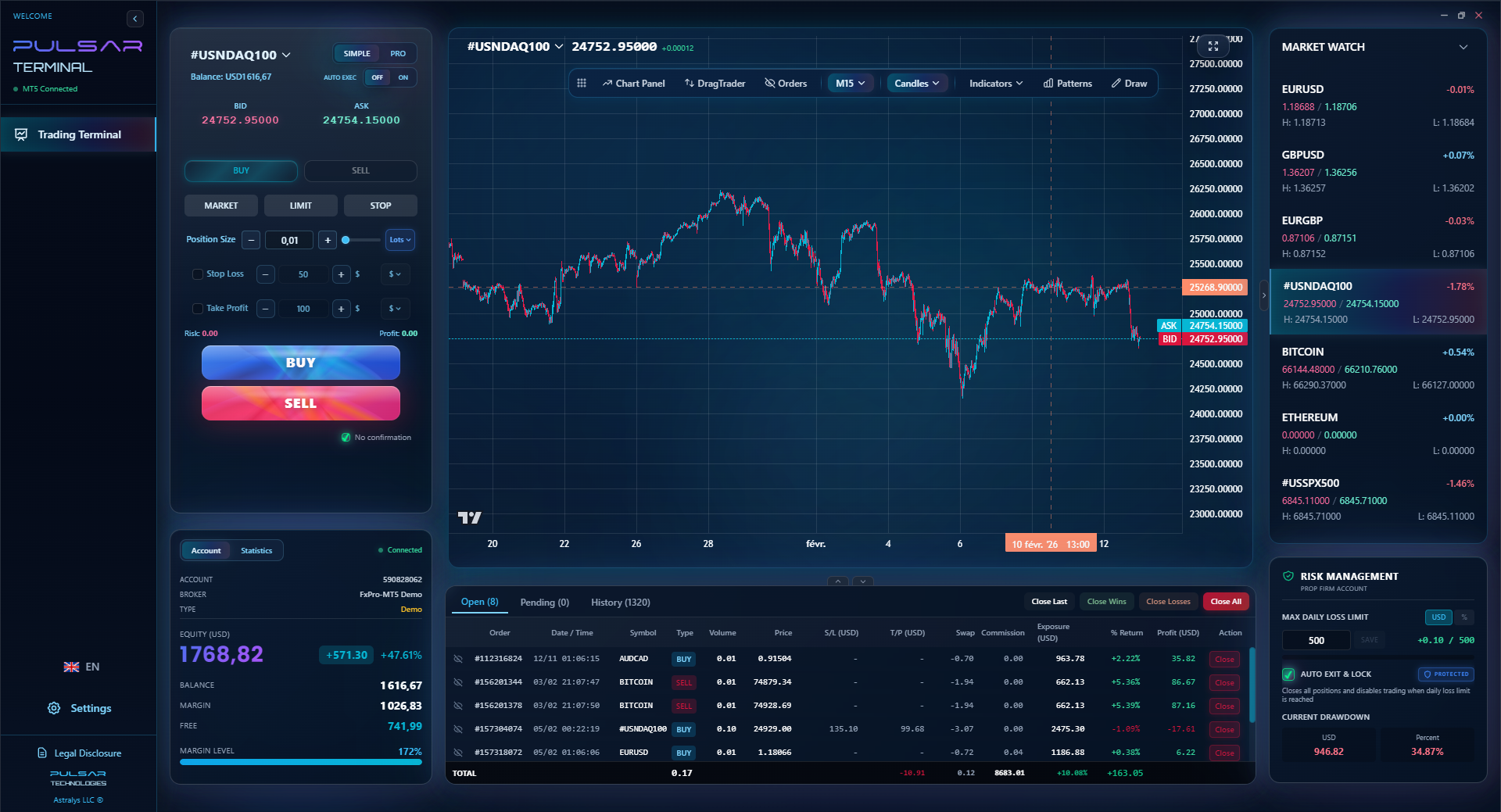
When you're ready to trade seriously on MT5, managing multiple targets and stops manually becomes a huge hassle; Pulsar Terminal automates all that with drag-and-drop ease.
Pulsar Terminal
Công cụ MT5 tất-cả-trong-một: đặt lệnh kéo-thả, multi-TP/SL, trailing stop, grid trading, Volume Profile và bảo vệ prop firm. Hơn 1.000 trader sử dụng mỗi ngày.
Honestly, you can learn 80% of what you need for free. I'm not saying courses are worthless, but you should start here before spending a rupee.
Step 1: Master the Basics with Free Resources. Understand what a pip definition is, what use really does (it magnifies losses as fast as gains), and how to read a candlestick chart. Babypips.com has a free 'School of Pipsology' that's legendary for a reason.
Step 2: Paper Trade on an Indian Platform. Open a demo account with Zerodha or Upstox. Don't touch international broker demos yet - it creates bad habits for your context. Trade USD/INR futures. Your goal for the first month isn't profit; it's to not blow up the demo account. Practice placing orders, setting stops, and getting a feel for how the price moves.
Step 3: Develop a Simple Plan. Choose one concept. Maybe it's trading bounces off a key moving average. Maybe it's swing trading using daily chart support and resistance. Document every trade: why you took it, where your stop was, where you took profit (or loss), and what you felt.
Step 4: Seek Focused Help. After 100 demo trades, you'll know your weak spots. Is it exiting trades too early? Is it misreading volatility? Now consider paying for a course or a coach, but one that specifically addresses your problem. This is infinitely better than paying for a generic beginner course that covers things you already know.
This path requires more discipline, but it builds self-reliance. The trader who needs a guru's signal for every trade has already failed. The trader who can analyze, execute, and review on their own has a real chance.
“The trader who needs a guru's signal for every trade has already failed. Self-reliance is the only true edge.”
So, should you enroll in a forex trading course in Chennai? It depends.
Yes, if:
- The provider is transparent about Indian regulations.
- The syllabus clearly outlines the topics I mentioned (risk management, psychology, a complete strategy).
- They offer a trial class or a money-back period for the first few sessions.
- You can talk to past students who aren't just 'success stories' but can describe a balanced learning experience.
- It fits your budget without putting you under financial stress. Never take a loan for a trading course.
No, if:
- You're expecting it to be a shortcut to income. It's the start of a long journey.
- You haven't tried self-education first. You won't know the right questions to ask.
- The main selling point is the instructor's lavish lifestyle.
My final piece of advice? Treat the cost of the course as your first trade. Define your risk. What's the maximum you're willing to lose on this education if it doesn't work out? That's your budget. Manage it like a trader.
The right education is a tool, not a magic wand. It gives you the map, but you still have to walk the path, face the storms, and navigate the markets within the strict, safe harbor of Indian law. Do that, and you give yourself a real fighting chance.
FAQ
Q1Is forex trading legal in India after taking a course in Chennai?
Yes, but only in a specific way. Forex trading is legal for Indian residents only through SEBI-regulated brokers (like Zerodha, Upstox) and only for currency pairs that include the Indian Rupee (INR), such as USD/INR or EUR/INR. Trading major global pairs like EUR/USD through international platforms remains illegal under FEMA, regardless of any course you take.
Q2What is the average cost of a good forex trading course in Chennai?
Prices vary wildly. You can find short workshops for under ₹3,000, while complete courses range from ₹10,000 to ₹50,000. Don't equate price with quality. A ₹15,000 course with a solid syllabus on risk management and Indian regulations is far better value than a ₹40,000 course promising 'secret strategies' and ignoring legal realities.
Q3Can I get a job after completing a forex trading course?
Directly, it's very unlikely. Most trading jobs at banks or funds require finance degrees (like an MBA or CFA). A course certifies education, not proficiency. Your goal should be to learn to manage your own capital. Some prop trading firms operate, but be extremely cautious and ensure they use SEBI-compliant instruments and aren't just charging you fees for a 'challenge'.
Q4What is the most important thing a forex course should teach?
Risk and money management. This is non-negotiable. Before any profitable strategy, you must learn how to size your positions (use a position size calculator), set stop-losses, and protect your capital. A course that jumps straight to 'winning setups' without dedicating significant time to survival skills is failing you.
Q5Are online forex trading courses from Chennai institutes effective?
They can be, if they are structured well. Effectiveness depends less on the medium (online vs. classroom) and more on the content and mentorship. Look for courses with interactive elements like live Q&A sessions, assignment reviews, and access to a community or mentor. A pure video library is often no better than free YouTube content.
Q6What trading platform will I learn on in a Chennai course?
A reputable course should primarily teach you using platforms you can legally trade on in India, like Zerodha Kite or Upstox Pro. They may also use MetaTrader 5 (MT5) for teaching charting and analysis concepts, as it's the global standard. Be wary if a course only teaches you an obscure, proprietary platform they're trying to sell you.
Q7How long does it take to become profitable after a course?
There is no guaranteed timeline. Anyone who gives you one is lying. It typically takes 1-2 years of consistent practice, journaling, and losing small amounts of money to learn the psychological discipline required. A course gives you the foundation, but profitability comes from screen time and experience that no class can provide.
Bài học của Prof. Winston
Điểm chính:
- ✓Trade only SEBI-regulated INR pairs (USD/INR, EUR/INR).
- ✓Risk a maximum of 1% of your capital per trade.
- ✓Demo trade for 3-6 months before using real money.
- ✓A trading journal is more important than any indicator.
Bài viết này hữu ích thế nào?
Nhấp vào ngôi sao để đánh giá
Nhận định giao dịch hàng tuần
Phân tích & chiến lược miễn phí hàng tuần. Không spam.
Về tác giả
Rajesh Sharma
Chuyên gia Phân tích Forex Cao cấp
Hơn 10 năm giao dịch tại thị trường Ấn Độ và Nam Á. Bắt đầu với phái sinh tiền tệ trên NSE trước khi chuyển sang forex quốc tế. Chuyên về cặp USD/INR và các cặp tiền thị trường mới nổi.
Bình luận
Cảnh báo rủi ro
Giao dịch các công cụ tài chính tiềm ẩn rủi ro đáng kể và có thể không phù hợp với tất cả nhà đầu tư. Hiệu suất trong quá khứ không đảm bảo kết quả trong tương lai. Nội dung này chỉ mang tính chất giáo dục và không nên được coi là lời khuyên đầu tư. Hãy luôn tự nghiên cứu trước khi giao dịch.
Bạn cũng có thể thích

Cara Trading Forex Sukses: 7 Prinsip dari Trader Profesional
Cara trading forex sukses dengan 7 prinsip trader pro: manajemen modal, disiplin, journal trading, backtest. Data nyata, bukan janji profit palsu.
Jam Trading Forex Terbaik untuk Trader Indonesia: Panduan Lengkap dengan Tabel Waktu
Panduan jam trading forex untuk trader Indonesia. Tabel 4 sesi dunia, jam emas 20:00-00:00, sesi mana yang harus dihindari. Data akurat + tips dari trader berpengalaman.
Top 5 Sàn Forex Uy Tín Nhất 2026: Review Jujur dari Trader Indonesia
Top 5 sàn forex uy tín 2026 untuk trader Indonesia. Review jujur: spread, deposit, withdraw, dukungan lokal. Exness, XM, IC Markets & lebih.
Tải Pulsar Terminal
Tất cả các công cụ tính này được tích hợp trong Pulsar Terminal với dữ liệu thời gian thực từ tài khoản MT5 của bạn.
Tải Pulsar Terminal