


I was short two contracts on the ES (E-mini S&P 500) at 4525.75.

James Mitchell
Chuyên gia Phân tích Giao dịch Cao cấp
☕ 12 phút đọc
Bạn sẽ học được:

I was short two contracts on the ES (E-mini S&P 500) at 4525.75. It was a Thursday afternoon, and the market was grinding lower. My prop firm dashboard showed I was $800 in the green for the day, comfortably past my daily target. Then, the Fed speaker hit the wires. A single hawkish sentence. The chart spiked 12 points in 90 seconds. My stop got filled at 4537.50. Just like that, I’d blown through my max daily loss on the account. Game over. Reset fee: $85. That’s the reality of trading with futures prop firms. It’s not free money. It’s a high-stakes test where the house always has an edge, and understanding that edge is the only way you come out ahead.
Let's cut through the marketing. A futures prop firm isn't a charity or a talent scout. It's a business with a very clever model. You pay them a fee (call it an evaluation, a challenge, whatever) for the chance to trade their capital. If you pass their rules, you get a simulated account that mimics real trading. Make profits there, and you get a share of those simulated profits. The firm's risk? Almost zero. They collect fees from thousands of hopefuls. Their data shows only about 5-10% pass the first eval. Of everyone who buys a challenge, a measly 7% ever see a payout. The math is brutally in their favor.
These firms have exploded because they found a regulatory loophole. They don't hold your money as a client. You're paying for an educational or evaluation service. This keeps them outside the direct watch of the CFTC and NFA, unlike your standard broker like AMP Futures which is heavily regulated. They trade their own proprietary capital, so the Volcker Rule and other bank trading restrictions don't apply. It's a gray area, but it's the landscape we're trading in.
The appeal is obvious. You get access to size without risking your life savings. A $50,000 or $100,000 futures account trading the ES or NQ would require serious capital if it was your own. Here, you might pay a $150 evaluation fee for a shot at it. But remember, you're not just trading the market. You're trading against their rulebook.

💡 Mẹo của Winston
Your first prop firm challenge isn't a trading mission. It's a reconnaissance mission. Your goal is to learn their systems and rules, not get funded. Budget for two fails minimum.
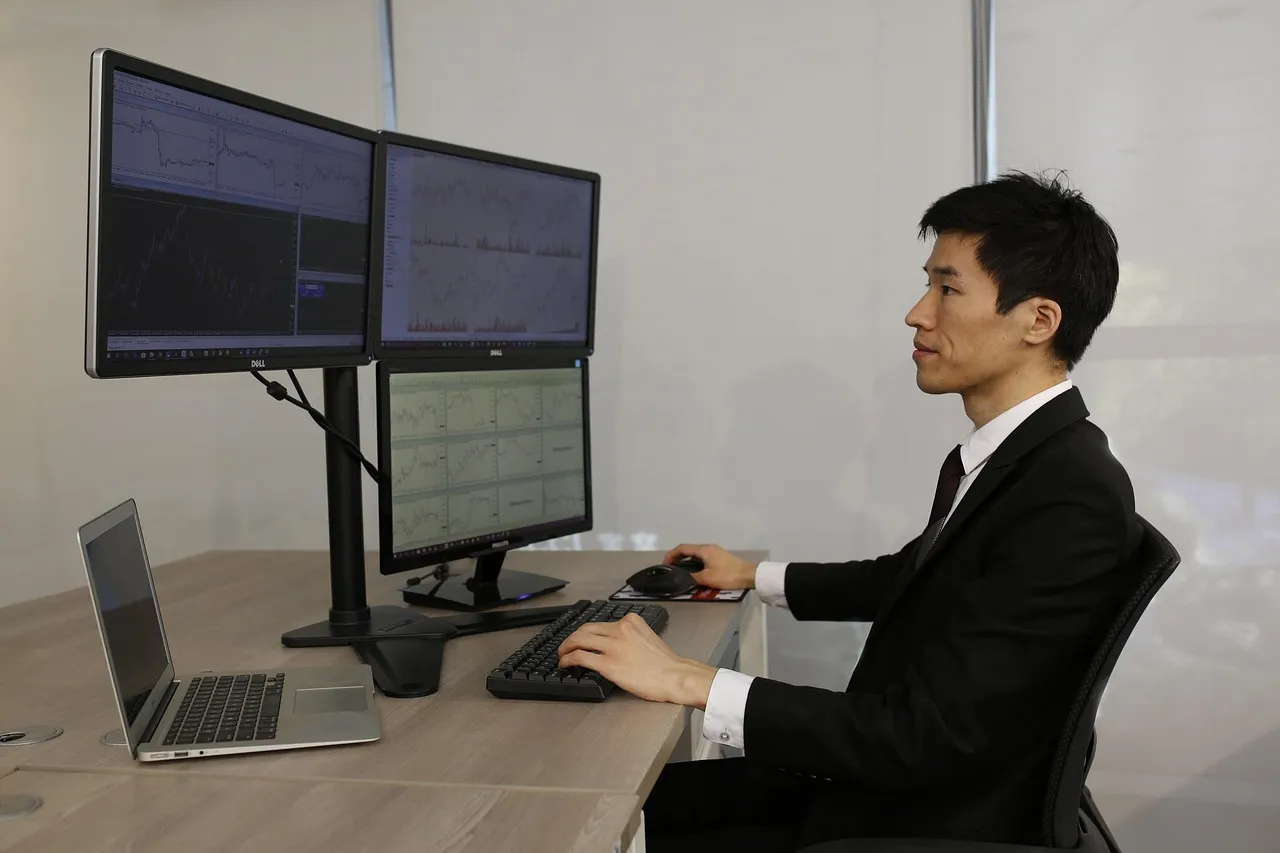
“You're not just trading the market. You're trading against their rulebook.”
When you look at a prop firm's pricing page, you're seeing maybe 60% of the picture. Here’s what they don’t put in the big, bold font.
The Upfront & Hidden Fees
First, the evaluation fee. This is your buy-in. For futures, it typically runs:
- $100 - $200 for a $25k-$50k account size.
- $250 - $400+ for a $150k-$300k account.
Some firms like Topstep or Apex have moved to a monthly subscription model for their challenges, say $49 to $167 per month. Seems cheaper upfront, but it adds up if you're stuck in the eval phase for months.
Then come the other fees.
- Activation Fee: You passed! Now pay $85-$105 a month just to access your "funded" simulated account. Some firms are ditching this now, but it was standard.
- Reset Fee: You blew your daily loss limit? That'll be another $85 to restart the challenge. I've paid this more times than I care to admit.
- Data Fees: This is the silent killer. You want to trade the ES? You need CME real-time data. That's about $10-$15/month. Add CBOE for volatility products? Another $5-$8. If your account goes live, you may get bumped to "professional" data fees, which can be around $135/month total.
- Commissions: They take this right off your trades. Expect $0.50 to $2.00 per contract, per side. So a round turn on a micro ES might cost you $1.00 to $4.00. It doesn't sound like much, but for a scalping strategy placing 20 trades a day, it annihilates your edge.

Warning: Never look at the evaluation fee in isolation. Add up the data, the potential resets, and the commissions. Your $150 challenge can easily become a $500 venture before you make a single profitable trade.
The Profit Split Illusion
They advertise "Up to 90% Profit Split!" Sounds great. The reality is often tiered. You might start at 70/30 in your favor. After you've banked $10,000 in simulated profits, maybe it goes to 80/20. Hit $25,000, then 90/10. Only a tiny fraction of traders reach the top tier. Most firms take a flat 80/20 or 70/30 cut. Always read the split schedule in the FAQ, not the homepage banner.

“A $150 challenge can easily become a $500 venture before you make a single profitable trade.”
This is the core of the game. You are not just trading to make money. You are trading to avoid breaking their specific, often arbitrary, rules. Your primary analysis isn't of the chart; it's of your dashboard.
The holy trinity of prop firm rules is:
- Daily Loss Limit: Usually 3-5% of the account's starting balance. Hit it, and your day is over. Account may be suspended or failed. This forces you to have insane risk discipline. A $50k account means a $1,500-$2,500 max daily loss. One bad NQ trade can wipe that.
- Maximum Drawdown: The total loss you can incur from the account's starting equity or its peak equity. This is the big one. It's often 6-10%. It can be "trailing," meaning it locks in as your equity rises, or "static," based on the starting balance. A trailing drawdown on a growing account is brutally difficult.
- Profit Target: The amount you need to make in the evaluation phase to get funded. Usually 8-10%.
Here’s where I got burned, personally. In early 2023, I was trading a $100k eval with Apex. I had a great run, up about $6,000. My trailing max drawdown was at $94,000 (6% down from the peak). I took a small, 1-lot ES trade as a swing trade idea. I was wrong. It went against me 15 points overnight. No big deal, right? Only $750 loss on a $106,000 account. Wrong. My equity dipped to $93,950. I violated the max drawdown rule by $50. Account failed. All that work, gone over fifty bucks. I didn't respect the rule as the supreme law.

Pro Tip: Your first tool before trading should be a position size calculator. Not just any calculator, but one where you input the prop firm's daily loss limit. Your position size should be so small that you can withstand multiple losing trades without ever sniffing that daily limit. This is non-negotiable.

“A $150 challenge can easily become a $500 venture before you make a single profitable trade.”
With dozens of firms out there, how do you pick one that won't vanish with your fee or make it impossible to get paid?
Look for Transparency and Track Record:
- Payout Proof: A firm like Apex that has publicly paid out over half a billion dollars has a business model that relies on consistent payouts to attract traders. They're not a scam; they're a well-oiled machine. Newer firms with flashy websites but no verifiable payout history are a huge risk.
- Clear, Consistent Rules: The rulebook should be easy to find and unambiguous. Avoid firms that constantly change rules or have "gotcha" clauses.
- Platform Choice: Most US futures prop firms use NinjaTrader, Tradovate, or Rithmic. Make sure you're comfortable with the platform. If you love TradingView for analysis, see if they offer integration.
The Regulatory Cloud: Remember, this is an unregulated space under scrutiny. In Feb 2024, MetaQuotes (maker of MT4/5) cracked down, causing chaos. An estimated 80-100 prop firms closed in 2023-2024. The industry is consolidating. I'd stick with the established, larger players right now - the ones most likely to navigate coming regulatory changes. Think of it like picking a broker; you want the solidity of an Exness or Pepperstone, not the sketchy offshore bucket shop.
Compare the Real Numbers:
| Feature | Firm A (Typical) | Firm B (Better Deal) | Why It Matters |
|---|---|---|---|
| Profit Split | Starts at 70%, scales to 90% | Flat 80% from Day 1 | Simplicity. You know exactly what you get. |
| Drawdown Type | Trailing from peak equity | Static from starting balance | Static is infinitely easier to manage. |
| Activation Fee | $99/month | None | Saves you money immediately upon passing. |
| Data Fees | Charged separately ($15+/mo) | Included in fee | One less hidden cost to worry about. |
My advice? Start small. Buy the cheapest evaluation for the smallest account. Your goal isn't to get rich on the first try. Your goal is to learn the process, feel the psychological pressure of their rules, and see if their systems work for you. Consider it a tuition fee.
💡 Mẹo của Winston
If you feel your heart rate increase when a trade moves 2 points against you, your position size is too large. Cut it in half. Then cut it in half again.
“The psychological toll is real. Knowing a single bad hour can cost you weeks of work and another fee creates a tightness that leads to mistakes.”
Your usual trading strategy probably needs a major overhaul for prop firms. The rules demand a specific approach.
Forget Hero Trades: The 10:1 reward-to-risk home run trade is your enemy. Why? Because the drawdown limit is absolute. A trade that goes 5% against you before roaring back 50% in your favor will fail your account on the way down. You need strategies with high win rates and tight stops. Think mean reversion, scalping support/resistance, not trend-following marathons.
Risk Management is Your Strategy: I can't stress this enough. Your trade size should be microscopic. On a $50k account, a 5-point stop on the ES (worth $250) means you can only take 6 losing trades before hitting a $1500 daily loss limit. So maybe you trade one micro ES contract (MES) where a 5-point stop is only $25. Now you can take 60 losing trades. It sounds ridiculous, but it gives you breathing room. This is the single biggest adjustment successful prop traders make.
The Two-Phase Mindset:
- Evaluation Phase: This is a job interview. Your sole objective is to hit the profit target without breaking a single rule. Be conservative. Take profits early. Once you're up 3-4%, consider stopping for the day. Green is green.
- Funded/Paidout Phase: The rules often relax slightly (higher drawdown, no profit target). Now you can think about scaling and performance. But the core discipline must remain.
The psychological toll is real. Knowing a single bad hour can cost you weeks of work and another fee creates a tightness in your chest that leads to mistakes. You have to detach. This is why automation tools are a godsend. Using a platform that can auto-set your stop loss the second you enter a trade is crucial. It removes emotion.

Example: Let's say you're in a $100k account with a 5% daily loss limit ($5,000). You're trading the NQ (NQ, $20 per point). A 50-point move against you is $1,000 per contract. If you size in with 2 contracts, a single 50-point adverse move eats 40% of your daily limit. That's insane pressure. Trade 1 micro-NQ (MNQ) contract instead. That same 50-point move is only $100. The pressure evaporates. You can think clearly.
“The psychological toll is real. Knowing a single bad hour can cost you weeks of work and another fee creates a tightness that leads to mistakes.”
You've done it. You passed the eval, traded the funded account, and now have a $5,000 profit split coming your way. How does it work?
Payout Process: Most firms have a payout request period (e.g., once every two weeks). You request it from your dashboard. Payout speed varies wildly:
- Crypto (USDT, BTC): Fastest. Often within 24-48 hours. This is why many traders use it.
- Bank/Wire Transfer: 3-7 business days.
- Fintech (Wise, PayPal): 1-3 days.
Always check the firm's payout policy. Some have a minimum profit threshold before your first payout (e.g., $1,000 in trader profit). Others pay out any amount.
The Tax Bomb (USA Specific): This is critical. In the eyes of the IRS, your profit share is ordinary income, not capital gains. You will receive a 1099-MISC or 1099-NEC from the prop firm at the end of the year.
Let me give you a real, painful example from my 2022 taxes. I received $42,750 in total payouts from two firms. It was glorious. Come tax season, that $42,750 was added to my other income. I'm a sole proprietor, so I had to pay both the employee and employer portion of Social Security and Medicare (15.3% self-employment tax) on top of my income tax bracket. My effective tax rate on that prop income was nearly 40%. I had not set aside nearly enough. I owed the IRS a check that made me physically ill. You must set aside 30-40% of every single payout for taxes. Do not touch that money. Consider it already gone.
Also, your trading losses inside the prop firm account are not deductible on your personal taxes. You didn't risk your capital, the firm did. You only claim the income you receive. This is a huge disadvantage compared to trading your own account, where losses can offset gains.

Managing the strict daily loss limits of a prop firm is a constant manual headache, which is why tools like Pulsar Terminal that can automate stop-loss and breakeven orders directly on your MT5 chart are a game-saver.
Pulsar Terminal
Công cụ MT5 tất-cả-trong-một: đặt lệnh kéo-thả, multi-TP/SL, trailing stop, grid trading, Volume Profile và bảo vệ prop firm. Hơn 1.000 trader sử dụng mỗi ngày.

“In the eyes of the IRS, your profit share is ordinary income, not capital gains. This is a tax bomb waiting to happen.”
The party can't last forever. The CFTC and other regulators are circling. The current "educational service" model is being questioned. Are these firms actually Commodity Trading Advisors (CTAs) in disguise? Should they be registered?
We're already seeing a "Great Migration" towards more transparent, potentially regulated futures models. The closure of 80-100 firms was a market correction. The prediction is that by 2030, maybe three major players will control 80% of the market.
What this means for you:
- Stick with the giants. Firms with a long payout history and legal teams are more likely to survive regulatory shifts.
- Read the Terms of Service updates. They might change rules due to regulatory pressure.
- Don't rely on this as a forever career. The landscape in 2028 could look completely different. Use prop firms as a capital-building tool to eventually trade your own account, where you control all the rules.
The core truth remains: prop firms are a fantastic tool for disciplined traders who lack capital. They teach brutal risk management. But they are a business designed to profit from your dreams. Go in with your eyes open, trade tiny, respect the rules like gospel, and always, always do the math. That 7% payout club is small for a reason. With the right approach, you can be in it.
Finally, remember this is a performance game. Managing multiple trades, stops, and tracking your daily loss against a firm's dashboard is a hassle. This is where the right tools separate the survivors from the failed accounts. Discipline isn't just mental; it's systemic.
💡 Mẹo của Winston
The day you receive your first payout, open a separate savings account and deposit 35% of it. Do not touch it. The tax bill always arrives.

FAQ
Q1Are futures prop firms legal in the United States?
Yes, but they operate in a regulatory gray area. They structure themselves as educational or evaluation services trading their own capital, which typically avoids direct oversight from the CFTC/NFA that applies to brokers managing client funds. This model is legal but is facing increasing scrutiny.
Q2What is the typical profit split from a futures prop firm?
Most offer splits between 70% and 80% for the trader. Some use tiered systems starting at 70/30 and scaling to 90/10 after you achieve certain profit milestones. A flat 80/20 split is common and transparent. Always read the specific split schedule, as the "up to 90%" headline is often a best-case scenario.
Q3What's the single biggest mistake traders make with prop firms?
Trading too large. They see a $100,000 account and trade 3-4 lots, forgetting the daily loss limit is only $3,000-$5,000. A few bad trades blow the account. You must trade micro contracts (MES, MNQ) and use a position size calculator based on the firm's loss limits, not your ego.
Q4How are payouts from prop firms taxed in the US?
As ordinary income (1099-NEC/MISC), not capital gains. This is crucial. You'll pay income tax plus self-employment tax (about 15.3%) on every dollar received. Set aside 30-40% of each payout immediately. Your trading losses within the prop account are not tax-deductible.
Q5What's the difference between a trailing and static drawdown?
A static drawdown is a fixed loss limit from your account's starting balance (e.g., never go below $94,000 on a $100k account). A trailing drawdown locks in as your equity rises (e.g., never draw down more than 6% from your peak equity). Trailing is far more difficult and is the reason many accounts fail after a good start.
Q6Should I start with a forex or a futures prop firm?
Futures. The market structure is more transparent (centralized on the CME/CBOT), there's no dealing desk nonsense, and the rules are cleaner. Forex prop firms often have wider spreads and more opaque pricing. For learning pure price action, futures are superior. Check our XAU/USD guide to see how futures on gold compare to spot forex.
Q7Can I use my own trading strategy, like scalping?
Yes, but you must adapt it to the rules. Scalping can work well due to its tight stops, but high commission costs can kill your edge. You must factor in the per-trade fees. Strategies that require wide stops to work (like long-term trend following) are often incompatible with strict daily loss and drawdown limits.
Bài học của Prof. Winston
Điểm chính:
- ✓Only 7% of challenge buyers ever get a payout.
- ✓Trade micro contracts (MES, MNQ) to survive drawdown rules.
- ✓Set aside 35% of every payout for taxes immediately.
- ✓A trailing drawdown is your strategy's worst enemy.
- ✓Choose firms with a long public payout history.
Bài viết này hữu ích thế nào?
Nhấp vào ngôi sao để đánh giá
Nhận định giao dịch hàng tuần
Phân tích & chiến lược miễn phí hàng tuần. Không spam.
Về tác giả
James Mitchell
Chuyên gia Phân tích Giao dịch Cao cấp
Hoạt động tại New York với hơn 9 năm kinh nghiệm giao dịch. Tập trung vào các cặp USD chính, thử thách prop firm và bối cảnh pháp lý tại Mỹ.
Bình luận
Cảnh báo rủi ro
Giao dịch các công cụ tài chính tiềm ẩn rủi ro đáng kể và có thể không phù hợp với tất cả nhà đầu tư. Hiệu suất trong quá khứ không đảm bảo kết quả trong tương lai. Nội dung này chỉ mang tính chất giáo dục và không nên được coi là lời khuyên đầu tư. Hãy luôn tự nghiên cứu trước khi giao dịch.
Bạn cũng có thể thích

Cara Trading Forex Sukses: 7 Prinsip dari Trader Profesional
Cara trading forex sukses dengan 7 prinsip trader pro: manajemen modal, disiplin, journal trading, backtest. Data nyata, bukan janji profit palsu.
Jam Trading Forex Terbaik untuk Trader Indonesia: Panduan Lengkap dengan Tabel Waktu
Panduan jam trading forex untuk trader Indonesia. Tabel 4 sesi dunia, jam emas 20:00-00:00, sesi mana yang harus dihindari. Data akurat + tips dari trader berpengalaman.
Top 5 Sàn Forex Uy Tín Nhất 2026: Review Jujur dari Trader Indonesia
Top 5 sàn forex uy tín 2026 untuk trader Indonesia. Review jujur: spread, deposit, withdraw, dukungan lokal. Exness, XM, IC Markets & lebih.
Tải Pulsar Terminal
Tất cả các công cụ tính này được tích hợp trong Pulsar Terminal với dữ liệu thời gian thực từ tài khoản MT5 của bạn.
Tải Pulsar Terminal