


I remember the trade that made me question everything.

Olumide Adeyemi
Nhà tiên phong Giao dịch Tây Phi ·  Nigeria
☕ 10 phút đọc
Bạn sẽ học được:
I remember the trade that made me question everything. It was late 2024, and I was short on USD/NGN with a broker that promised 'local support.' The CBN announced new FX guidelines, and the market gapped against me hard. My stop-loss? It was ignored, executed 50 pips worse than my price. I lost NGN 120,000 in seconds. That's when I realized the broker's regulation - or lack of it - was the real risk. It pushed me to properly vet international brokers like XM. Trading with them isn't just about low spreads; it's about understanding whose rules you're actually playing by, especially with Nigeria's new ISA 2025 law now in effect.
Let's cut through the noise. The biggest question for any Nigerian trader using XM is: "Who's watching them for me?" The answer is layered, and it changed in March 2025.
XM is a global broker. Nigerian clients are onboarded through XM Global Limited, regulated by the Financial Services Commission (FSC) in Belize. It's a real license (No. 000261/397), but let's be honest, it's not top-tier like ASIC or the UK's FCA. Your funds are segregated, and you get negative balance protection, which is crucial. But the primary regulator is offshore.
Now, here's the Nigerian side. For years, retail forex was in a grey area. The SEC said it wasn't regulated. That changed with the Investments and Securities Act (ISA) 2025. This law makes it illegal for anyone to operate an online forex trading platform in Nigeria without registering with the SEC Nigeria.

Warning: This doesn't mean you, the trader, are breaking the law by using XM. It means XM, as a platform provider, would need SEC registration to operate from within Nigeria. Since XM serves you from its international entity, you're still legally trading with an overseas broker. But it signals a shift. The government is tightening the net on digital finance. Always check if XM or any broker gets direct SEC approval in the future.
The CBN still controls the flow of foreign exchange. Funding your XM account in USD means navigating their rules and the associated bank fees. So, while your trading is with an FSC-regulated entity, your funding and profits land in a CBN-regulated banking system. You need to be comfortable with that split.
My take? XM's setup is common for international brokers here. The client protections (segregated accounts) are the minimum you should accept. The new ISA 2025 is a wake-up call to understand exactly who your broker answers to.
XM's headline numbers look great. A $5 minimum deposit? That's about NGN 7,635 at recent rates. It's incredibly accessible. But the real cost of trading isn't just the deposit.
Spreads & Commissions: The Real Trading Cost
Spreads vary wildly by account type. Don't just open a Standard account because it's first on the list.
| Account Type | Avg. EUR/USD Spread | Commission | Best For... |
|---|---|---|---|
| Standard/Micro | From 1.7 pips | None | Beginners learning about pips and costs. |
| Ultra Low | From 0.6 pips | None | Active traders who hate wide spreads. |
| Zero | From 0.0 pips | $7 per lot (round turn) | High-volume scalping and algorithmic trading. |
I used the Ultra Low account for years. On a quiet London session, I'd regularly see EUR/USD at 0.8 pips. But during news, it could widen to 2.5 pips. That's normal. The Zero account is cheaper overall if you trade big size, but that $3.50 per side commission hits hard on small lots.
Funding Your Account: The Naira Journey
XM doesn't have NGN accounts. You'll deposit in USD, EUR, or GBP. This is where hidden costs creep in.
- Local Bank Transfer: You instruct your bank to send USD to XM's bank. Your bank will convert your Naira to USD at their rate (which includes a margin) and charge a telegraphic transfer fee (often $15-$30). This can take 1-3 business days.
- Credit/Debit Card (Visa/Mastercard): Usually instant. Your Nigerian card issuer will do the NGN-to-USD conversion. Check their forex margin - it can be 2-5% above the official rate. That's a huge silent fee on a $500 deposit.
- E-Wallets (Skrill, Neteller): Instant. You fund the e-wallet in Naira (they have their own conversion), then send to XM. Fast, but you pay two conversion layers.

Example: You deposit NGN 500,000. Your bank's USD/NGN rate is 1,580 (CBN rate is 1,527). You get ~$316. A $25 wire fee reduces it to $291 before it even hits XM. You've already lost over 4%.
Withdrawals are generally free from XM's side, but your Nigerian bank will likely convert the incoming USD to Naira, again with their margin. Keep records. That 10% capital gains tax is on your gross profit in Naira, calculated using all these conversion rates.

💡 Mẹo của Winston
The $5 minimum deposit is a trap for your psychology. It makes you think risk is small. Start with an amount that hurts enough to make you respect the market - at least $200.
“That 1:1000 use is a weapon that can destroy you. I learned this the hard way early on.”
XM offers MT4 and MT5. That's it, and that's perfect. In Nigeria, these are the industry standards. The mobile apps are solid for checking positions, but do your analysis on the desktop version.
The instrument list is massive - over 1,000 CFDs. For us in Nigeria, a few stand out:
- Forex: 55+ pairs. Crucially, they offer USD/NGN. The spread is wide (often 500+ pips), but it's a direct hedge against local currency moves. I once took a small long position on USD/NGN at 1,420 as a pure inflation hedge, not a trade, and it saved my portfolio value when the naira dipped.
- Commodities: Gold (XAU/USD) and Oil are hugely popular. Their XAU/USD guide is a good primer.
- US Stock CFDs: Trade Tesla, Apple, etc. No need for a US brokerage account.
- Indices: NASDAQ, S&P 500.
The use Trap
XM offers use up to 1:1000 for some accounts. This is a weapon that can destroy you. I learned this the hard way early on. On a $1,000 account with 1:500 use, I could open a 5-lot position. A 20-pip move against me would wipe out 50% of my capital. It happened on GBP/USD during a Brexit headline. I was down $500 in minutes.

Pro Tip: Ignore the maximum. Use a position size calculator. For a $1,000 account, even 1:50 use is aggressive. Start with 1:10 or 1:20. It forces you to be selective. High use makes you feel powerful until the market reminds you you're not.
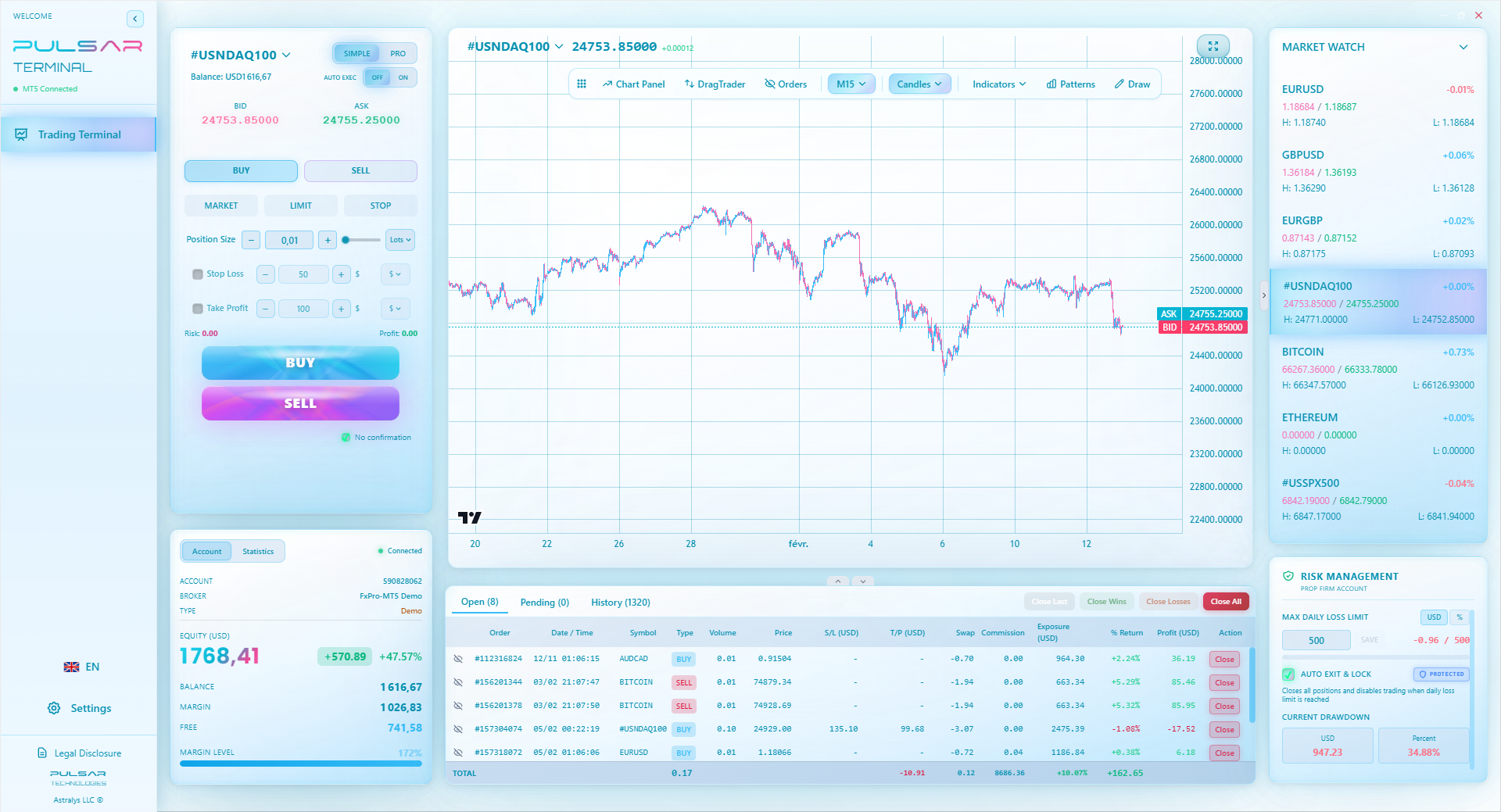
The platforms themselves are vanilla MT4/MT5. XM doesn't add fancy tools. For advanced charting, many serious traders use third-party tools like Pulsar Terminal on top of MT5. XM's value is in execution and cost, not proprietary tech.
Since XM provides vanilla MT5, using a tool like Pulsar Terminal adds advanced risk management features like one-click trailing stops and partial closures, which are essential for protecting profits on their tight spreads.
Pulsar Terminal
Công cụ MT5 tất-cả-trong-một: đặt lệnh kéo-thả, multi-TP/SL, trailing stop, grid trading, Volume Profile và bảo vệ prop firm. Hơn 1.000 trader sử dụng mỗi ngày.
Nigeria's broker market is crowded. Here’s a quick, blunt comparison based on my experience and community chatter.
XM vs. Exness: Exness is the market leader here. They often have narrower raw spreads and instant withdrawals to Nigerian bank accounts in Naira. That's a massive convenience win. However, their regulatory setup for Nigerian clients is similar (offshore). XM fights back with its massive educational push (that Lagos center is real) and a more established global brand.
XM vs. IC Markets: IC Markets is the king of raw spreads and low latency, loved by algo traders and scalpers. Their commission-based Raw Spread account is often cheaper than XM's Zero account. But their minimum deposit is higher ($200), and they don't have the same physical presence or educational focus in Nigeria. XM is more beginner-friendly.
XM vs. OctaFX/FXTM: These brokers have deep local marketing. OctaFX often has promo campaigns. FXTM has local seminars. XM feels more 'international.' Its client portal and support aren't as Nigeria-customized, but the underlying product (tight spreads on Ultra Low) is often more reliable during volatile Naira news events in my experience.
The Bottom Line: Choose XM if you value a balance of low cost (Ultra Low account), a wide range of instruments including USD/NGN, and are comfortable with an international broker's structure. Choose a more locally embedded broker if Naira withdrawals and hyper-local support are your top priorities.
💡 Mẹo của Winston
When comparing brokers, test withdrawal speed with a small profit before committing serious capital. A broker that's slow to give you your money has failed the most important test.
“The real cost of trading with XM in Nigeria isn't the spread; it's your bank's hidden forex conversion margin.”
Here's exactly what to do, factoring in the current 2026 landscape.
- Account Type Selection: Go for the Ultra Low Account. The 0.6 pip starting spread on EUR/USD is the sweet spot. Avoid the Standard account unless you're literally practicing with $5.
- Registration: Use accurate details matching your bank account/BVN. This is critical for withdrawals. The ISA 2025 means financial scrutiny is increasing; mismatched details will freeze your account.
- Verification: Upload a clear international passport and a utility bill (PHCN, water) not older than 3 months. This is standard KYC. XM processes this in a few hours usually.
- First Deposit: Use a credit/debit card for your first, small deposit ($50-$100). It's instant, letting you test the platform and withdrawal process quickly. Swallow the bank's forex margin for this test run.
- Platform Download: Download MT5. It's the newer platform with more timeframes and instruments. Configure your charts, add basic indicators like the RSI or MACD.
- Risk Management Setup: Before your first real trade, set rules. Use the calculator. Risk 1% max per trade. Set stop-losses always. Understand what a margin call looks like on their platform.
- First Withdrawal Test: This is non-negotiable. Once you've made a small profit, request a withdrawal of, say, $20 back to your card. Time how long it takes (usually 1-3 days). This proves the payment channel works for you.
Only after step 7 should you consider funding more significantly. I didn't do this with my first international broker and faced a 3-week withdrawal nightmare. Learn from my mistake.
After years of using them, here's my unfiltered take.
The Good (Where XM Shines):
- Ultra-Low Minimum Deposit: Lowering the barrier to entry is huge.
- Competitive Costs: The Ultra Low account spreads are legitimately good for a non-commission account.
- Instrument Diversity: Trading USD/NGN alongside global markets from one account is powerful.
- Educational Commitment: The free Lagos seminars and webinars are a tangible value-add you don't get from many rivals.
- Platform Stability: I've rarely had MT4/MT5 crash or requote me badly, even during high Naira volatility.
The Bad (What Frustrates Me):
- The Offshore Regulation for Nigeria: The FSC Belize license is the weak link. I sleep better with brokers under ASIC or FSCA, even if costs are slightly higher.
- No Naira Accounts: The currency conversion tax is a silent killer of profits. Brokers like Exness offering Naira accounts solve this.
- Withdrawal Speed: While free, bank wire withdrawals can be slower (3-5 days) than some competitors' 'instant' Naira options.
Who is XM For?
XM is perfect for the serious beginner and the cost-focused intermediate trader. If you're starting out and want a reputable international name with great learning resources and you don't mind the currency conversion hassle, it's a top pick. If you're an active swing trader or scalper who lives in the Ultra Low account and values instrument choice, it remains fiercely competitive.
Who Should Look Elsewhere?
If your primary need is moving large profits in and out of Nigeria in Naira with zero friction, look at brokers with local settlement. If top-tier regulation (ASIC, FCA) is your non-negotiable for peace of mind, consider IC Markets or Pepperstone, though their offerings to Nigerian clients may also be via offshore entities. Always check.
My final word: XM is a solid, trustworthy broker in the Nigerian context. Just go in with your eyes open. Understand the regulatory setup, master the currency conversion math, and never, ever trade without a stop-loss. The platform won't save you from a bad plan.
💡 Mẹo của Winston
If you trade USD/NGN on XM, you're not trading the local market. You're trading XM's quoted CFD price. It correlates, but it's not the same as the CBN rate. Don't treat it as a perfect hedge.
FAQ
Q1Is XM Forex legal and safe for Nigerian traders in 2026?
Yes, it's legal to use XM as a Nigerian trader. You're contracting with their internationally regulated entity (FSC Belize). Safety comes from their client fund segregation and negative balance protection. However, note that Nigeria's new ISA 2025 law requires platforms operating in Nigeria to register with the SEC. XM serves you from offshore, so this doesn't currently affect your access, but it's a key legal development to watch.
Q2What is the minimum deposit for XM in Nigerian Naira?
XM's minimum deposit is $5 USD. At an approximate exchange rate of 1,527 NGN/USD, that's about NGN 7,635. However, your Nigerian bank or payment provider will use their own conversion rate, which will likely be less favorable, so you may need to deposit slightly more in Naira to meet the $5 equivalent.
Q3Can I withdraw my profit from XM directly to my Nigerian bank account in Naira?
Not directly in Naira. XM will process your withdrawal in USD (or another base currency) to your bank account or card. Your Nigerian bank will then convert the USD to Naira at their own exchange rate and credit your account. The entire process for a bank transfer typically takes 3-5 business days.
Q4Does XM offer the MT5 platform?
Absolutely. XM fully supports both MetaTrader 4 (MT4) and MetaTrader 5 (MT5) on desktop, web, and mobile. MT5 is recommended as it's the more modern platform with more timeframes, pending order types, and a built-in economic calendar.
Q5What is the best XM account type for a beginner in Nigeria?
For a total beginner, the Micro or Standard Account is fine to learn the mechanics with very little money. Once you understand costs, switch to the Ultra Low Account. Its spreads (from 0.6 pips) are significantly cheaper than the Standard account (from 1.7 pips), saving you money on every trade as you develop your strategy.
Q6How does XM's use work, and what's a safe level to use?
XM offers use up to 1:1000, but this is extremely dangerous. use amplifies both gains and losses. A safe level for a beginner is between 1:10 and 1:30. For a $1,000 account, 1:30 use means you can control a position worth $30,000. Always use a position size calculator to ensure a 20-30 pip stop-loss won't wipe out a large chunk of your capital.
Q7Are there any hidden fees when depositing from Nigeria?
XM doesn't charge deposit fees. The 'hidden' costs are from your Nigerian bank or payment provider. They add a margin (2-5%) to the official USD/NGN exchange rate when converting your Naira. Credit card deposits may also have a cash advance fee. Always check with your provider before you deposit to understand the total cost in Naira.
Bài học của Prof. Winston
Điểm chính:
- ✓Test withdrawal speed before large deposits.
- ✓Use the Ultra Low, not Standard, account.
- ✓use above 1:30 is usually gambling.
- ✓Factor a 3-5% bank FX fee into your profit math.
- ✓ISA 2025 means know your broker's regulator.
Bài viết này hữu ích thế nào?
Nhấp vào ngôi sao để đánh giá
Nhận định giao dịch hàng tuần
Phân tích & chiến lược miễn phí hàng tuần. Không spam.
Về tác giả
Olumide Adeyemi
Nhà tiên phong Giao dịch Tây Phi
Một trong những nhà đào tạo forex tích cực nhất tại Nigeria. 8 năm kinh nghiệm giao dịch từ Lagos. Chuyên về chiến lược vốn thấp và thử thách prop firm dành cho trader châu Phi.
Bình luận
Cảnh báo rủi ro
Giao dịch các công cụ tài chính tiềm ẩn rủi ro đáng kể và có thể không phù hợp với tất cả nhà đầu tư. Hiệu suất trong quá khứ không đảm bảo kết quả trong tương lai. Nội dung này chỉ mang tính chất giáo dục và không nên được coi là lời khuyên đầu tư. Hãy luôn tự nghiên cứu trước khi giao dịch.
Bạn cũng có thể thích

Cara Trading Forex Sukses: 7 Prinsip dari Trader Profesional
Cara trading forex sukses dengan 7 prinsip trader pro: manajemen modal, disiplin, journal trading, backtest. Data nyata, bukan janji profit palsu.
Jam Trading Forex Terbaik untuk Trader Indonesia: Panduan Lengkap dengan Tabel Waktu
Panduan jam trading forex untuk trader Indonesia. Tabel 4 sesi dunia, jam emas 20:00-00:00, sesi mana yang harus dihindari. Data akurat + tips dari trader berpengalaman.
Top 5 Sàn Forex Uy Tín Nhất 2026: Review Jujur dari Trader Indonesia
Top 5 sàn forex uy tín 2026 untuk trader Indonesia. Review jujur: spread, deposit, withdraw, dukungan lokal. Exness, XM, IC Markets & lebih.
Tải Pulsar Terminal
Tất cả các công cụ tính này được tích hợp trong Pulsar Terminal với dữ liệu thời gian thực từ tài khoản MT5 của bạn.
Tải Pulsar Terminal