


Let's cut through the noise right now.

Rajesh Sharma
高级外汇分析师 ·  India
India
☕ 9 分钟阅读
您将学到:
- 1The Legal Reality: FEMA, SEBI, and What You Can Actually Touch
- 2Going Offshore: The Illegal Temptation and Its Real Cost
- 3Real Numbers: Costs, use, and Why It's Different
- 4How to Start Legally: A Step-by-Step Walkthrough
- 5Trading Strategies That Work Within the Box
- 6Recent Crackdowns: What Changed in April 2026
- 7The Verdict: Should You Even Bother?
Let's cut through the noise right now. The answer to 'can I do forex trading in India' is a frustrating, government-mandated 'yes, but...' You can trade, but you're locked in a regulatory cage that makes most global strategies impossible. I've seen too many traders lose money not just to the markets, but to legal grey areas they didn't understand. This isn't a simple guide, it's a reality check. I'll show you exactly what's legal, what will get your bank account frozen, and how to navigate this mess without getting burned.
Forget everything you've seen on YouTube ads. In India, forex isn't a free-for-all. It's governed by the Foreign Exchange Management Act (FEMA) of 1999, and the watchdog is the Securities and Exchange Board of India (SEBI).
Here's the non-negotiable rule: Retail trading is only legal for currency derivatives (futures and options) on recognized Indian exchanges like the NSE, BSE, or MSE. Spot forex trading - the kind you see advertised with 1:500 use - is illegal for residents if it involves non-INR pairs on offshore platforms.
The RBI maintains an 'Alert List' of unauthorized forex platforms. Getting caught using them isn't a slap on the wrist. We're talking monetary fines, seizure of funds, and legal headaches you don't need. I knew a guy in Mumbai who funded an offshore account using a friend's business. The RBI inquiry froze both accounts for six months. He didn't lose a trade, but he lost access to his capital entirely.

Warning: Using the Liberalised Remittance Scheme (LRS) to send money abroad for speculative forex trading is a direct violation. Banks are required to report suspicious transactions, and the RBI is cracking down.
The Permitted Pairs (Your Only Playground)
You can only trade pairs where the Indian Rupee (INR) is one side of the deal. Your main menu is:
- USD/INR (by far the most liquid)
- EUR/INR
- GBP/INR
- JPY/INR
Some exchanges also offer cross-currency pairs like EUR/USD as derivatives, but you must verify this with your SEBI-registered broker. Your dream of trading AUD/JPY or GBP/NZD from your apartment in Bangalore? Officially, that's off the table.

💡 Winston 小贴士
The biggest edge in regulated markets isn't a secret indicator, it's patience. Wait for the RBI meeting. That's your catalyst.

“Your dream of trading AUD/JPY from your apartment in Bangalore? Officially, that's off the table.”
This is where everyone's eyes glaze over. Yes, hundreds of international brokers - think XM, IC Markets, Pepperstone - gladly accept Indian clients. They'll offer you $5 minimum deposits, 1:500 use, and every currency pair under the sun. Their websites will work flawlessly. Depositing might even be easy.
This creates a massive cognitive dissonance. The platform works, the trades execute, so it must be okay, right? Wrong. It's a regulatory loophole, not a green light. These brokers are regulated offshore (Cyprus, Seychelles, etc.), not by SEBI. You have zero protection under Indian law if something goes wrong.
The real cost isn't just legal risk. It's psychological. Trading in a grey area adds a layer of stress you don't need. Every withdrawal, every customer service query comes with a whisper of 'is this going to trigger a flag?' I tried it briefly years ago. Made a decent 15% return on a scalping strategy on EUR/USD, but the anxiety of moving money back to my Indian bank account ruined the win. The profit wasn't worth the peace of mind I lost.

Pro Tip: If you're even considering an offshore broker, check the RBI's Alert List first. If they're on it, funding your account is literally sending money to an entity the government has warned you about. Is that a smart trade?
“The profit wasn't worth the peace of mind I lost.”
Trading USD/INR futures on the NSE is a different beast from trading spot EUR/USD. Let's get specific.
use & Margin: Forget 1:500. On Indian exchanges, use is controlled by the SPAN margin system. It's dynamic and risk-based. For USD/INR, initial margin might be around 2-5% of the contract value, which translates to roughly 1:20 to 1:50 use - much lower. This is a good thing for beginners; it prevents you from blowing up your account in two seconds, but it limits the explosive gains (and losses) of high-use spot trading.
Costs: You're dealing with brokerage fees, exchange transaction charges, and GST (18% on brokerage). There's no 'spread' in the traditional forex sense. Here's a rough comparison:
| Aspect | Legal (NSE USD/INR Futures) | Illegal (Offshore Spot EUR/USD) |
|---|---|---|
| use | ~1:20 to 1:50 (SPAN) | Up to 1:500 (or more) |
| Primary Cost | Brokerage + Taxes + Exchange Fees | Spread +/or Commission |
| Typical Trade Cost | Say, ₹20 per lot brokerage + charges | 0.8 pips on EUR/USD = $8 per standard lot |
| Platform | Broker-specific (Zerodha Kite, Upstox) | MT4/MT5, cTrader |
| Key Risk | Market Risk | Market Risk + Regulatory/Legal Risk |
Minimum Capital: With a legal broker like Zerodha or Angel One, you can start small. But remember, contract sizes are fixed. One USD/INR futures contract is for $1000. At a rate of 83.50, that's ₹83,500 notional value. With a 3% margin, you'd need about ₹2,500 in your account to hold one contract. This is very different from a $100 micro account on MT4.
“The profit wasn't worth the peace of mind I lost.”
If you want to sleep at night, here's the only path.
- Choose a SEBI-Registered Stockbroker: This is non-negotiable. Go with a major, reputable name. Zerodha, Upstox, Angel One, ICICI Direct, HDFC Securities. These are your gateways to the NSE/BSE currency derivatives segment.
- Complete Your KYC: You'll need your PAN card, Aadhaar, bank details, and income proof. It's more involved than signing up with an offshore broker, but it's the law.
- Fund Your Account: Use the integrated methods: UPI (PhonePe, Google Pay), NetBanking, or IMPS. The money stays within the Indian financial system.
- Learn the Platform: Open the trading platform (like Kite). Don't look for a 'Market Watch' with 100 pairs. Look for the 'Futures' or 'Currency' segment. You'll see scripts like
USDINR26APRFUT(USD/INR April 2026 Future). - Understand the Contract: Click on the contract. See the lot size (usually 1000), expiry date (last Thursday of the month), and margin required. Always use a position size calculator based on the SPAN margin, not a simple percentage of your balance.
- Place Your First Trade: It's an equity-style order. Buy if you think the USD will strengthen against INR (rate goes up). Sell if you think it will weaken (rate goes down).
Your analysis for USD/INR must now focus on RBI policy, oil prices (India's major import), FDI flows, and the dollar index. It's a macro-economic play, not just reading a MACD indicator crossover on a 5-minute chart.
💡 Winston 小贴士
If you wouldn't explain your trading method to a tax officer, you're not trading. You're gambling in the shadows.
“The RBI wants all rupee speculation happening onshore, where they can see and control it.”
You can't scalp the 1-minute chart of GBP/JPY. So what can you do?
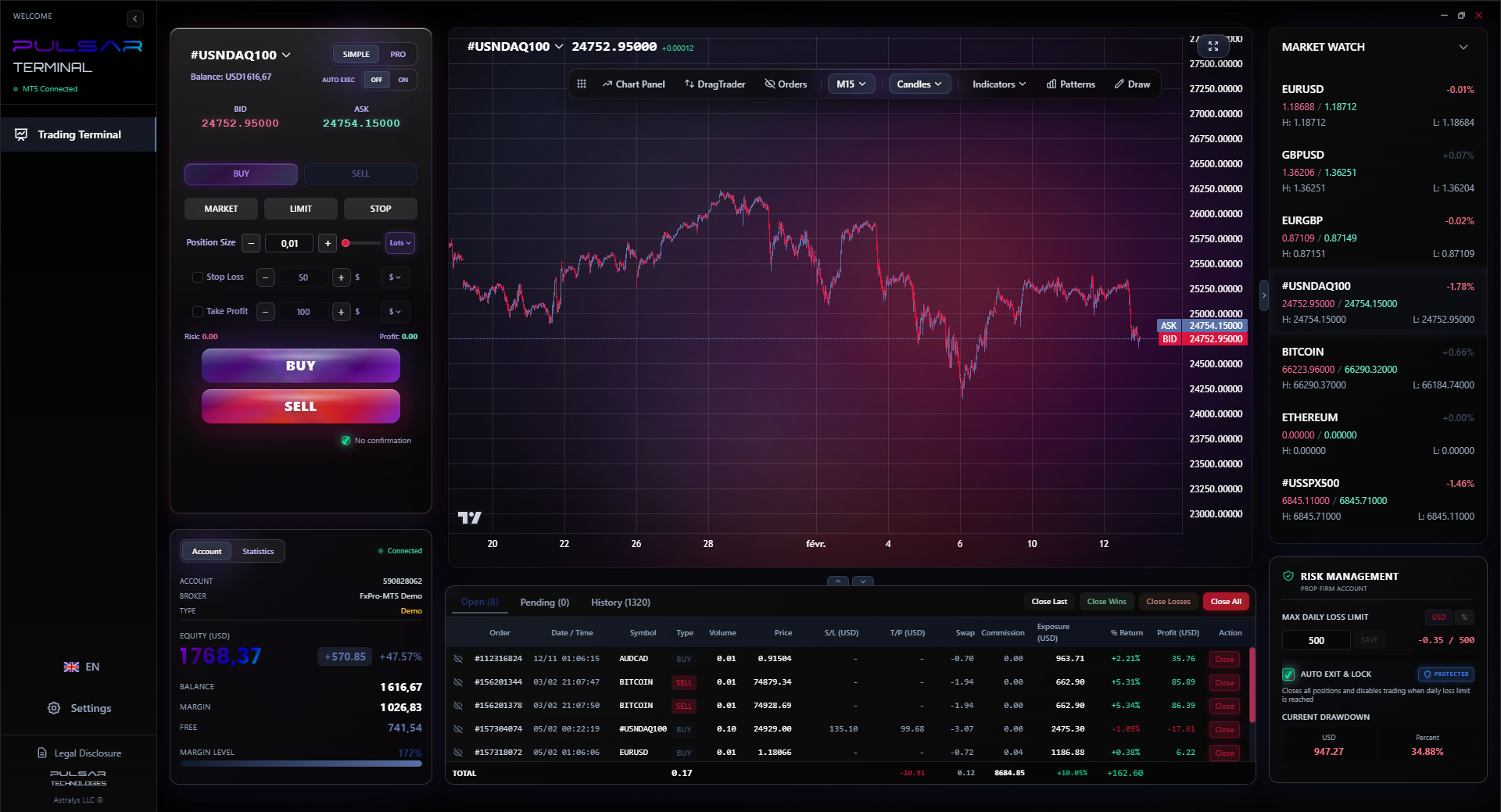
Swing Trading USD/INR Futures: This is the most viable approach. The pair has clear trends driven by fundamental forces. Look for positions you hold for days to weeks. I had a successful swing trade in late 2025. I went long USD/INR (betting on USD strength) at 82.90 based on a hawkish Fed vs. a cautious RBI stance, and used a trailing stop. I exited at 83.85 over three weeks. The move wasn't fast, but the contract size made it meaningful. Tools like Pulsar Terminal's advanced order management would have been perfect for automating that trailing stop on the MT5 platform some brokers offer for derivatives.
Event-Driven Trading: RBI monetary policy announcements are your non-farm payrolls. The volatility is immense. The key is to have a hypothesis before the event and manage risk tightly. I've been stopped out in 30 seconds on an RBI announcement gone wrong. The slippage can be nasty.
Using Technicals on a Higher Timeframe: Daily and 4-hour charts on USD/INR still respect key support/resistance and indicators like RSI. But you must overlay the fundamental story. A perfect bullish pinbar on the daily chart is useless if the RBI is intervening heavily to support the Rupee.

Example: Trading 1 lot of USD/INR FUT. Entry: 83.00. Exit: 83.50. Profit per lot: (83.50 - 83.00) * 1000 = ₹500. Minus brokerage and taxes (~₹40). Net: ~₹460. Not a fortune, but it's real, legal, and withdrawable without fear.
Managing a multi-day USD/INR swing trade requires precise order tools, which Pulsar Terminal provides directly on your MT5 platform with features like trailing stops and breakeven automation.
Pulsar Terminal
MT5一站式工具:拖拽下单、多重止盈/止损、追踪止损、网格交易、成交量分布图和自营交易保护。每日1000+交易者使用。
“The RBI wants all rupee speculation happening onshore, where they can see and control it.”
The rules just got tighter. Pay attention, because this shows the RBI's mindset.
In April 2026, the RBI slammed the door on a popular loophole: Non-Deliverable Forward (NDF) contracts involving the INR. Banks are now prohibited from offering these to residents or non-residents. Why? NDFs are offshore derivatives used to speculate on the rupee. The RBI wants all rupee speculation happening onshore, where they can see and control it. They also banned the rebooking of any cancelled forex derivative contracts involving INR.
Simultaneously, the government re-issued warnings against offshore forex and CFD platforms. The message is clear: We are watching, and we are not kidding.
This matters for you because it shrinks the available tools and signals a more aggressive enforcement stance. The era of casually using an international broker's VPN to access their full suite might be ending with more than just a warning letter. Your strategy must adapt to a market where the regulator is an active, powerful participant, not a passive observer.
“The dream of getting rich quick on forex from India is, for the vast majority, a fantasy.”
Honestly? For most people dreaming of forex trading as seen globally, the answer is probably no. The restrictions are severe. If your passion is analyzing exotic pairs or mastering high-frequency scalping, the Indian legal framework will suffocate you.
However, if you're interested in macroeconomics, have patience for swing trades, and want to trade with absolute legal certainty, then trading USD/INR futures is a valid, albeit limited, pursuit. It teaches real discipline because the use won't bail you out of bad decisions.
Here's my final take: Use the Indian system to learn the basics of derivatives, margin, and risk management without the danger of 1:500 use. Treat it as training wheels for a much bigger global financial market you might access later through different, legal means (like investing in international ETFs). The skills of reading price action and managing a margin call are transferable.
The dream of getting rich quick on forex from India is, for the vast majority, a fantasy sold by unregulated educators and offshore brokers. The reality is slower, more regulated, and , safer. Only you can decide which path aligns with your goals and your tolerance for regulatory risk.
FAQ
Q1Is forex trading taxable in India?
Yes. Profits from trading currency derivatives on Indian exchanges are treated as 'Business Income' or 'Speculative Business Income' if you're not a professional. You must file ITR and pay tax according to your income slab. Keep detailed records of all trades for accounting.
Q2Can I trade Gold (XAU/USD) legally in India?
Not in the spot forex form (XAU/USD). However, you can trade Gold futures and options on Indian commodity exchanges (MCX) in INR denominations. It's a different market with its own dynamics. We have a separate guide on trading gold that covers the global context.
Q3What happens if I already have an account with an offshore broker like XM or IC Markets?
You're in a grey area. The RBI hasn't (yet) systematically gone after individual retail traders, but they are targeting the platforms and payment channels. The safest course is to stop trading, withdraw your funds, and close the account. Continuing to use it carries a persistent, if low-probability, risk of severe financial and legal penalty.
Q4Are there any legal brokers offering MT4/MT5 in India?
Some SEBI-registered brokers may offer MT4 or MT5 as a platform to access the currency derivatives segment on Indian exchanges. However, the symbols and liquidity will be from the exchange, not the broker's global liquidity pool. Always confirm the broker is SEBI-registered and you are trading exchange-listed derivatives, not their offshore CFD products.
Q5How does the low use on Indian exchanges affect strategy?
It forces better risk management. You need more capital to see significant percentage returns, which discourages overtrading. Strategies must focus on higher-probability, longer-term setups. It kills most high-frequency scalping and martingale systems that rely on high use to recover from losses.
Q6Can I hedge my USD/INR futures position?
Yes, through options on currency futures. You can buy a put option to hedge a long futures position, for example. This adds complexity and cost but is a legitimate risk management tool within the regulated system.
Winston 教授的课程
要点总结:
- ✓Legal forex in India = INR pairs only on NSE/BSE.
- ✓Offshore brokers mean regulatory risk, not just market risk.
- ✓use is capped at ~1:50 via SPAN margin.
- ✓Your new catalyst is the RBI, not the NFP.
- ✓Swing trading USD/INR futures is the most viable strategy.
这篇文章对您有用吗?
点击星星评分
每周交易洞察
免费每周分析与策略。无垃圾邮件。
关于作者
Rajesh Sharma
高级外汇分析师
在印度和南亚市场拥有超过10年的交易经验。从NSE货币衍生品起步,后转入国际外汇市场。专注于USD/INR和新兴市场货币对。
评论
风险提示
金融工具交易存在重大风险,可能不适合所有投资者。过往业绩不代表未来表现。本内容仅供教育目的,不构成投资建议。在交易前请务必自行研究。
您可能还喜欢

Cara Trading Forex Sukses: 7 Prinsip dari Trader Profesional
Cara trading forex sukses dengan 7 prinsip trader pro: manajemen modal, disiplin, journal trading, backtest. Data nyata, bukan janji profit palsu.
Jam Trading Forex Terbaik untuk Trader Indonesia: Panduan Lengkap dengan Tabel Waktu
Panduan jam trading forex untuk trader Indonesia. Tabel 4 sesi dunia, jam emas 20:00-00:00, sesi mana yang harus dihindari. Data akurat + tips dari trader berpengalaman.
Top 5 Sàn Forex Uy Tín Nhất 2026: Review Jujur dari Trader Indonesia
Top 5 sàn forex uy tín 2026 untuk trader Indonesia. Review jujur: spread, deposit, withdraw, dukungan lokal. Exness, XM, IC Markets & lebih.
