


Here's a statistic that should make you pause: the FSCA fined a forex signals provider over R1 million in 2024 for operating without a license.

David van der Merwe
新兴市场交易员 ·  South Africa
☕ 9 分钟阅读
您将学到:
Here's a statistic that should make you pause: the FSCA fined a forex signals provider over R1 million in 2024 for operating without a license. That's the reality behind the 'get rich quick' ads flooding your social media. In South Africa, forex advertising is a minefield of half-truths and outright lies, designed to separate you from your money before you even place a trade. I've watched countless students get sucked in by promises of 1000:1 use and guaranteed returns, only to blow their accounts in a week. This guide isn't about how to trade; it's about how to see through the marketing and find a broker that won't ruin you.
Let's cut through the broker marketing speak. The Financial Sector Conduct Authority (FSCA) is the sheriff in town, and they're not messing around. Their main job is to stop you from getting fleeced. Every piece of forex advertising you see from a legit, local operation has to play by their rules, whether they like it or not.
The cornerstone is the FAIS Act. To offer financial services (and yes, that includes pushing trading accounts), a company needs an FSP license. If an ad doesn't prominently display that license number, swipe left immediately. It's probably a scam.
The use Cap You Need to Know
The biggest lie in forex advertising is about use. Since 2021, the FSCA has capped retail use at 1:30. Full stop. Yet, you'll still see ads screaming about 1:500 or even 'unlimited' use. How? They're showing you the offer from their offshore entity, which isn't bound by South African law. Trading with that entity means you lose FSCA protection. If they rip you off, good luck getting help from a regulator in Cyprus or the Seychelles. I made this mistake early on, chasing high use with an offshore broker. When a trade went south due to a questionable 'spike,' I had zero recourse. My R5,000 was just gone.

Warning: If an ad highlights insane use as its main selling point, they're targeting your greed, not your intelligence. A 1:30 cap is there for a reason: to keep you from a margin call on your first big loss.
Another key rule is client fund segregation. FSCA-regulated brokers must keep your money in separate accounts from their own operating funds. This means if the broker goes bankrupt (it happens), your capital isn't up for grabs by their creditors. This is non-negotiable for any broker you consider.
Forex advertising follows a predictable, psychological script. Recognise the patterns, and you become immune to the hype.
The 'Lifestyle' Fantasy: This is the most common. Ads feature a guy (it's always a guy) glancing at a laptop on a yacht, or in a luxury car. The message isn't about analysis or risk management; it's about escaping your 9-to-5. They're selling a dream, not a trading platform. I fell for this years ago, thinking trading was a ticket to freedom. I learned the hard way that freedom comes from discipline, not a Lamborghini backdrop.
The 'Zero Cost' Illusion: "Trade with zero spreads!" shouts the banner ad. What they don't shout is "...but we charge a R150 commission per lot." The cost is just moved. Always look for the full cost structure: spread + commission. Use a position size calculator to work out your real break-even point. For example, a 'zero spread' on EUR/USD with a $7 commission is often more expensive than a 0.6 pip spread with no commission on a standard account.
The False Urgency: "OPEN AN ACCOUNT THIS WEEK AND GET A 100% DEPOSIT BONUS!" Bonuses are almost always a trap. They come with withdrawal restrictions and insane trading volume requirements (like trading 50 times the bonus amount before you can withdraw your own money). The FSCA looks dimly on these, but offshore brokers love them. That bonus isn't free money; it's a leash.
The 'Guru' Endorsement: Be wary of ads featuring a local 'trading guru' promising signals. Remember the R1 million fine? That was for an unlicensed signals provider. If someone is selling you trading advice for a fee, check their FSP license on the FSCA website. If they don't have one, they're breaking the law.

💡 Winston 小贴士
If an ad makes you feel a burning FOMO (Fear Of Missing Out), that's your cue to close the tab, not open an account. Good trading opportunities are patient and repeatable.
“If an ad highlights insane use as its main selling point, they're targeting your greed, not your intelligence.”
Forget the ad copy. Let's talk about what you actually get on the trading floor. I've traded with most of the major players here. The table below strips away the marketing and shows the raw specs you need to compare.
| Broker (FSCA Entity) | Min. Deposit (ZAR approx.) | Typical EUR/USD Spread | Key Platform | FSCA use |
|---|---|---|---|---|
| Khwezi Trade | R500 | From 0.4 pips | MT4, MT5 | 1:30 |
| Tickmill SA | ~R1800 ($100) | 0.0 pips + commission | MT4, MT5 | 1:30 |
| Exness (SA) | ~R180 ($10) | From 0.0 pips | MT5, cTrader | 1:30 |
| IG South Africa | ~R6000 (£250) | Variable, often low | Proprietary, MT4 | 1:30 |
| XM (SA) | ~R90 ($5) | 0.8 pips (commission-free) | MT4, MT5 | 1:30 |
A few truths from the trenches:
- That $1 minimum deposit (like from JustMarkets) is a gimmick. You can't trade seriously with that. It's just to get you in the door. A realistic starting deposit for a beginner who wants to learn proper position sizing is at least R2,000.
- Tight spreads aren't everything. I used a broker with 0.0 pip spreads on EUR/USD, but their execution was slow during news events, costing me more in slippage than I saved on the spread. Sometimes, paying a slightly higher spread for lightning-fast, reliable execution (like with IC Markets or Pepperstone via their global entities) is the better deal.
- ZAR-based accounts are a godsend. They let you deposit and withdraw in Rands without murderous bank conversion fees. This alone is a reason to pick a local FSCA broker over an international one for your main account.
The FSCA has been getting serious. Their enforcement actions tell you exactly what they hate - and what should scare you off a broker.
The Big Fine: In 2024, the FSCA slapped Kabelo Emanuel Mogale with a R1,015,315.87 penalty and a 10-year debarment. His crime? Running a forex trading signals service without a license. This is a direct shot across the bow of every 'guru' selling Telegram signals. If you're paying for signals, ask for their FSP number. No number, no deal.
The JP Markets Case: In 2023, JP Markets was fined R100,000 for letting clients trade CFDs without proper authorization. The message is clear: regulators are watching how products are sold.
Red Flags in Advertising:
- Guaranteed Profits: This is illegal. The market guarantees nothing. Any ad that says otherwise is lying.
- No Risk Disclosure: Legitimate forex advertising must include a clear warning that you can lose more than your initial deposit (thanks to use). If it's all upside, it's a scam.
- Pressure to Deposit: "Limited time offer!" on a trading account is nonsense. There's no rush. A good broker will let you demo for months.
- Vague or Offshore Contact Details: If their 'South African office' is a P.O. Box or a virtual address, be very suspicious. Check their physical address on the FSCA register.

Pro Tip: Before you deposit a cent, go to the FSCA's website and use their 'Verify a Financial Services Provider' search tool. Type in the company name or FSP number from the ad. If they don't show up, or if their license status isn't 'Authorised,' run.
💡 Winston 小贴士
The most honest part of any broker's website is the 'Legal Documents' or 'Regulatory Disclosures' page. If you don't understand it, don't deposit. Clarity is a sign of integrity.
“Your best defence is to build your strategy around the strictest rules.”
Don't let forex advertising do the thinking for you. Here’s your action plan, the same one I give my mentoring students.
- Regulation First: FSCA license number. Verified on the official site. This is non-negotiable.
- Check the Costs: Ignore the headline. Find the detailed schedule of fees. Look for: spread on USD/ZAR (it will be wide, that's normal), overnight financing rates (swap), inactivity fees, and withdrawal fees. A broker like XM might have low spreads but charge for withdrawals under a certain amount.
- Test the Platform: Open a demo account. Is it MT4/MT5? Good. Is it some weird, proprietary platform you've never heard of? Be cautious. Can you easily set stop-losses, take-profits, and trailing stops? Clunky execution kills profits. (This is where tools that enhance MT5, offering drag-and-drop orders and advanced trailing stops, can make a real difference, but only after you've chosen a solid broker).
- Contact Support: Send them a email or hop on live chat. Ask a technical question like, "What's your model for executing orders during the SA market open?" If they can't give a coherent answer in a reasonable time, imagine trying to get help when your trade is on the line.
- Read the Real Reviews: Not the ones on their site. Go to independent forums and look for complaints. Specifically, look for how the broker resolved those complaints. Every broker has issues; the good ones fix them.
I once skipped step 4 with a broker that had slick ads. When I had a critical question about margin on a gold trade, I was on hold for 45 minutes. I lost the trade opportunity and my patience. The flashy advertiser was useless in a crisis.
Once you've found a trustworthy, FSCA-regulated broker with a stable MT5 platform, the next step is executing your strategy with precision—tools like Pulsar Terminal add advanced order management and risk controls directly into your MT5 workflow.
Pulsar Terminal
MT5一站式工具:拖拽下单、多重止盈/止损、追踪止损、网格交易、成交量分布图和自营交易保护。每日1000+交易者使用。
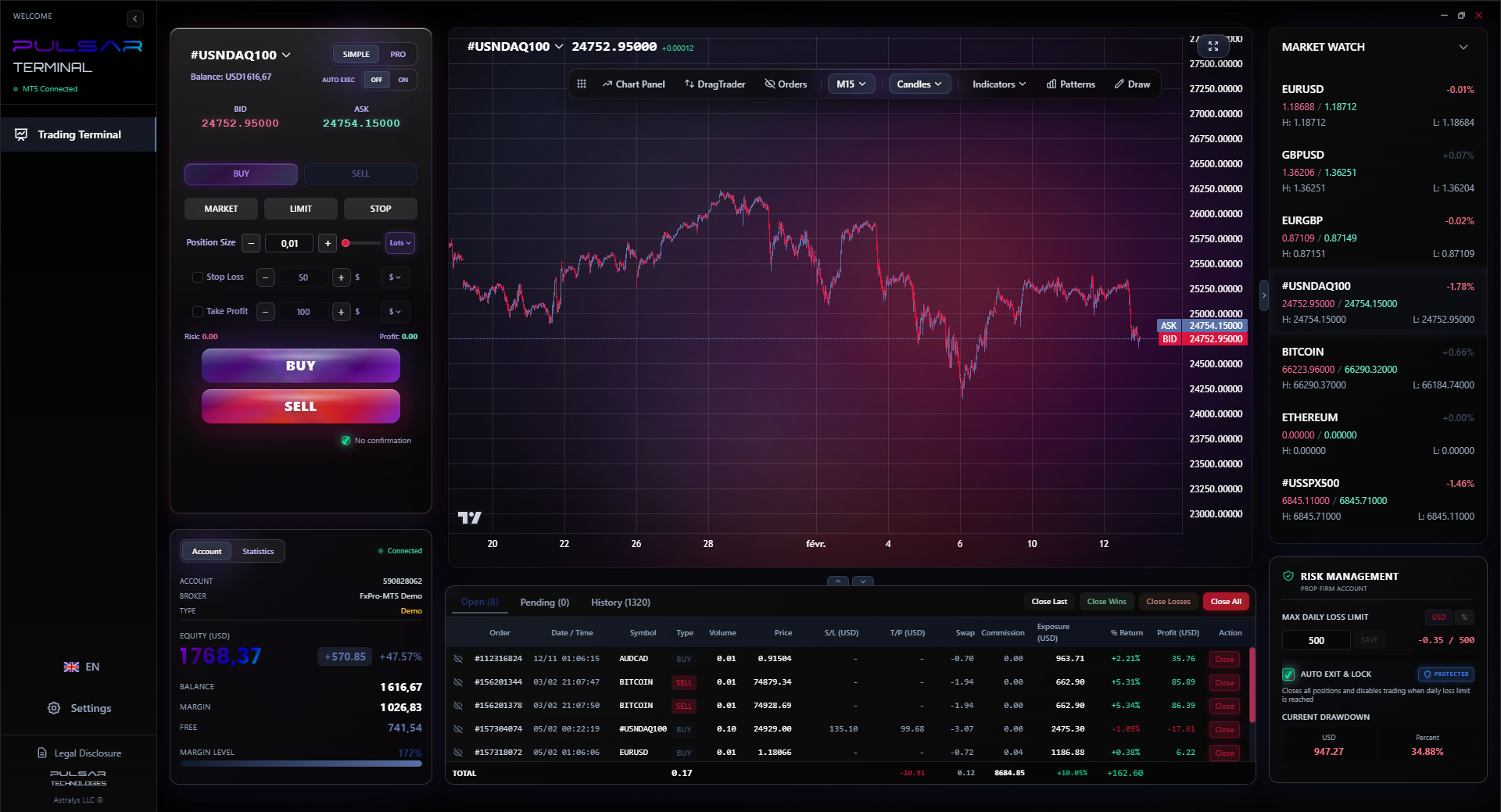
Think the current rules are strict? Buckle up. The FSCA isn't done. By early 2026, they intend to further cap use for retail traders to a maximum of 1:200 for major pairs. This is a direct response to the account blow-ups they see during periods of wild Rand volatility.
What this means for you is that the gap between what offshore brokers advertise and what local, regulated brokers can offer will widen. The pressure to chase those offshore 'deals' will increase. Resist it. The regulatory trend is globally towards lower use to protect retail traders. South Africa is just following suit.
The forex advertising you see in 2026 will likely have to be even more sober, with larger risk warnings. The era of the 'yacht ad' for FSCA-regulated entities might be coming to a close. This is a good thing. It forces the conversation towards risk management, education, and sustainable trading - the things that actually make you money in the long run, not the things that sell you a dream for a quick deposit.
Your best defence is to build your strategy around the strictest rules. If you learn to profit with 1:30 use, you'll be a rock-solid trader. If you need 1:500 to make your system work, your system is the problem, not the use limit. Focus on mastering a core strategy, like swing trading key levels, instead of relying on over-leveraged scalping that one bad spread will destroy.
FAQ
Q1Is it illegal for South Africans to use offshore brokers with flashy ads?
No, it's not illegal. The FSCA doesn't block you from signing up with a broker in another country. However, you voluntarily give up all the protections of South African law. If that offshore broker engages in price manipulation, refuses your withdrawal, or goes under, your only recourse is through the courts in their home country - a costly and often hopeless fight. The risk is all yours.
Q2What's the single most important thing to check in any forex ad?
The FSP (Financial Services Provider) license number. It should be clearly visible. Immediately go to the FSCA's official website and verify that the number is valid, current, and matches the company name in the ad. If you can't find it or it's expired, treat the ad as a scam.
Q3Why do brokers advertise 'unlimited' use if it's capped at 1:30?
They're advertising the offer from their international, non-FSCA regulated entity. When you click that ad, you're often directed to sign up under their global brand (regulated in a place like St. Vincent or the Marshall Islands). They're using a legal loophole. The ad is technically truthful for that entity, but it's deliberately misleading for a South African audience seeking local protection.
Q4Are trading bonus offers from ads ever a good idea?
Almost never. These bonuses come with strings attached that tie your money up. You typically have to trade an enormous volume (e.g., 25x the bonus amount) before you can withdraw any funds, including your original deposit. This forces you to trade more frequently and take on more risk than you should, usually leading to losses. The FSCA discourages these practices for good reason.
Q5A famous sports star is endorsing a forex broker in an ad. Is it safe?
Celebrity endorsement means nothing about the broker's safety or integrity. The celebrity is being paid to read a script. They are not a regulatory authority. You must do your own due diligence - check the FSCA license, fees, and reviews - regardless of who is in the ad. Never let a famous face do your homework for you.
Q6What should I do if I see a forex ad that looks like a scam?
Report it. You can report misleading financial advertisements directly to the FSCA. Gather evidence: take a screenshot of the ad, note the website URL, and record where you saw it (e.g., 'Instagram, from page XYZ'). By reporting it, you help protect other traders from falling victim.
Winston 教授的课程
要点总结:
- ✓Always verify the FSP license on the FSCA website.
- ✓FSCA retail use is capped at 1:30 for your protection.
- ✓Real broker costs are spread + commission + fees.
- ✓Offshore broker ads mean zero South African legal recourse.
- ✓Bonus offers are designed to make you lose.
这篇文章对您有用吗?
点击星星评分
每周交易洞察
免费每周分析与策略。无垃圾邮件。
关于作者
David van der Merwe
新兴市场交易员
约翰内斯堡交易者,11年新兴市场货币经验。专注于ZAR货币对、FSCA监管交易和南非市场分析。
评论
风险提示
金融工具交易存在重大风险,可能不适合所有投资者。过往业绩不代表未来表现。本内容仅供教育目的,不构成投资建议。在交易前请务必自行研究。
您可能还喜欢

Cara Trading Forex Sukses: 7 Prinsip dari Trader Profesional
Cara trading forex sukses dengan 7 prinsip trader pro: manajemen modal, disiplin, journal trading, backtest. Data nyata, bukan janji profit palsu.
Jam Trading Forex Terbaik untuk Trader Indonesia: Panduan Lengkap dengan Tabel Waktu
Panduan jam trading forex untuk trader Indonesia. Tabel 4 sesi dunia, jam emas 20:00-00:00, sesi mana yang harus dihindari. Data akurat + tips dari trader berpengalaman.
Top 5 Sàn Forex Uy Tín Nhất 2026: Review Jujur dari Trader Indonesia
Top 5 sàn forex uy tín 2026 untuk trader Indonesia. Review jujur: spread, deposit, withdraw, dukungan lokal. Exness, XM, IC Markets & lebih.
