


Here's a fact that will save you money: 72% of retail traders in South Africa lose their entire first deposit within 90 days.

David van der Merwe
新兴市场交易员 ·  South Africa
☕ 10 分钟阅读
您将学到:

Here's a fact that will save you money: 72% of retail traders in South Africa lose their entire first deposit within 90 days. It's not because they're bad at picking trades. It's because they start with the wrong broker, paying for features they don't need while getting hammered by costs they don't understand. This guide isn't about finding the 'best' broker. It's about finding the right broker for a beginner who wants to survive long enough to learn.
You might think you can just open an account anywhere, trade for a bit, and switch later. That's a great way to blow up. Your first broker sets your entire trading psychology. If your spreads are too wide, every small winning trade becomes a loser after costs. If your platform freezes during load-shedding, you'll take a loss that wasn't your fault. That breeds frustration, then revenge trading, then an empty account.
I learned this the hard way. My first live account was with a flashy international broker that offered 'zero spreads'. Sounded perfect. What they didn't shout about was the R95 commission per lot and insane slippage on news events. My very first 'profitable' scalp on EUR/USD netted me $8 on the price move... but cost me $12 in commissions. I was profitable on the chart and poorer in reality. That experience made me over-use on the next trade to 'make back the fees', which is a classic beginner death spiral.
For a beginner, consistency is more important than cost. You need an environment where your mistakes are yours alone, not amplified by a broker's poor execution or hidden fees. A good beginner broker provides a stable, transparent sandbox where you can learn what a losing streak feels like without the platform itself kicking you while you're down.

Warning: A broker offering you a 1:1000 use account as a beginner is not doing you a favour. They're giving you a rope to hang your account with. The FSCA limits use for retail clients to 1:30 on major forex pairs, and for good reason. Any 'offshore' broker offering you more is bypassing South African consumer protections.
“Your first broker sets your entire trading psychology.”
Forget about advanced charting tools, AI signals, or copy-trading platforms. As a beginner, you need bedrock. Here’s what actually matters.
1. FSCA Regulation (Not Just 'Registration')
This is your safety net. The Financial Sector Conduct Authority (FSCA) is our local watchdog. A broker must be authorised by them, not just have a South African office. This means your funds are held in segregated accounts at a major South African bank (like FNB or Standard Bank), and you have recourse if something goes wrong. You can check any broker's status on the FSCA's website. If they're not on there, walk away. No matter how good the offer sounds.
2. ZAR-Based Accounts & Local Deposits
You should be funding your account in Rands, from your South African bank account or via instant EFT, without paying international transfer fees. Your profit and loss should also be calculated in ZAR. Why? Because it removes currency risk from the equation. If you deposit $100 and the Rand strengthens, your trading capital shrinks before you've even placed a trade. Brokers like XM review and Exness review offer proper ZAR accounts. This one feature alone will save you 2-3% in hidden currency conversion costs.
3. A Platform You Can Actually Use
MetaTrader 4 (MT4) is still the king for beginners in South Africa. It's simple, stable, and 95% of educational content you'll find online uses it. MT5 is more powerful, but it's overkill when you're starting. The broker's version must be stable on a mobile app and a desktop platform that doesn't need a fibre connection to run. Test their demo during peak load-shedding hours (5pm-7pm). If it disconnects, so will your sanity.

Pro Tip: Your number one tool as a beginner is a demo account. But don't just use it to practice trading. Use it to test the broker. How fast do deposits and withdrawals show? How is customer service at 10pm? Does the platform lag when you have 3 charts open? Demo the broker, not just the markets.

💡 Winston 小贴士
A broker is a utility, not a partner. Your relationship should be boring and functional. If you're getting excited about their marketing, you're focusing on the wrong thing.
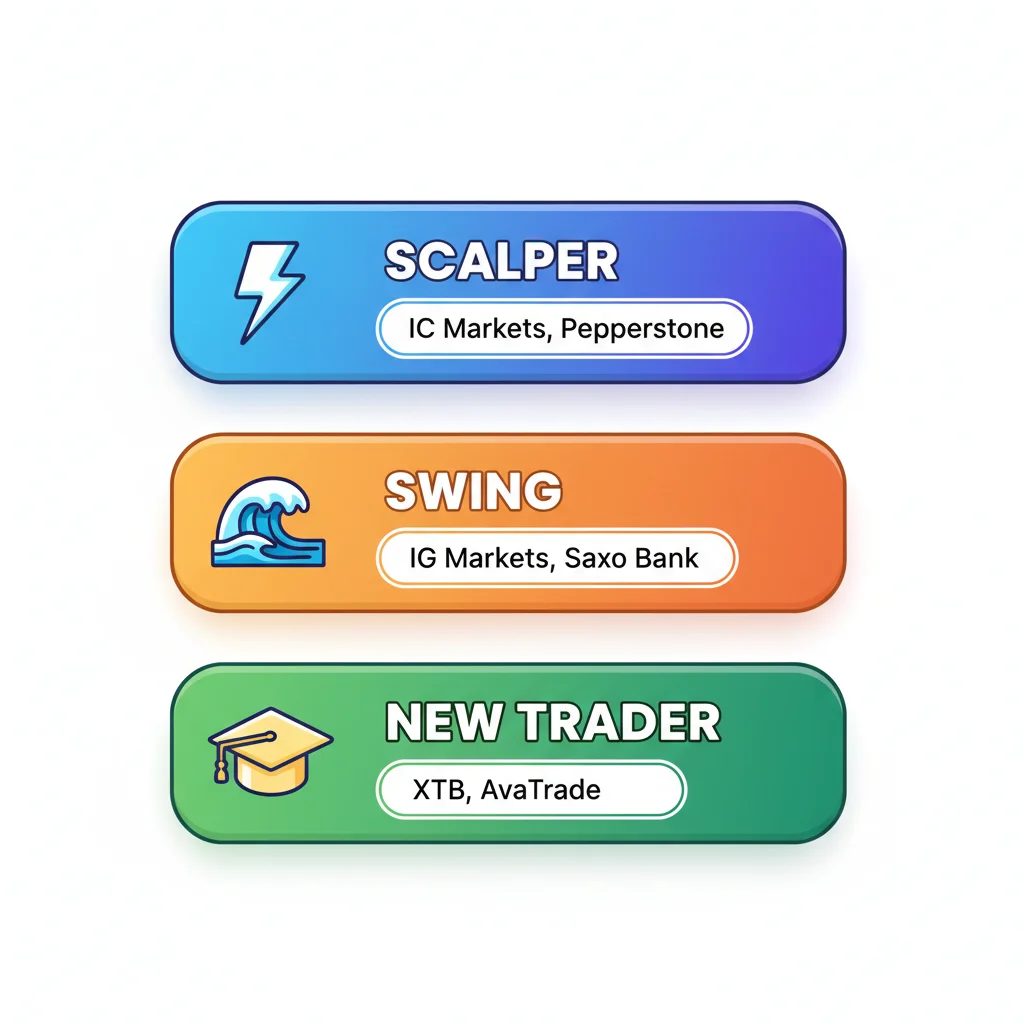
“A broker offering 1:1000 use to a beginner is giving you a rope to hang your account with.”
The spread isn't the only cost. Beginners fixate on it, while other fees quietly drain their capital. Let's break down where your Rands actually go.
The Spread: This is the difference between the buy and sell price. On EUR/ZAR, a 'good' spread might be 80-120 pips during the London session. If it's consistently over 150 pips, you're paying too much. Use a demo account to monitor this at different times of day.
Commission: Some brokers offer tight spreads but charge a commission per lot traded. This can be better for active traders, but terrible for beginners who trade small sizes. If you're trading 0.01 lots, a $5 commission is a massive percentage of your potential profit.
The Hidden Killer: Swap Rates (Overnight Financing) This is the interest you pay or receive for holding a position past 10pm South African time (the daily rollover). If you're buying a high-interest rate currency (like ZAR) and selling a low-one, you might earn a small credit. But more often, as a beginner holding trades for a few days, you'll pay. On a 0.1 lot EUR/ZAR position, the swap can be a few Rands per night. It seems small, but if you're in a losing trade for two weeks hoping it turns around, those Rands add up to a significant extra loss.
Inactivity Fees: Life happens. If you need to take a month off to study or save more capital, some brokers will charge you a fee (often $5-$15) for not trading. For a beginner with a R1000 account, that's a 1-1.5% penalty for not losing money. It's predatory. Always check the fee schedule.
Here’s a comparison of how costs can play out on a typical beginner's trade:
| Cost Type | Bad Scenario (R) | Good Scenario (R) | Notes |
|---|---|---|---|
| Spread on 0.05 lots EUR/ZAR | 12.50 | 7.50 | At 100 vs 60 pips |
| Commission (if applicable) | 5.00 | 0.00 | Not all brokers charge this |
| Swap for 3 nights | 4.50 | 1.50 | Depends on direction |
| Total Cost | 22.00 | 9.00 | That's a 144% difference |
That R13 saved is money that stays in your account to fight another day. This is why using a position size calculator that includes all costs is non-negotiable before you enter any trade.
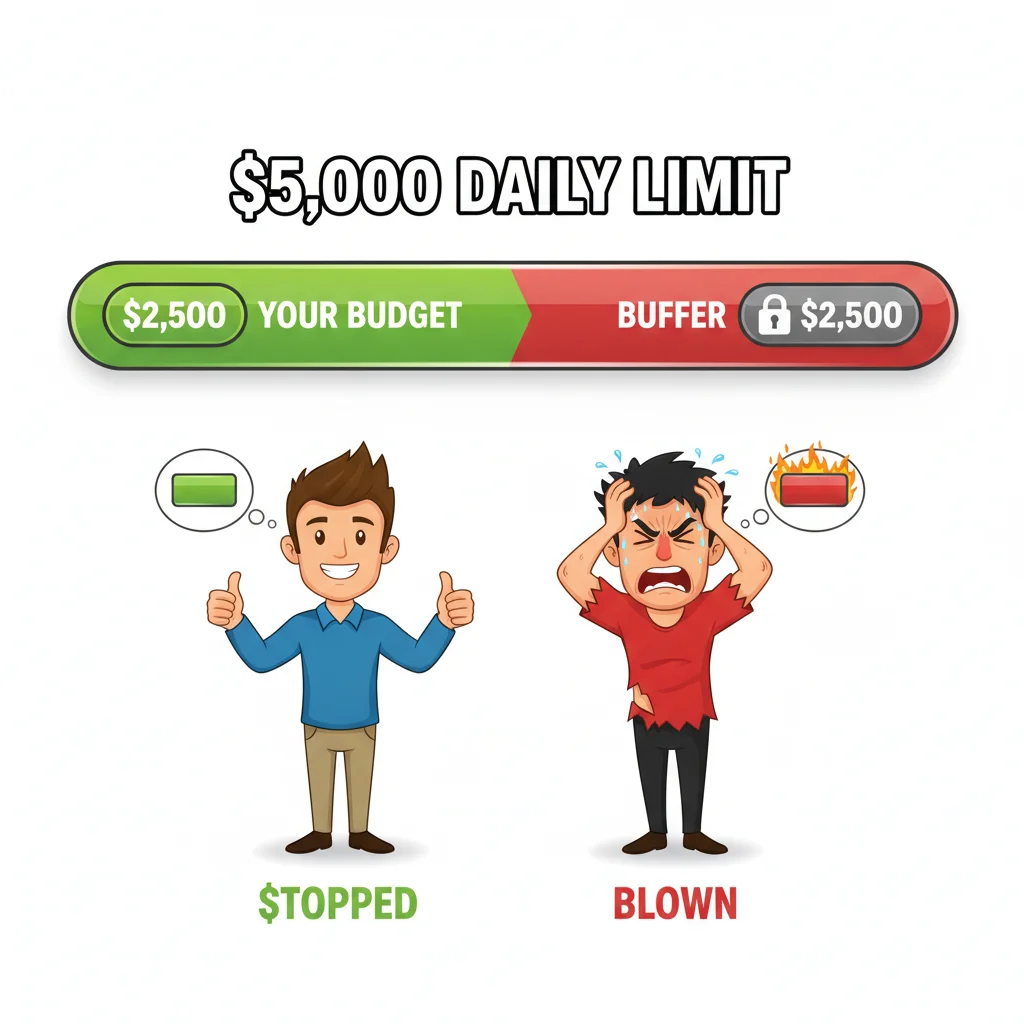
“The FSCA's 1:30 use limit is your speed governor. Embrace it.”
Offshore brokers will flash 1:500 or 1:1000 use in their ads. It looks like free power. It's actually a financial landmine. Let me give you a real example from my early days.
I deposited $500 (about R9,000 at the time) with an offshore broker offering 1:500 use. That meant I could control $250,000 worth of currency. I thought I was smart. I put on a 0.5 lot trade on GBP/USD (controlling $50,000). The trade moved 20 pips against me - a normal market wobble. My loss? $100. That was 20% of my entire account gone in minutes. I was in shock. The trade eventually came back to my entry, but I had already panicked and closed it at a loss.
Now, with FSCA-mandated 1:30 use, that same $500 account would only let me control $15,000. A 0.15 lot trade would be my max. That same 20-pip move would have cost me $30 - a painful but survivable 6% loss. The lower use forces you to size your trades appropriately for your account. It protects you from yourself.
Think of use as a car's accelerator. A beginner needs a car that limits speed to 120km/h while they learn. A 1:500 broker gives you a Formula 1 car on a public road. You will crash. The FSCA's 1:30 limit is your speed governor. Embrace it. Your goal as a beginner isn't to make 100% returns in a week; it's to still be trading in 6 months. Proper swing trading with sensible use is a far more sustainable path than hyper-scalping with insane margin.
💡 Winston 小贴士
Test withdrawal before you make a large deposit. If it's difficult to get R500 out, imagine trying to get R50,000.
“The FSCA's 1:30 use limit is your speed governor. Embrace it.”
Not all brokers want you to succeed as a trader. Some just want your deposit. Here are the types to avoid like a faulty traffic light in Johannesburg.
The 'Bonus' Broker: They offer a 100% deposit bonus. Sounds great, right? You deposit R1000, they give you another R1000 to trade with. The fine print: you have to trade a volume of 2 million lots (or some other impossible number) to withdraw your own original deposit. These bonuses are designed to make you over-trade until you lose everything. Your capital is not a casino chip.
The 'Signal Seller' in Broker's Clothing: The broker's main marketing is their 'proprietary AI signals' or 'expert daily analysis'. Their business model is to get you hooked on their signals, not to provide you with good execution. The conflict of interest is huge. You need a broker who makes money when you trade, not when you lose.
The Platform That's 'Too Easy': If the platform is filled with one-click 'BUY/SELL' buttons and constantly flashes pop-ups about 'hot opportunities', it's designed for impulse trading. You need a calm, neutral environment like MT4, not a digital casino.
The Offshore 'Regulation' Specialist: They claim to be regulated by some obscure body you've never heard of in Vanuatu or the Comoros. This is a paper shield. If you have a dispute, what are you going to do? Fly to Port Vila? Stick with FSCA regulation. The peace of mind is worth a slightly wider spread any day.
My rule? If their website has more promises of easy money than clear information on their spreads, fees, and FSCA license number, close the tab. A legitimate broker like IC Markets review or Pepperstone review leads with their regulations and trading conditions, not fantasies.
Managing risk as a beginner is hard enough without platform complexity; Pulsar Terminal's drag-and-drop orders and one-click risk management tools on MT5 make executing your plan simple and fast.
Pulsar Terminal
MT5一站式工具:拖拽下单、多重止盈/止损、追踪止损、网格交易、成交量分布图和自营交易保护。每日1000+交易者使用。
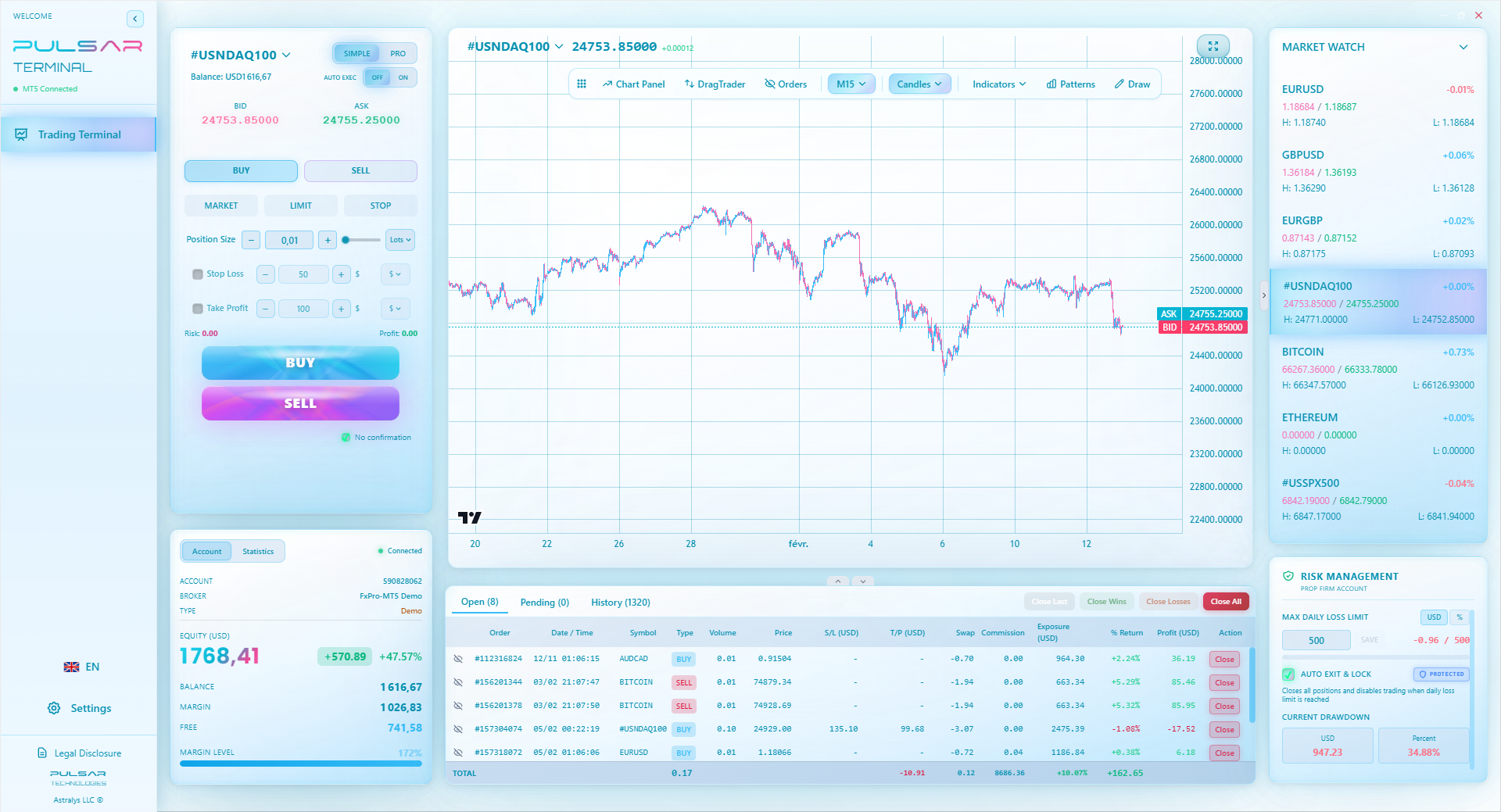
“Your goal as a beginner isn't to make 100% returns in a week; it's to still be trading in 6 months.”
Ready to open an account? Follow this list in order. Don't skip a step.
- Define Your Capital: Start with money you can afford to lose completely. R500-R2000 is a realistic starting point for a beginner in 2026. This is tuition money, not investment money.
- Shortlist 3 Brokers: Based on this guide, pick 3 FSCA-regulated brokers that offer ZAR accounts. Don't get distracted by shiny objects.
- Open a Demo Account with Each: Use real-world conditions. Fund it with your intended starting capital (e.g., R1000). Trade your planned strategy for two weeks. Track which platform feels most reliable.
- Test Support: Call or live chat each broker's support with a technical question (e.g., 'How do I set a trailing stop?'). See who responds fastest and most helpfully.
- Make Your First Deposit: Once you've chosen, deposit the minimum amount to open a live Cent account or a Micro account if available. This lets you trade in cents, not Rands, so a 50-pip loss might be R5, not R50. It's the best training wheels ever invented.
- Place Your First Live Trade: Make it tiny. 0.01 lots. Your goal is not profit. Your goal is to go through the entire process: calculating position size, entering, setting stop-loss and take-profit, managing the emotion, and closing. That's the win.

Example: Your first live trade on a Cent account:
- Account Balance: R1000 (10,000 cents)
- Risk per trade: 1% = R10 (100 cents)
- Trade: Buy EUR/USD at 1.0850
- Stop Loss: 1.0820 (30 pips risk)
- Position Size: (100 cent risk) / (30 pips) = 3.33 cents per pip. So, a 0.03 lot trade. The monetary risk is tiny, but the educational value is massive.
From here, your journey truly begins. Focus on process, not profits. Learn to use basic tools like the RSI indicator or MACD indicator properly on one pair, like EUR/USD guide, before adding more. Your broker is now just the arena. You are the fighter. Train accordingly.
FAQ
Q1What is the minimum deposit for a beginner in South Africa?
You can start with as little as R50-R500 at many regulated brokers offering Cent or Micro accounts. I strongly recommend starting with no more than R1000-R2000. This is learning capital. Your goal with this deposit is to learn how to trade without blowing up, not to make a living.
Q2Is Forex trading legal and tax-free in South Africa?
Yes, forex trading is legal through FSCA-regulated brokers. No, it is not tax-free. Profits from trading are considered income and are subject to income tax. You must declare your net profit (profits minus losses and expenses) to SARS. Keep detailed records of all your trades from day one.
Q3Can I use international brokers like IG or Forex.com?
You can, but it introduces complexity. You'll likely need to fund in USD or EUR, incurring bank conversion fees. Your consumer protection will fall under a foreign regulator (like the FCA in the UK), which can be harder to navigate from South Africa. For simplicity and cost, a global broker with a strong local FSCA presence (like the ones mentioned) is usually better for a beginner.
Q4What is a Cent account and do I need one?
A Cent account lets you trade where 1 standard lot is 1,000 units of currency instead of 100,000. This means you risk cents, not Rands. It is the single best tool for a beginner. You can practice real money psychology with real market execution, but a R50 mistake won't ruin your week. I recommend every beginner starts on a Cent account for their first 3-6 months.
Q5How do I know if my broker is really FSCA regulated?
Go directly to the FSCA's website (www.fsca.co.za) and use their 'Search for an authorised financial services provider' tool. Type in the broker's company name. Don't rely on a logo on the broker's site. The FSCA listing will show their license number and authorised services. If they're not there, they're not properly regulated for you.
Q6What's more important for a beginner: low spreads or a stable platform?
Stable platform, 100%. A platform that disconnects during load-shedding or news events will cause you catastrophic, uncontrollable losses. A slightly wider spread is a known, manageable cost. Slippage and requotes from a unstable platform are random account killers. Reliability first, then optimize costs later.
Winston 教授的课程
要点总结:
- ✓FSCA regulation is non-negotiable for fund safety.
- ✓Start with a ZAR account to avoid hidden currency costs.
- ✓Use a Cent account; risk cents, not Rands, while learning.
- ✓use above 1:30 is a trap, not an advantage.
- ✓Test the broker's platform stability during peak load-shedding.
这篇文章对您有用吗?
点击星星评分
每周交易洞察
免费每周分析与策略。无垃圾邮件。
关于作者
David van der Merwe
新兴市场交易员
约翰内斯堡交易者,11年新兴市场货币经验。专注于ZAR货币对、FSCA监管交易和南非市场分析。
评论
风险提示
金融工具交易存在重大风险,可能不适合所有投资者。过往业绩不代表未来表现。本内容仅供教育目的,不构成投资建议。在交易前请务必自行研究。
您可能还喜欢

Cara Trading Forex Sukses: 7 Prinsip dari Trader Profesional
Cara trading forex sukses dengan 7 prinsip trader pro: manajemen modal, disiplin, journal trading, backtest. Data nyata, bukan janji profit palsu.
Jam Trading Forex Terbaik untuk Trader Indonesia: Panduan Lengkap dengan Tabel Waktu
Panduan jam trading forex untuk trader Indonesia. Tabel 4 sesi dunia, jam emas 20:00-00:00, sesi mana yang harus dihindari. Data akurat + tips dari trader berpengalaman.
Top 5 Sàn Forex Uy Tín Nhất 2026: Review Jujur dari Trader Indonesia
Top 5 sàn forex uy tín 2026 untuk trader Indonesia. Review jujur: spread, deposit, withdraw, dukungan lokal. Exness, XM, IC Markets & lebih.
