


Everyone in Nigeria seems to have a 'secret' forex strategy that'll make you rich overnight.

Olumide Adeyemi
西非交易先驱 ·  Nigeria
☕ 9 分钟阅读
您将学到:
- 1The Nigerian Context First (Forget What You See on YouTube)
- 2The Foundation: Price Action & Support/Resistance
- 3Trend Following: Riding the Wave (Not Predicting It)
- 4Range Trading: Profiting When the Market Sleeps
- 5Strategies You Should Probably Avoid (From Experience)
- 6Putting It Together: Your Daily Trading Routine
- 7Risk Management: The Only 'Strategy' That Never Fails
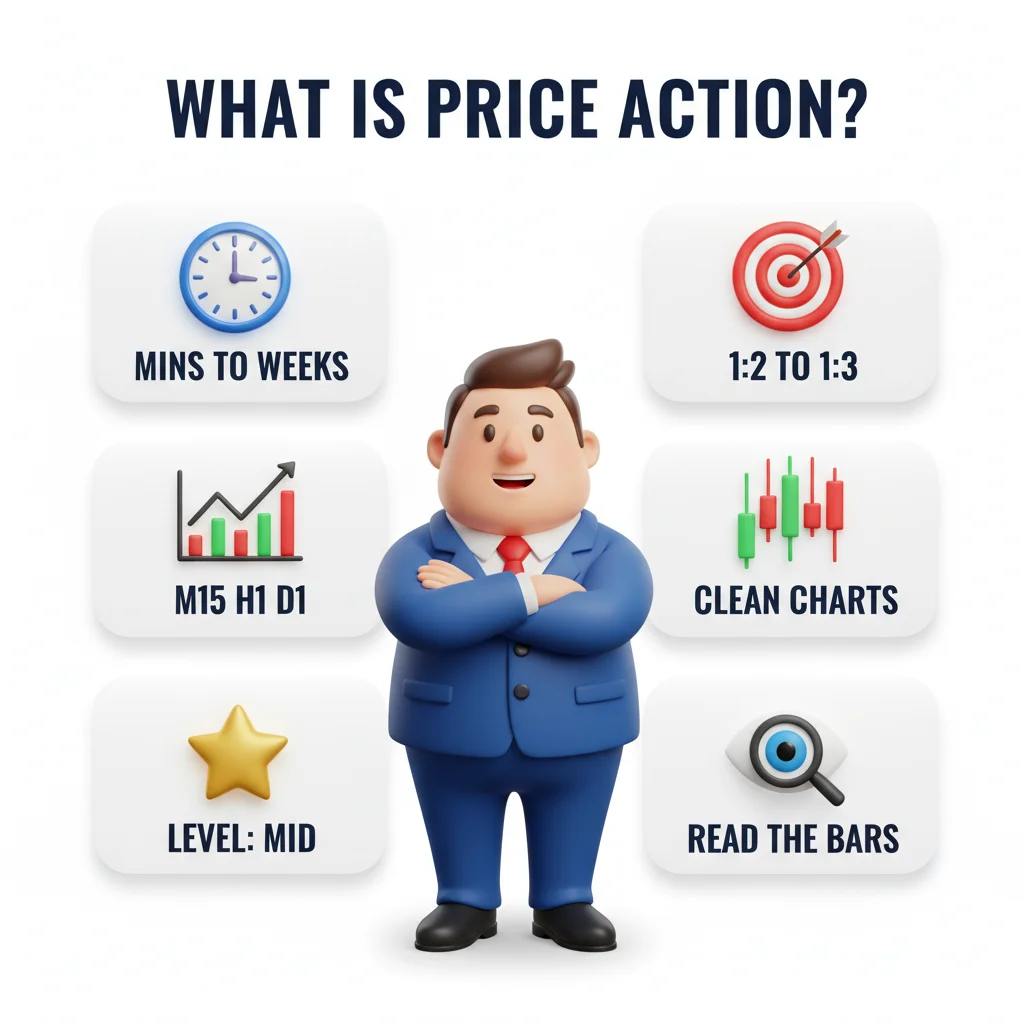
Everyone in Nigeria seems to have a 'secret' forex strategy that'll make you rich overnight. From WhatsApp groups promising 100% weekly returns to influencers selling expensive signals, it's a minefield of bad advice. I believed it too, early on. I lost ₦450,000 in my first six months chasing those fantasies. Let's cut through the noise. I'll show you the forex strategies that have survived real market conditions here, the exact costs you'll face, and how to adapt global methods to our unique Naira reality.
You can't just copy a strategy from a trader in London or New York and expect it to work the same way in Lagos. Our market has its own rhythm, dictated by CBN policies, liquidity crunches, and the psychological weight of the Naira. I learned this the hard way trying to scalping strategy during CBN announcement windows. The spreads on USD/NGN pairs would widen from 50 pips to over 200 in seconds, swallowing my tiny profit targets whole.
Your broker choice is your first strategic decision. Many popular international brokers like Exness, IC Markets, and XM accept Nigerians, but you're trading in a global pool. The 10% capital gains tax on profits is real, and funding your account can be a strategy in itself with bank restrictions. A $500-$1000 starting capital isn't just a suggestion, it's what you need to properly manage risk without getting wiped out by a few bad trades.

Warning: Nigerian banks are prohibited from facilitating forex transactions for 'speculative purposes'. This wording is vague. Using your personal domiciliary account for broker deposits/withdrawals can sometimes trigger account freezes. Using approved payment channels like Flutterwave or direct broker payment options is a crucial part of your operational strategy.
“A strategy is useless without a system.”
This isn't glamorous, but it's the bedrock. All my profitable years stem from understanding how price moves between clear levels. Forget the 20 complicated indicators. Start with a clean chart, identify where the price has historically stopped and reversed (support/resistance), and watch how it reacts there.
How I Apply It to Major Pairs
For pairs like EUR/USD, I look for reactions at round numbers (1.0800, 1.0900) and recent daily highs/lows. In March 2025, I took a short on EUR/USD at 1.0940, a level it had tested and failed to break above three times in the prior week. My stop was at 1.0985 (45 pips), and I took profit at 1.0860 (80 pips). The risk-reward was almost 1:2. The strategy wasn't complex, just patience.
The Naira Angle
With USD/NGN, support and resistance are often tied to CBN intervention levels or psychological barriers. When the pair hit ₦1,700 in late 2024, the selling pressure was immense. That wasn't just a random number, it was a line in the sand for the market. Trading around these levels requires bigger stops because of volatility, but the reactions can be powerful.

Pro Tip: Draw your support/resistance lines on the daily and 4-hour charts. Only take trades on the lower timeframes (like 1-hour or 15-min) when price approaches these major zones. This 'higher timeframe bias' filters out 70% of the noise.

💡 Winston 小贴士
The market doesn't know you exist. Your ego, your hopes for a new car, your rent due next week - none of it matters to the charts. Trade the price you see, not the price you want.
“You can be wrong about the market 60% of the time and still be profitable. How? Risk management.”
The old saying 'the trend is your friend' is true, but most traders misinterpret it. They jump on a trend after it's already moved 300 pips and then get caught in the pullback. Your job isn't to predict the start of a trend, but to confirm it's alive and then join it safely.
I use a simple two-step process. First, I look at the daily chart. Are the price swings making higher highs and higher lows (uptrend) or lower highs and lower lows (downtrend)? Second, I wait for a pullback to a key level - like a moving average or a previous support-turned-resistance area - and then enter on the resumption of the trend direction.
My biggest win in 2025 came from this on Gold (XAU/USD). The daily chart was in a clear uptrend. It pulled back from $2,080 to $2,020. I bought at $2,025 when the price reclaimed a 4-hour level, with a stop at $2,010. I rode it up to $2,160, using a trailing stop. That one trade netted over $13,000 on a 2-lot position. The key? I didn't buy the top or the bottom. I bought the confirmed continuation.

Example: Let's say you have a $1,000 account. You identify an uptrend on GBP/USD. You decide to risk 1% ($10) per trade. Your entry is at 1.2650, stop loss at 1.2620 (30 pips risk). Your position size is $10 / (30 pips * $1 per pip on a micro lot) = 0.33 micro lots. Use a position size calculator every single time. This discipline is what keeps you in the game.

“You can be wrong about the market 60% of the time and still be profitable. How? Risk management.”
Markets trend only about 30% of the time. The other 70%, they're consolidating in a range. This is where many trend traders lose money, constantly getting stopped out. A range trading strategy flips the script. You sell near the top of the range and buy near the bottom.
The tool I rely on most here is the RSI indicator. In a clear range, I'll look for RSI to hit overbought (above 70) near resistance as a potential sell signal, and oversold (below 30) near support as a buy signal. It's not foolproof, but it gives you a probabilistic edge.
I got chopped up in early 2024 trying to force trend trades on EUR/GBP. It was stuck between 0.8550 and 0.8600 for weeks. Once I switched mentality and started selling at 0.8595 and buying at 0.8560 with tight stops, I made 12 small, consistent wins in a row. The profit per trade was small (15-25 pips), but the win rate was high. This strategy builds confidence and account stability.
Remember, the moment price breaks decisively out of the range, this strategy fails. Your stop loss must be on the other side of the range, and you must be ready to abandon the plan if you get a clear breakout candle closing outside the range.
💡 Winston 小贴士
Your first loss is often your smallest loss. Chasing a losing trade by moving your stop loss further away is like refusing to leave a burning building because you forgot your phone.

“Boring trading is profitable trading.”
Not all strategies are created equal, especially in our context. Here are the ones that have cost me and other traders I know real money.
Hyper-Active Scalping with High use: The dream of making 50 pips a day sounds great. The reality? The pressure is immense, spreads and commissions eat your profits, and one emotional mistake can blow your account. Nigerian internet latency alone can make this a nightmare. I tried it on a $500 account with 1:500 use from a broker. I made ₦80,000 in two days. I lost ₦120,000 the next morning in one failed trade. The margin call came before I could react.
Martingale and Grid Systems: This is where you double your position after a loss to recover. It's mathematically doomed. I tested a grid EA on a demo account during a strong USD/CHF trend. The EA kept placing buy orders as the pair fell 400 pips. The floating loss was catastrophic, requiring enormous margin. In a real account, it would have been a total loss.
Copy Trading 'Gurus' Without Verification: Just because someone is Nigerian and has flashy car photos doesn't mean they can trade. I paid ₦150,000 for a 'signal service' in 2022. Their published track record was fake. They were just flipping a coin and posting the wins. Verify everything independently. Real traders talk about losses openly.
“Boring trading is profitable trading.”
A strategy is useless without a system. Here's the exact routine that took me from inconsistent to profitable.
- Morning Review (15 mins): Check the economic calendar. Any major CBN, US Fed, or ECB news today? If yes, I might avoid trading around that time. I then look at the daily charts of my 5-6 favorite pairs to identify the overall trend and key levels.
- Strategy Selection: Is the market trending or ranging? I decide which of my two core playbooks to use: Trend Pullback or Range Fade. I don't mix them.
- Wait for the Setup: This is the hardest part. I don't trade until price action gives me a clear signal at a pre-identified level. Some days, that means no trades. In 2025, I made money on only 42% of my trading days. But my profitable days were much bigger than my losing days.
- Execute & Manage: I enter with my pre-calculated position size. I place my stop loss immediately. I then set a take-profit target at a 1.5:1 or 2:1 risk-reward ratio. For trend trades, I might move my stop to breakeven after 50 pips in profit to eliminate risk.
- Journal: Every trade gets logged. Entry/exit reason, screenshot, emotional state. This is how you improve. My journal showed I lost 70% of my trades entered after 10 PM. So I stopped trading after 10 PM. Simple fix, massive result.
This routine turns abstract forex strategies into a repeatable, boring business. And boring is profitable.
💡 Winston 小贴士
Spend 80% of your time learning to identify high-probability, low-risk setups, and 20% on execution. Most beginners do the opposite and wonder why they're always in the red.
“Verify everything independently. Real traders talk about losses openly.”
You can be wrong about the market 60% of the time and still be profitable. How? Risk management. This isn't a side topic, it's the core of every successful trader's plan.
The 1% Rule: Never, ever risk more than 1% of your trading capital on a single trade. On a $1,000 account, that's $10. This means if your stop loss is 25 pips away, your position size must be small enough that a 25-pip loss equals $10. This protects you from a string of losses ending your career.
The Correlation Trap: Don't open a buy trade on EUR/USD and a buy trade on GBP/USD at the same time. They often move together. You're effectively doubling your risk. It feels like two trades, but it's one big bet.
Surviving Drawdown: Even the best swing trading systems have losing streaks. If you have 10 losing trades in a row risking 1% each, you're down 10%. It hurts, but you're alive. If you were risking 5% per trade, you'd be down 50%. The psychological damage is irreparable, and recovering requires a 100% return just to get back to breakeven.
My personal rule is even stricter. If I lose 5% of my account in a month, I stop trading for the rest of the month. I go back to demo. It forces me to cool off and review what's broken. This rule saved me from a $4,000 loss in July 2023.

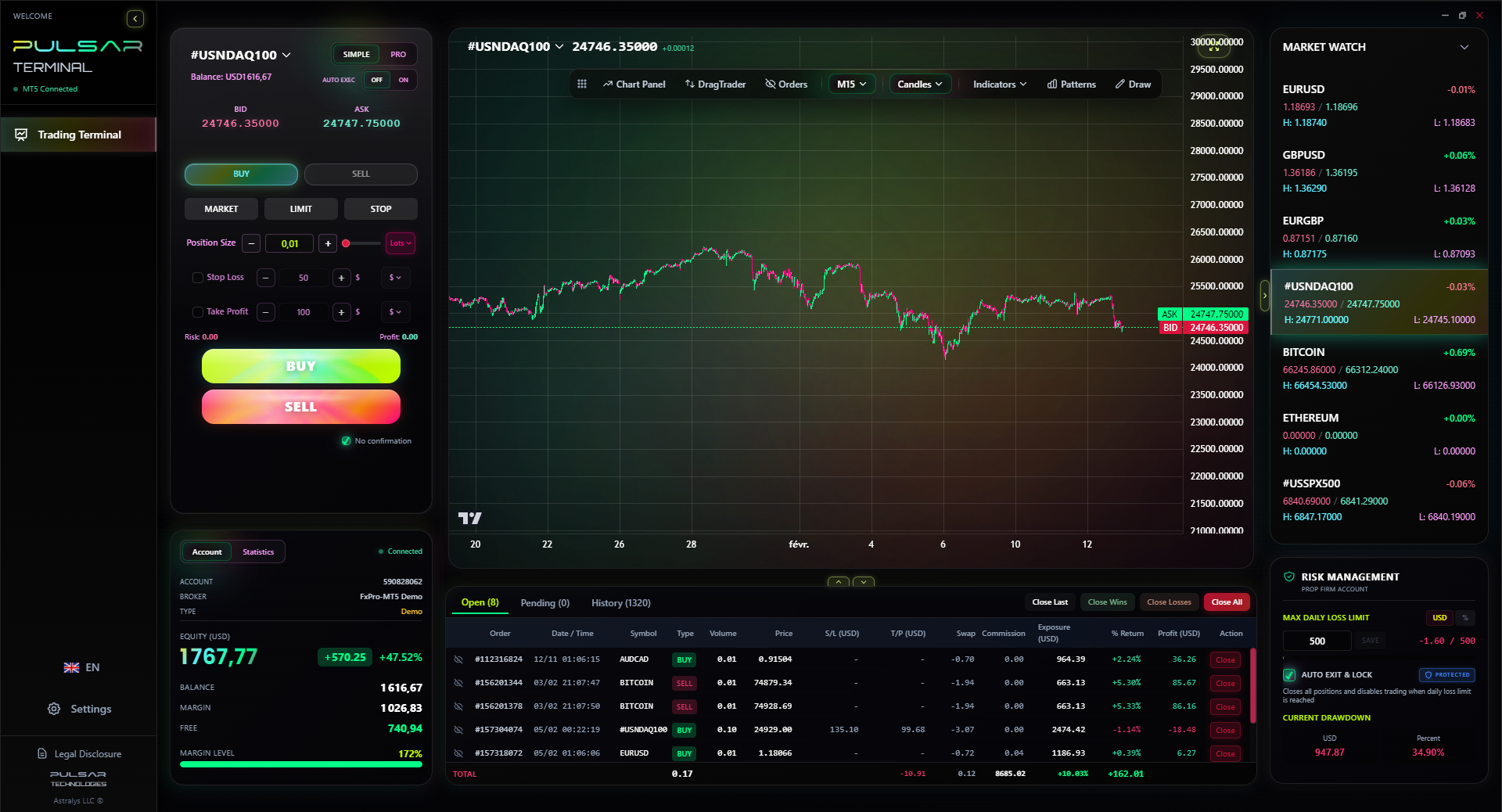
Sticking to your risk management rules is easier when your trading platform automates position sizing, stop-loss placement, and trade journaling for you.
Pulsar Terminal
MT5一站式工具:拖拽下单、多重止盈/止损、追踪止损、网格交易、成交量分布图和自营交易保护。每日1000+交易者使用。
FAQ
Q1What is the best forex strategy for beginners in Nigeria?
Start with simple support/resistance trading on the 4-hour and daily charts of a major pair like EUR/USD. It teaches you to read price action without indicator clutter. Pair it with strict risk management (the 1% rule). Avoid USD/NGN initially due to its high volatility and wider spreads.
Q2How much money do I need to start forex trading in Nigeria?
You can technically start with as little as $10 with some brokers, but it's not practical for learning proper risk management. I recommend a minimum of $500. This allows you to trade micro lots, withstand normal drawdowns, and use realistic stop losses without being stopped out by tiny market noise.
Q3Are forex trading profits taxable in Nigeria?
Yes. Profits from forex trading are subject to Capital Gains Tax at a rate of 10%. You are responsible for declaring this income to the Federal Inland Revenue Service (FIRS). Keep detailed records of all your trades, deposits, and withdrawals.
Q4Which time frame is best for forex trading?
There's no single 'best' frame. It depends on your strategy and lifestyle. For full-time traders, the 1-hour and 4-hour charts offer a good balance between signal frequency and noise. For part-time traders (like most Nigerians with day jobs), the daily chart is ideal. You can analyze in the evening and set orders for the next day.
Q5Can I use use to grow a small account quickly?
You can, but it's the fastest way to lose a small account. use amplifies both profits and losses. With a $100 account and 1:500 use, a 20-pip move against you can wipe out your capital. Use use conservatively. I never use more than 1:30 on my main account, regardless of what the broker offers.
Q6How do I know if a forex strategy is working?
Test it objectively over at least 50-100 trades in a demo account. Calculate the win rate, average win size, average loss size, and most importantly, the expectancy (Average Win * Win Rate) - (Average Loss * Loss Rate). A positive expectancy means it has a statistical edge. Your gut feeling is not a metric.
Winston 教授的课程
要点总结:
- ✓Risk max 1% per trade, always.
- ✓Test any strategy for 50+ trades first.
- ✓Trends exist only 30% of the time.
- ✓Start with at least $500 capital.
- ✓Journal every single trade.
这篇文章对您有用吗?
点击星星评分
每周交易洞察
免费每周分析与策略。无垃圾邮件。
关于作者
Olumide Adeyemi
西非交易先驱
尼日利亚最活跃的外汇交易教育者之一。从拉各斯出发有8年交易经验。专注于低资金策略和面向非洲交易者的自营公司挑战。
评论
风险提示
金融工具交易存在重大风险,可能不适合所有投资者。过往业绩不代表未来表现。本内容仅供教育目的,不构成投资建议。在交易前请务必自行研究。
您可能还喜欢

Cara Trading Forex Sukses: 7 Prinsip dari Trader Profesional
Cara trading forex sukses dengan 7 prinsip trader pro: manajemen modal, disiplin, journal trading, backtest. Data nyata, bukan janji profit palsu.
Jam Trading Forex Terbaik untuk Trader Indonesia: Panduan Lengkap dengan Tabel Waktu
Panduan jam trading forex untuk trader Indonesia. Tabel 4 sesi dunia, jam emas 20:00-00:00, sesi mana yang harus dihindari. Data akurat + tips dari trader berpengalaman.
Top 5 Sàn Forex Uy Tín Nhất 2026: Review Jujur dari Trader Indonesia
Top 5 sàn forex uy tín 2026 untuk trader Indonesia. Review jujur: spread, deposit, withdraw, dukungan lokal. Exness, XM, IC Markets & lebih.
