


I lost ₦450,000 in a single afternoon back in 2015.

Olumide Adeyemi
西非交易先驱 ·  Nigeria
☕ 10 分钟阅读
您将学到:

I lost ₦450,000 in a single afternoon back in 2015. I was convinced the Naira was going to strengthen against the Dollar after some positive news. I piled into a USD/NGN trade with way too much size, ignoring the fact that the Central Bank was still heavily involved. The market moved against me, my stop-loss was too tight, and I got wiped out. That painful lesson taught me more about how forex trading actually works than any textbook ever could. It's not just about buying and selling currencies, it's about understanding the engine under the hood - the liquidity, the spreads, the margin calls - and how it all works in the real world, especially here in Nigeria with our unique challenges.
Most people think forex trading is about predicting if the Naira will go up or down. That's part of it, but it's like saying driving is just about steering. The real magic, and danger, is in the mechanics.
Forex, or foreign exchange, is the global marketplace for trading national currencies against one another. It's the largest financial market in the world, with over $7 trillion traded daily. No central exchange like the NGX exists. Instead, it's an over-the-counter (OTC) market run by a network of banks, brokers, and institutions.
When you trade, you're always trading a pair. Think EUR/USD or GBP/NGN. The first currency is the 'base', the second is the 'quote'. If you buy EUR/USD, you're buying Euros and selling US Dollars, betting the Euro will rise relative to the Dollar. The price you see is how much of the quote currency you need to buy one unit of the base.

Warning: Many new traders get fixated on 'directional' bets (up/down) and completely ignore the cost of doing business - the spread. On exotic pairs involving the Naira, spreads can be massive, eating your profits before the trade even moves.
Here's the kicker for us in Nigeria: we often trade 'proxy' pairs. You might want to bet on the Naira, but direct USD/NGN trading with a retail broker can be tricky or have huge spreads. So, you might trade USD/ZAR (US Dollar vs. South African Rand) as a proxy for African currency sentiment. You need to understand these workarounds.
I learned this the hard way early on. I was right about a Naira move but lost money on USD/NGN because the spread was 50 pips! My position size calculator told me I needed a 30-pip move to profit, but I never checked if the market could give it to me cheaply. Now, checking the spread is my first step, every single time.
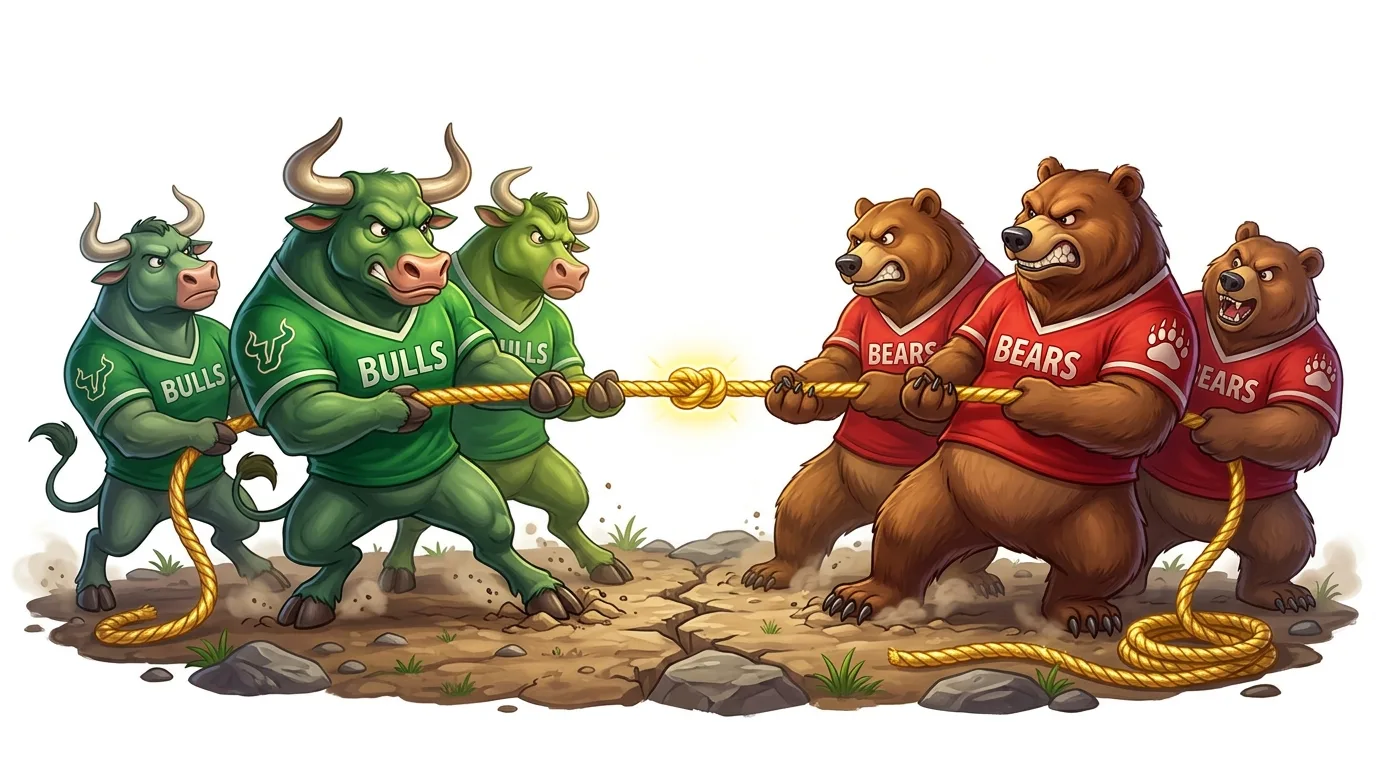
This is where most tutorials stop and where the real education begins. How forex trading works on a technical level determines if you sink or swim.
Liquidity is King
Liquidity means how easily you can buy or sell without moving the price. Major pairs like EUR/USD have insane liquidity. You can move millions with a click. Exotic pairs or crosses (like GBP/NGN) have thin liquidity. This means:
- Wider spreads (the difference between buy and sell price).
- Slippage (your order fills at a worse price than you wanted).
- Sharp, unpredictable spikes.
The Silent Killer: The Spread
You don't pay a commission on most retail accounts. Instead, you pay the spread. If EUR/USD is quoted as 1.0850/1.0852, the spread is 2 pips. You are 'down' 2 pips the moment you enter a trade. Your trade must first overcome this cost to become profitable. On a slow day, this can be your entire profit target.
use: A Double-Edged Sword
This is the big one. use lets you control a large position with a small amount of capital (your margin). In Nigeria, brokers like Exness or IC Markets might offer 1:500 or even 1:1000 use.

Example: With 1:100 use, you only need ₦10,000 in your account to control a ₦1,000,000 position. A 1% move in your favor doubles your margin. A 1% move against you wipes it out. That's a margin call.
use amplifies everything: gains, losses, and even the psychological pressure. My ₦450k loss? That was 1:200 use on a position way too big for my account. I was gambling, not trading. Now, I rarely use more than 1:30, even if my broker offers more. It forces better position size discipline.

💡 Winston 小贴士
The spread isn't a fee, it's a toll bridge. If the toll is 5 pips and your profit target is 10, you've already given up half your potential gain before the journey starts. Always trade where the tolls are low.

“use doesn't amplify your strategy; it amplifies your emotions.”
Let's walk through a real trade I took last month on Gold (XAU/USD). It shows forex trading and how it works in practice.
- Analysis: I used my MACD indicator and RSI indicator on the 4-hour chart. Both showed bullish divergence after a pullback to a key support level. I also checked the economic calendar for US Dollar news.
- The Plan: I decided to buy (go long) XAU/USD if it broke above a minor resistance at $2325.
- Order Placement: I didn't sit and wait. I set a Buy Stop Limit order at $2325.50. This meant: 'If price hits $2325.50, automatically buy at a limit of $2326.' This avoids bad slippage on the break.
- Risk Management: My account had $2,000. I risked 1% ($20). My stop-loss was at $2318. That's a 7.5-point risk. Using a position size calculator, I found I could trade 0.27 lots. My take-profit was set at $2340 (a 14-point target, nearly a 2:1 reward-to-risk ratio).
- Execution & Management: The order triggered. I was in at $2326. I then moved my stop-loss to breakeven when price reached $2330 (up 4 points). This removes the risk from the trade.
- Exit: Price hit my take-profit at $2340. The trade netted a profit of about $378. The key? The plan was set before I entered. No emotions.
This process - plan, place, manage - is how it works when you're doing it right. The alternative is clicking buttons reactively, which is a fast track to losing your deposit.
You can't trade London open at 8 AM if you're in Lagos traffic. You need a style that fits your life.
| Style | Time Commitment | Best For | Risk Profile |
|---|---|---|---|
| Scalping | High (hours/day) | The disciplined, screen-glued trader | Very High |
| Day Trading | Medium (2-4 hrs/day) | Traders who can dedicate mornings or evenings | High |
| Swing Trading | Low (30 mins/day) | Professionals, students, busy people | Medium |
| Position Trading | Very Low (weekly check) | Long-term, fundamental-focused investors | Low-Medium |
For most Nigerians with jobs, swing trading is the sweet spot. You hold trades for days or weeks, catching bigger moves. You don't need to watch screens all day. You set your orders, set alerts on your phone, and check in once a day. I've found more consistency with this than with frantic scalping strategy.
Day trading is possible if you can trade the European session (1 PM - 5 PM Nigerian time). This is when liquidity is high and spreads are low on majors like EUR/USD.

Pro Tip: Match your style to your personality and schedule. A restless person will fail at position trading. A busy doctor will fail at scalping. Be honest with yourself.
💡 Winston 小贴士
Your trading platform's order entry screen is a confession booth. The numbers you type in for stop-loss and take-profit reveal your true expectations and fears. If you can't type them in before clicking 'buy', you're not trading, you're hoping.

“A stop-loss is not an admission of being wrong. It's the receipt for the cost of finding out if you're right.”
Your broker is your gateway. A bad one will fail you at the worst moment. Here’s what matters for us:
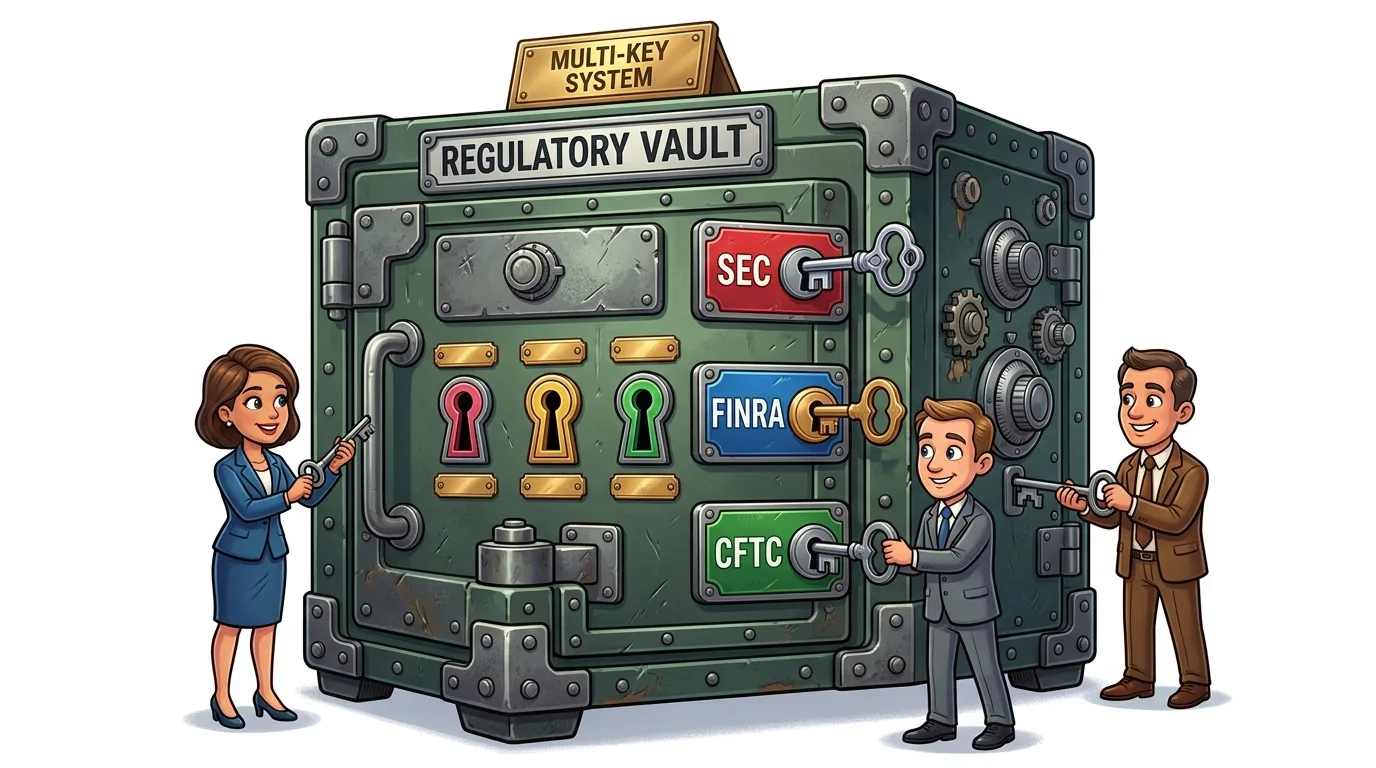
- Regulation & Safety of Funds: This is non-negotiable. Look for brokers regulated by top-tier authorities like the FCA (UK) or ASIC (Australia). They segregate client funds. Many brokers like IC Markets and Pepperstone accept Nigerian clients under their global entities. Avoid unregulated 'bucket shops' promising the moon.
- Deposit & Withdrawal: Can you fund with your Nigerian debit card or bank transfer? How long do withdrawals take? What are the fees? XM and Exness have historically had good local payment processing. Test with a small amount first.
- Spreads & Commissions: Compare the typical spread on the pairs you'll trade. A 'zero spread' account usually has a commission. Do the math to see which is cheaper for your trading size.
- use Offered: While high use is available, remember my earlier warning. Choose a broker that allows you to adjust your use level down to something sane.
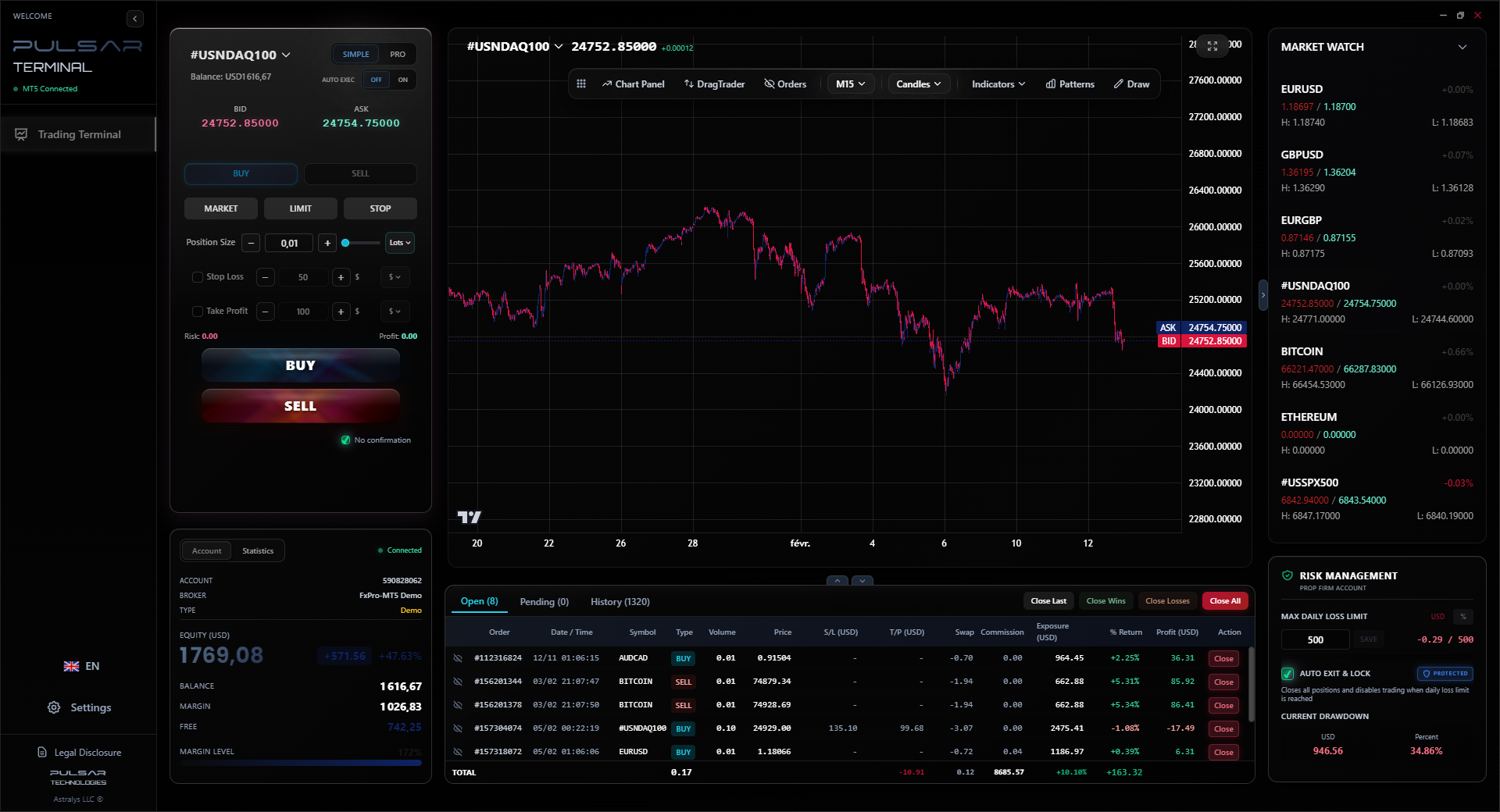
- Platform & Tools: MT4/MT5 is standard. But do they offer additional tools for analysis? This is where a platform like Pulsar Terminal, which works with MT5, can be a game-changer for advanced order types and charting.
The biggest mistake I see? Chasing bonus offers. A 100% deposit bonus usually comes with impossible withdrawal conditions. Focus on execution speed and withdrawal reliability, not free money.
Managing multiple trades and complex orders on MT5 can be clunky, but tools like Pulsar Terminal streamline it with drag-and-drop orders and one-click breakeven stops.
Pulsar Terminal
MT5一站式工具:拖拽下单、多重止盈/止损、追踪止损、网格交易、成交量分布图和自营交易保护。每日1000+交易者使用。
Let's get real. You will make mistakes. Here are the classics.
1. Overtrading: This isn't just too many trades. It's trading when the market is dead, trading too large a size, trading to 'get back' losses. Boredom is a killer. If there's no clear setup, walk away.
2. Ignoring Fundamentals: As a technical trader, I used to ignore news. Then I got caught in a GBP/USD trade during a Brexit vote. A 200-pip spike against me in seconds. Always know when major news (like US Non-Farm Payrolls or CBN announcements) is due.
3. No Stop-Loss: This is suicide. 'I'll just watch it' doesn't work. The market can move faster than you can react. A stop-loss is your life jacket. A margin call is what happens without one.
4. Chasing the Market: You see EUR/USD flying up. You FOMO (Fear Of Missing Out) and buy at the top. The smart money is taking profits, and you're left holding the bag. Wait for a pullback or a new setup.
5. Misunderstanding a Pip's Value: A pip on USD/NGN is not the same as a pip on EUR/USD. You must know the value for your specific pair and lot size before you trade. That pip definition is critical for your risk calculation.
The common thread? Poor risk and trade management. The market analysis gets you in the door, but management keeps you in the game.
💡 Winston 小贴士
The most important currency pair you'll ever trade is Patience/Impulsiveness. The chart of that pair always trends down for new traders. Your first job is to flip the trend.

“The market doesn't care about your rent, your dreams, or your analysis. It only responds to collective action and liquidity.”
Ready to start? Don't deposit real money yet. Here's your month-one plan.
Week 1-2: Paper Trading & Education
- Open a demo account with a reputable broker. Give yourself a virtual ₦500,000.
- Don't try to double it. Try to make a consistent 2-3% per week with no losing weeks.
- Practice placing orders, setting stops, calculating position size. Get the mechanics down cold.
- Read one solid book on trading psychology (Mark Douglas's Trading in the Zone is a classic).
Week 3-4: Developing a Routine
- Pick ONE major pair (EUR/USD is perfect).
- Pick ONE time frame (like the 1-hour chart).
- Pick TWO indicators (like RSI and Moving Averages).
- Write down a simple rule: 'I will only buy if price is above the 200 MA and RSI is above 50 and rising.'
- Backtest this on your demo account for 20 trades. Record every result in a journal.
The Live Launch: If your demo results are positive and consistent, fund a live account with the MINIMUM amount. I'm talking ₦50,000 or $100. Your goal with this real money is not to profit. Your goal is to execute your plan without emotion. If you can do that for 2 months, then you can think about scaling up.
Forex trading and how it works is a skill. You wouldn't bet your life savings on your first game of chess. Don't do it with forex. Be patient, be humble, and focus on learning the process, not chasing profits.
FAQ
Q1Is forex trading legal in Nigeria?
Yes, forex trading is legal for individuals in Nigeria. However, you must trade through an international broker regulated abroad, as the Securities and Exchange Commission (SEC) Nigeria does not currently license retail forex brokers. Always ensure your chosen broker is regulated by a reputable foreign authority like the FCA or ASIC.
Q2How much money do I need to start forex trading in Nigeria?
You can start with as little as $10 (about ₦15,000) with some brokers due to high use. But I strongly advise against this. With such a small amount, proper risk management is nearly impossible. A more realistic starter amount that allows for sensible position sizing is between ₦100,000 and ₦200,000. Start with a demo account regardless.
Q3What is the best time to trade forex in Nigeria?
The most liquid and volatile sessions overlap from 1:00 PM to 5:00 PM Nigerian Time (when the London session is fully open and the US session is starting). This is when spreads are tightest and movement is most reliable for pairs like EUR/USD and GBP/USD.
Q4Can I trade the Naira (NGN) directly?
It's difficult and often expensive through retail brokers. Direct USD/NGN pairs typically have very wide spreads (50+ pips) if offered, making short-term trading unprofitable. Many Nigerian traders use proxy pairs like USD/ZAR (US Dollar/South African Rand) to gain exposure to African currency markets or simply focus on major forex pairs.
Q5What's the difference between a pip and a spread?
A pip is the smallest standard price move a currency pair can make. The spread is the difference between the buy (ask) and sell (bid) price, measured in pips. It's the broker's fee. If EUR/USD is quoted 1.0850/1.0852, the spread is 2 pips. You start your trade at a 2-pip loss.
Q6How do I avoid scams in forex trading?
Avoid any 'mentor' or 'signal seller' who guarantees profits or asks for direct control of your funds. Only use well-known, internationally regulated brokers (research reviews for Exness, IC Markets, etc.). If an offer sounds too good to be true (e.g., 'double your money in a week'), it is a scam.
Q7Is forex trading a good side hustle for Nigerians?
It can be, but not in the way most people think. It's not a quick cash side hustle. It's a skilled profession that requires months, often years, of dedicated learning and practice with real risk of loss. Treat it as a serious skill acquisition, not a casual money-making app. Swing trading is the most compatible style for a busy professional.
Winston 教授的课程
要点总结:
- ✓A 2-pip spread on EUR/USD costs $20 on a standard lot. Know your costs.
- ✓Using 1:100 use? A 1% move is a 100% gain or loss on your margin.
- ✓Trade management (moving to breakeven) is 10x more important than entry.
- ✓Backtest 50 trades before risking one naira of real money.
这篇文章对您有用吗?
点击星星评分
每周交易洞察
免费每周分析与策略。无垃圾邮件。
关于作者
Olumide Adeyemi
西非交易先驱
尼日利亚最活跃的外汇交易教育者之一。从拉各斯出发有8年交易经验。专注于低资金策略和面向非洲交易者的自营公司挑战。
评论
风险提示
金融工具交易存在重大风险,可能不适合所有投资者。过往业绩不代表未来表现。本内容仅供教育目的,不构成投资建议。在交易前请务必自行研究。
您可能还喜欢

Cara Trading Forex Sukses: 7 Prinsip dari Trader Profesional
Cara trading forex sukses dengan 7 prinsip trader pro: manajemen modal, disiplin, journal trading, backtest. Data nyata, bukan janji profit palsu.
Jam Trading Forex Terbaik untuk Trader Indonesia: Panduan Lengkap dengan Tabel Waktu
Panduan jam trading forex untuk trader Indonesia. Tabel 4 sesi dunia, jam emas 20:00-00:00, sesi mana yang harus dihindari. Data akurat + tips dari trader berpengalaman.
Top 5 Sàn Forex Uy Tín Nhất 2026: Review Jujur dari Trader Indonesia
Top 5 sàn forex uy tín 2026 untuk trader Indonesia. Review jujur: spread, deposit, withdraw, dukungan lokal. Exness, XM, IC Markets & lebih.
