


Let's cut through the noise.

David van der Merwe
新兴市场交易员 ·  South Africa
☕ 10 分钟阅读
您将学到:
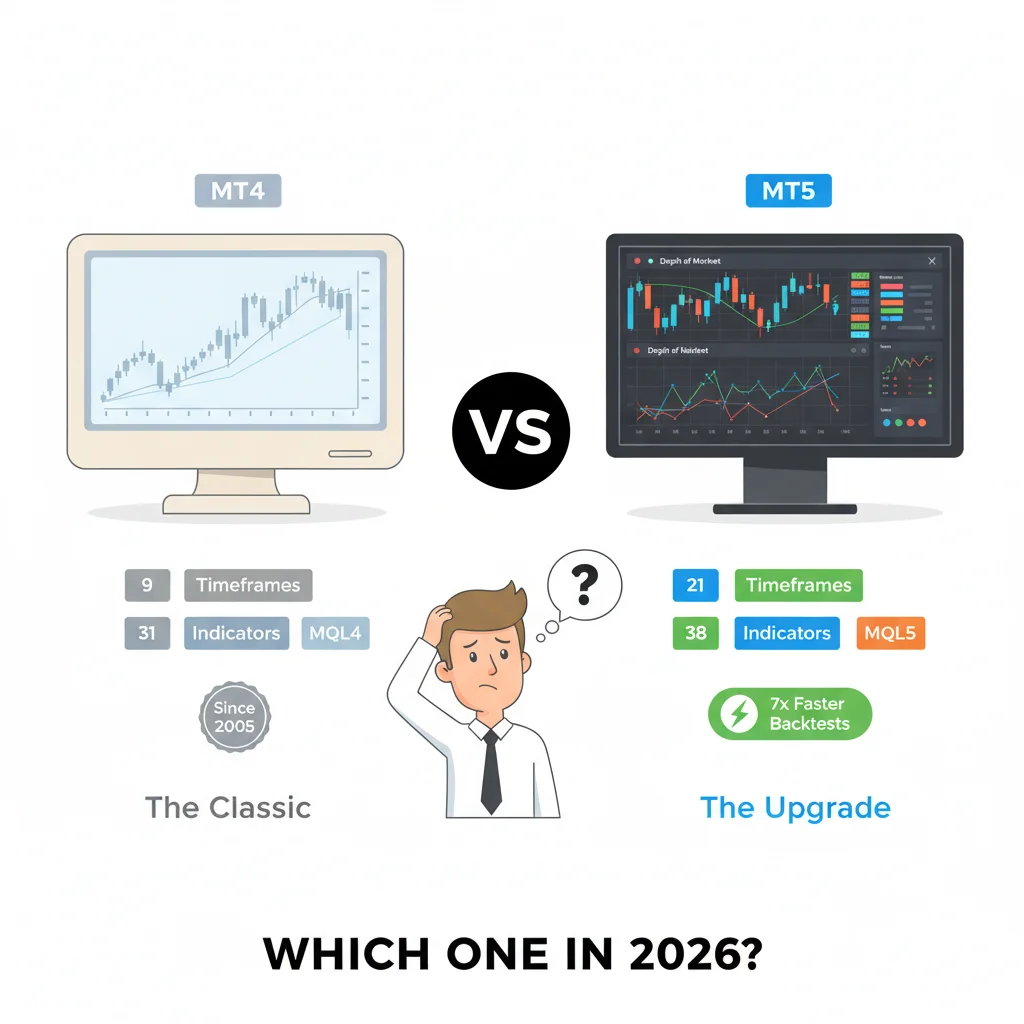
Let's cut through the noise. Most of the advice you get about forex vs stocks is generic rubbish from people who've never traded a rand in their life. They'll tell you forex is 24/5 and stocks have dividends, but that's like comparing a bakkie to a sedan without mentioning the potholes on the N1. The real decision isn't about which market is 'better' - it's about which one fits your personality, your schedule, and your tolerance for JSE-specific nonsense. Having traded both from Cape Town to Joburg for over a decade, I'm going to show you the unvarnished, South African reality of each. We'll look at liquidity during load-shedding, the real cost of trading USD/ZAR, and why some JSE stocks move like a tortoise on sedatives.
First, let's define our playground. When South Africans talk stocks, we're primarily talking about the JSE. It's our home turf. You're buying shares in companies like Naspers, Sasol, or Shoprite. You own a tiny piece of that business. The market is open from 9:00 to 17:00 SAST on weekdays. Full stop. If news breaks on a Saturday, you're sitting on your hands until Monday.
Forex is the foreign exchange market. It's where currencies are traded. For us, the most important pair is USD/ZAR. You're not buying a company; you're betting on the value of one currency against another. This market runs 24 hours a day, five days a week. It starts in Sydney, moves to Tokyo, then London, and finally New York. This is crucial for us in SA. You can trade the USD/ZAR reaction to a US jobs report at 14:30 SAST, or the EUR/USD move during the London open at 10:00 our time. The market doesn't care if it's 2 AM in Sandton.
Here’s the first major fork in the road: ownership vs speculation. With stocks, you can be a 'long-term investor.' Buy and hold, collect dividends, attend AGMs (if you're into that sort of thing). With forex, you're almost always a speculator. You're not holding ZAR to earn interest (the carry trade is a different story); you're trying to profit from price swings. This fundamental difference shapes everything from your strategy to your psychology.

Warning: Don't fall for the 'forex is easier' myth. The 24/5 access is a double-edged sword. It can lead to overtrading, especially when you're watching charts at night instead of sleeping. I've blown up a small account doing exactly that, chasing moves in the Asian session that meant nothing.
This is where the rubber meets the road. Let's talk about what moves, how fast, and how much it costs you.
Liquidity: Can You Get In and Out?
The forex market is the largest financial market in the world, with a daily turnover of over $6 trillion. Major pairs like EUR/USD are incredibly liquid. This means you can execute large orders quickly with minimal price slippage. For USD/ZAR, liquidity is still decent, but it's thinner than the majors. You might see wider spreads, especially around local market opens or during local data releases.
The JSE's liquidity is a different beast. For the top 40 shares, it's generally good. But step outside the blue-chips, and you can find yourself in a stock that barely trades. I once tried to build a position in a small-cap mining stock and watched the order book for two days just to get filled. It was painful.
Volatility: Where's the Action?
Forex pairs have consistent, measurable volatility. Economic data from the US, EU, or UK can cause significant, rapid moves. The USD/ZAR is notoriously volatile, often driven by local politics, commodity prices (like platinum and gold), and global risk sentiment. A tweet from a finance minister can send it reeling.
JSE stocks can have explosive volatility around earnings reports, merger news, or sector-specific events. But for much of the time, they can trend slowly or drift sideways. The overall index (the JSE Top 40) is often less volatile than a single currency pair.
The Cost of Doing Business
This is critical for your bottom line.
| Cost Factor | Forex (e.g., USD/ZAR) | JSE Stocks (e.g., Naspers) |
|---|---|---|
| Primary Cost | The Spread (difference between buy & sell price) | Broker Commission + SAFEX Fee + VAT |
| Typical Example | 15-50 pips spread on USD/ZAR | ~R50-100 per trade (online broker) |
| Overnight Fees | Swap/rollover (can be positive or negative) | None for outright ownership |
For forex, your main enemy is the spread. Using a tight-spread broker like IC Markets or Pepperstone is non-negotiable. For stocks, it's the commission. If you're a scalping strategy fan, those R50 fees will murder your profits on small moves. Forex often wins for short-term traders purely on cost structure.

Example: Say you buy R100,000 of Naspers. You pay R50 commission to buy and will pay another R50 to sell. The stock needs to move up 0.1% just to cover your round-trip costs. For a forex trade of equivalent size (roughly 5,300 USD/ZAR units), a 20-pip spread might cost you R40 upfront, with no commission to exit.

💡 Winston 小贴士
A market is just a crowd. Forex is a global crowd reacting to economic whispers. The JSE is a local crowd gossiping about company news. Learn which crowd you understand best, and never shout louder than they do.
“Never use the maximum use your forex broker offers. It's a trap.”
This is the big one, where fortunes are made and lost. South African regulations treat these two markets very differently, and it changes the game completely.
Forex brokers (especially international ones regulated by bodies like the FSCA) offer high use. It's common to see 1:100, 1:200, or even 1:500 for major pairs. For USD/ZAR, use is typically lower due to its volatility, often around 1:33 for retail clients under ESMA-like rules adopted by many brokers. What does this mean? With R10,000 in your account, you might control a R330,000 position in USD/ZAR. A 1% move in your favor doubles your capital. A 1% move against you wipes you out. This is why risk management is gospel. You must use a position size calculator for every single trade. I learned this the hard way early on, putting 20% of my account on one USD/ZAR trade because I was 'sure' the rand would strengthen. A surprise SARB statement later, and I was staring at a margin call.
Trading stocks on the JSE with use is a more formal process. You typically need to apply for a margin account. The use is much lower, often 1:1.5 or 1:2 at most. So, with your R10,000, you might control R15,000-R20,000 worth of shares. It's far less explosive. The risk of a catastrophic, same-day blow-up is lower, but so is the potential for rapid growth from a small account.

Pro Tip: Never use the maximum use your forex broker offers. It's a trap. I treat 1:30 as my absolute ceiling for USD/ZAR, and I usually trade at half that. Your goal is to survive, not to be a hero for one trade.

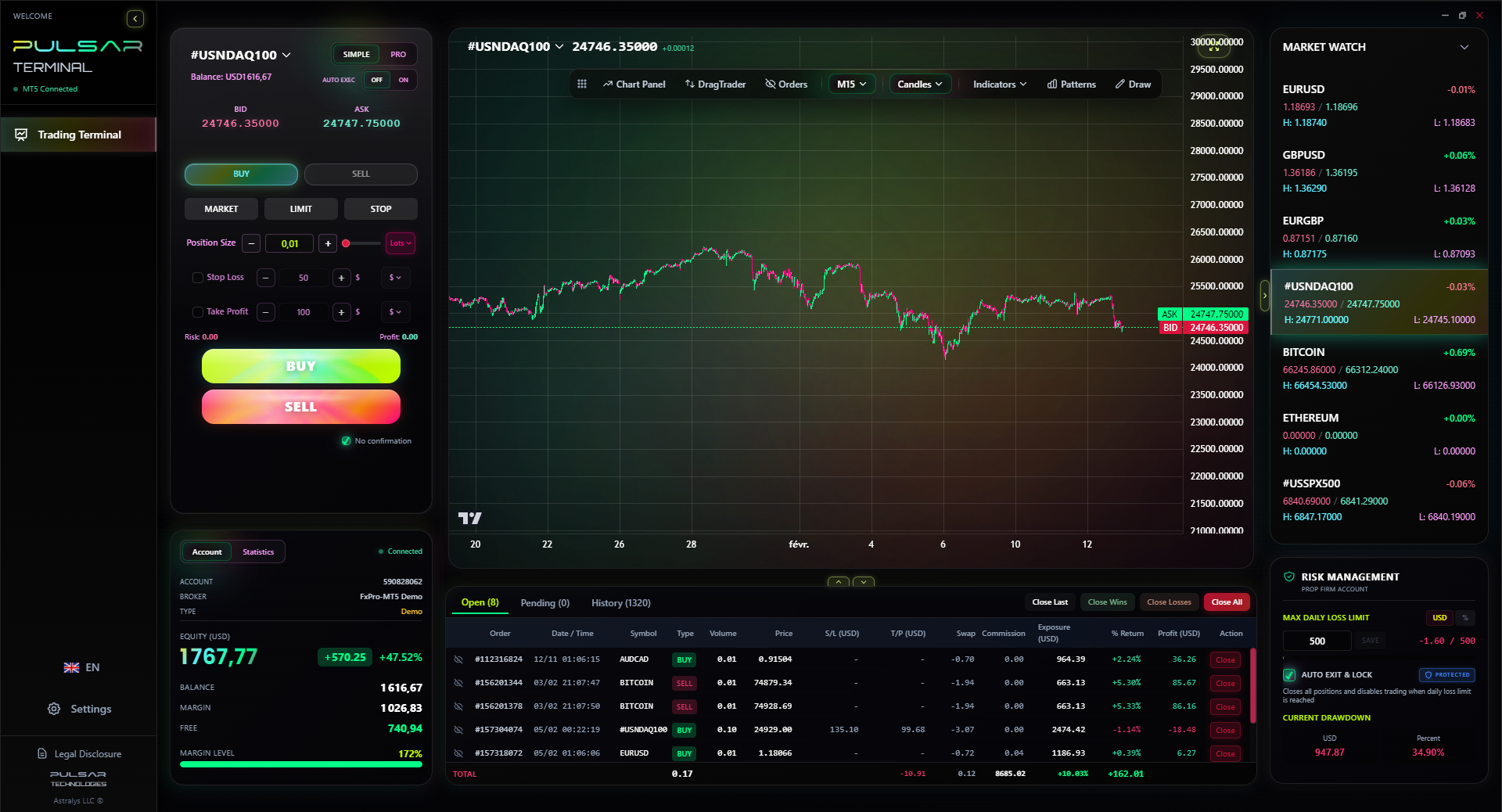
Managing high-leverage forex trades requires precision order tools, and Pulsar Terminal's drag-and-drop orders and multi-TP/SL features eliminate costly manual errors on MT5.
Pulsar Terminal
MT5一站式工具:拖拽下单、多重止盈/止损、追踪止损、网格交易、成交量分布图和自营交易保护。每日1000+交易者使用。
How you find trading ideas in forex vs stocks is like comparing astronomy to geology.
Stock Analysis (The Geologist): You get your hands dirty with company specifics. You're analyzing financial statements (income statements, balance sheets), management quality, industry trends, P/E ratios, and dividend yields. You're asking: Is this company fundamentally undervalued? A swing trading approach on the JSE often relies on this. The news flow is specific: earnings reports, CEO changes, product launches, competitor actions.
Forex Analysis (The Astronomer): You're looking at macro forces. You're watching interest rate decisions from the US Federal Reserve or the South African Reserve Bank (SARB). You're digesting GDP data, inflation figures (CPI), employment numbers, and political stability. For USD/ZAR, you need one eye on US data and one eye on SA data - and a third eye on the price of gold. The news is broad, economic, and country-wide. Technical analysis also tends to work very well in forex due to its high liquidity, making tools like the RSI indicator and MACD indicator quite reliable on currency charts.
My personal experience? I find stock analysis more intellectually satisfying but slower. I made a great 45% return over 18 months on a pharmaceutical stock after researching their new drug pipeline. But in forex, I once caught a 500-pip move in GBP/JPY in two days based purely on a central bank divergence setup I saw on my charts. The speed of feedback is totally different.
💡 Winston 小贴士
use is borrowed confidence. The market always calls in that debt, with interest. If you wouldn't take that same position size without use, you're not trading, you're gambling with a bank's money.
“How you find trading ideas in forex vs stocks is like comparing astronomy to geology.”
Stop asking which market is better. Start asking which trader you are. Let's break it down.
You might lean towards STOCKS if:
- You have a patient, long-term mindset. You're happy to hold for months or years.
- You enjoy deep-dive research into companies and industries.
- You want the potential for dividend income.
- You prefer trading only during SA business hours (9-5).
- You are risk-averse and the thought of 1:30 use gives you heart palpitations.
- You believe in 'investing in what you know' within the SA economy.
You might lean towards FOREX if:
- You are impatient and want faster feedback on your trades (hours or days, not months).
- You are fascinated by global economics and geopolitics.
- You have a flexible schedule and can trade during London or New York sessions (afternoon/evening SA time).
- You have a smaller starting capital and need the power of use to generate meaningful returns (while respecting the extreme risk).
- You are a disciplined technical trader who thrives on clear chart patterns and liquid markets.
- You understand that you are a speculator, not an investor.
Honestly, there's no rule against doing both. I keep a core portfolio of JSE stocks for long-term growth and dividends, but my active trading account is almost entirely forex. It fits my personality and my lifestyle. The key is to be brutally honest about your own temperament. If you check your phone every 5 minutes, a stock portfolio will drive you mad. If you can't handle rapid losses, forex will destroy you.
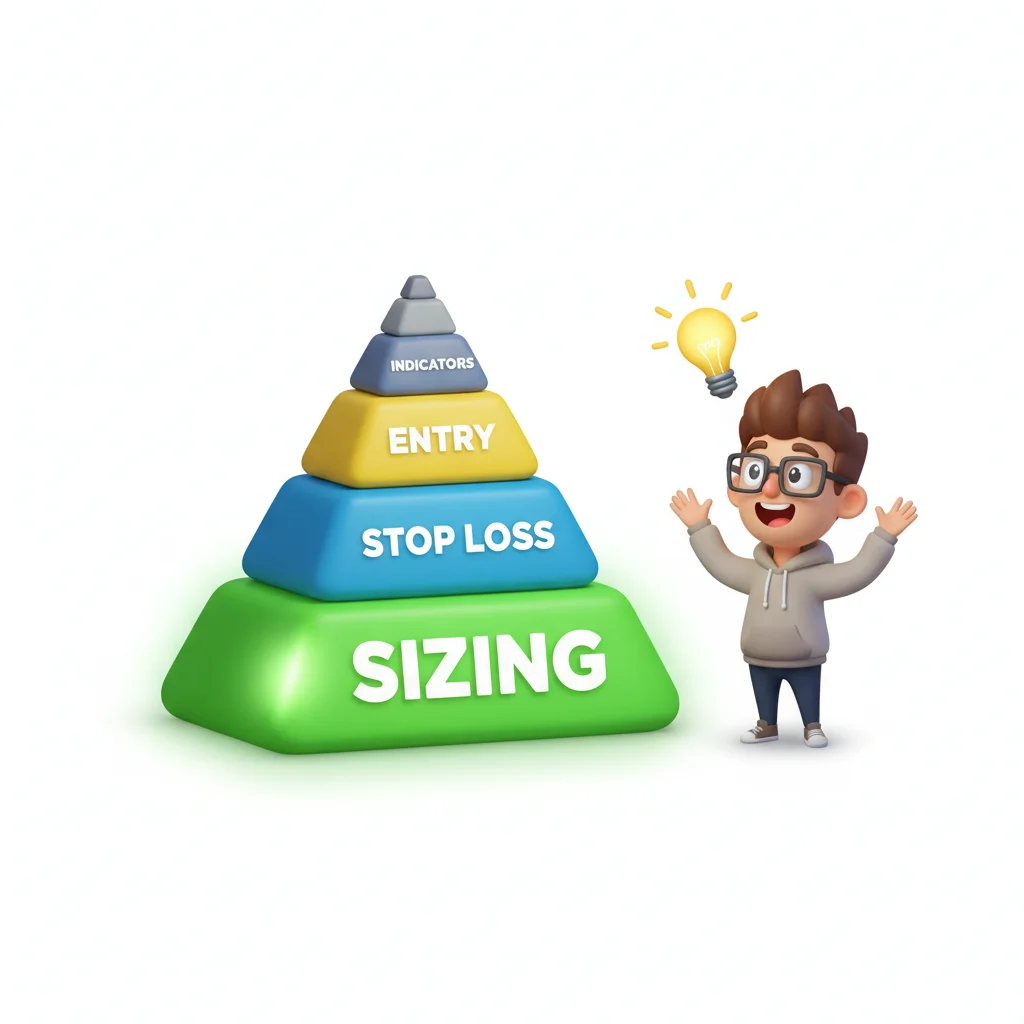
Alright, you've picked a path. Here's how to take the first steps without tripping.
Starting with Forex:
- Education First: Don't deposit a cent yet. Learn about pips, spreads, use, and margin. Understand what moves currencies.
- Choose a Reputable Broker: This is paramount. Look for an international broker with a strong reputation and good regulation that accepts South African clients. Do your due diligence with our reviews of brokers like Exness or XM. Key factors: tight spreads on USD/ZAR, reliable deposits/withdrawals in ZAR, and a good trading platform (MT4/MT5).
- Open a Demo Account: Practice for at least 2-3 months. Trade your EUR/USD guide or XAU/USD guide strategies in a risk-free environment. Your goal is consistency, not giant wins.
- Start Live Small: When you go live, fund your account with money you can afford to lose completely. Start with micro-lots. Your first goal is to preserve capital, not to buy a new car.
Starting with JSE Stocks:
- Open a Brokerage Account: Use a well-known South African online broker like EasyEquities, Standard Bank WebTrader, or FNB's Share Trading. The process is straightforward and they'll guide you through tax (SARS) implications.
- Start with a Simulator: Many platforms offer virtual trading. Use it.
- Begin with the Giants: Your first trades shouldn't be on obscure penny stocks. Look at the JSE Top 40. Pick one or two companies you actually understand and believe in for the long term.
- Think in Rands, Not Percentages: A 2% gain on R10,000 is R200. After brokerage fees of R100, that's a R100 net gain. Is that worth the risk and time? This math keeps you grounded.
The common thread? Go slow. The market isn't going anywhere. I rushed into both when I started, and it cost me years of progress. Learn the mechanics on a demo, then risk tiny amounts in the live market to get used to the psychology. That's the real battle.
FAQ
Q1Is forex trading more profitable than stock trading in South Africa?
There's no universal answer. Forex offers higher use, which can magnify profits (and losses) from small price moves, making rapid gains possible. Stocks offer slower, steadier growth and dividends. Profitability depends 100% on the individual trader's skill, strategy, and risk management. A disciplined forex scalper might outperform a long-term stock investor in a year, and vice versa the next.
Q2Can I trade forex and JSE stocks with the same broker?
Usually not. Most JSE stockbrokers (like EasyEquities) only offer local shares. Most international forex brokers (like IC Markets or Pepperstone) offer forex, CFDs on global indices, and sometimes CFDs on JSE stocks, but not direct ownership of the actual shares. You'll likely need two separate accounts if you want to do both properly.
Q3How much money do I need to start trading forex vs stocks in SA?
For forex, you can start with a few thousand rand thanks to use and micro-lots. Some brokers allow accounts with $100 (roughly R1,800). For JSE stocks, you need enough to buy at least one share of a company you want, plus cover brokerage fees. For a blue-chip like FirstRand, that's around R6,000 for one share plus ~R50 in fees. Realistically, R5,000-R10,000 is a sensible minimum starting point for either to learn properly.
Q4Which market is riskier for a beginner: forex or stocks?
Forex is generally riskier for a complete beginner due to the high use available. It's very easy to over-use a small account and lose it all quickly if you don't understand margin. JSE stock trading with a cash account (no use) is inherently less risky because the worst that can happen is a stock goes to zero, which is rare for large caps. However, the lower risk in stocks also means lower potential returns for small accounts.
Q5What are the tax implications (SARS) for forex vs stock trading profits in SA?
This is crucial. Profits from trading JSE shares are generally subject to Capital Gains Tax (CGT). If you're deemed to be trading frequently as a business, it could be income tax. Forex trading profits are almost always considered income tax if you're a frequent trader, as SARS views it as speculative. You must keep careful records of all trades. Always consult with a South African tax professional who understands trading.
Q6Is technical analysis more effective on forex or stocks?
Technical analysis (TA) tends to be more consistently effective in the forex market, especially on major pairs. This is because forex is driven by pure supply and demand on a massive scale, and chart patterns, support/resistance, and indicators like RSI are followed by millions of traders globally. On stocks, TA can work, but it's more prone to being disrupted by company-specific news (e.g., an earnings surprise) that overrides any chart pattern.
Winston 教授的课程
要点总结:
- ✓Forex costs are in the spread; stock costs are in commissions. Know your enemy.
- ✓Use 1:30 use as a max ceiling for volatile pairs like USD/ZAR.
- ✓Stocks require patient, fundamental research; forex reacts to global macro news.
- ✓Start with a demo account for 2-3 months, no exceptions.
这篇文章对您有用吗?
点击星星评分
每周交易洞察
免费每周分析与策略。无垃圾邮件。
关于作者
David van der Merwe
新兴市场交易员
约翰内斯堡交易者,11年新兴市场货币经验。专注于ZAR货币对、FSCA监管交易和南非市场分析。
评论
风险提示
金融工具交易存在重大风险,可能不适合所有投资者。过往业绩不代表未来表现。本内容仅供教育目的,不构成投资建议。在交易前请务必自行研究。
您可能还喜欢

Cara Trading Forex Sukses: 7 Prinsip dari Trader Profesional
Cara trading forex sukses dengan 7 prinsip trader pro: manajemen modal, disiplin, journal trading, backtest. Data nyata, bukan janji profit palsu.
Jam Trading Forex Terbaik untuk Trader Indonesia: Panduan Lengkap dengan Tabel Waktu
Panduan jam trading forex untuk trader Indonesia. Tabel 4 sesi dunia, jam emas 20:00-00:00, sesi mana yang harus dihindari. Data akurat + tips dari trader berpengalaman.
Top 5 Sàn Forex Uy Tín Nhất 2026: Review Jujur dari Trader Indonesia
Top 5 sàn forex uy tín 2026 untuk trader Indonesia. Review jujur: spread, deposit, withdraw, dukungan lokal. Exness, XM, IC Markets & lebih.
