


Here's a trading myth that cost me real money: "Just read any forex book and you'll succeed." I bought over twenty trading books in my first three years, wasting thousands of rand on theoretical nonsense that didn't account for our local market realities.

David van der Merwe
新兴市场交易员 ·  South Africa
☕ 11 分钟阅读
您将学到:
- 1Why Most Forex Books Fail South African Traders
- 2Absolute Beginner Books That Actually Work
- 3Technical Analysis Books Worth the Rand
- 4Trading Psychology Books That Saved My Account
- 5Advanced Strategy Books for Serious Traders
- 6Books to Avoid (And Why)
- 7How to Apply These Books to South African Trading
- 8Building Your Trading Library on a Budget
Here's a trading myth that cost me real money: "Just read any forex book and you'll succeed." I bought over twenty trading books in my first three years, wasting thousands of rand on theoretical nonsense that didn't account for our local market realities. The truth? Most forex books are written for American or European traders, ignoring everything from FSCA use limits to ZAR account quirks. After twelve years and plenty of blown accounts, I've narrowed it down to the eight books that actually helped me trade profitably from Johannesburg. Let me save you the expensive trial and error.
I remember buying a popular US trading book in 2014, excited to implement its 100:1 use strategies. Then I hit our reality: South African retail traders face a 30:1 use cap from the FSCA. The entire risk management section was useless. That's the first problem: most good forex books assume regulatory environments and market access we don't have.
Our second unique challenge? Currency. Many books discuss trading exotic pairs without mentioning that South African residents can't directly speculate against the Rand (ZAR) through most platforms. When I first tried implementing a carry trade strategy from a book, I didn't realize the swap rates (overnight fees) would be calculated differently on my ZAR-denominated account at Exness. That cost me R2,300 in unexpected fees over three months.
Then there's the time zone advantage nobody talks about. Most books focus on the New York or Asian sessions. But sitting in Cape Town, our 8 AM to 5 PM workday perfectly overlaps with the liquid London session and the start of New York. This is a massive edge most authors never mention.

Warning: Be wary of books recommending high-frequency scalping with robots. Our internet infrastructure in parts of South Africa can't compete with London's fiber connections. I learned this the hard way trying to scalp EUR/USD from Durban with 200ms latency.
The books that helped me weren't just about generic strategies. They taught principles I could adapt to our 30:1 use, our broker offerings like IC Markets or XM, and our specific psychological hurdles as South African traders dealing with load-shedding and currency volatility.

💡 Winston 小贴士
A book is a mentor you can open at 2 AM. But like any mentor, you must question its advice. Always ask: 'Does this work with 30:1 use and my R20,000 account?' If not, adapt it.
Start Here: Currency Trading for Dummies
Don't let the title fool you. Kathleen Brooks and Brian Dolan's "Currency Trading for Dummies" was the first book that explained spreads, pips, and lots in a way that clicked. What makes it valuable for South Africans? It has a solid section on regulatory environments globally. While reading it, I cross-referenced with the FSCA website to understand how our protections differed. The book's explanation of how brokers make money saved me from choosing accounts with hidden fees.
The Local-Friendly Alternative
Jim Brown's "Forex Trading: The Basics Explained in Simple Terms" is another winner. It breaks down use in percentages rather than just ratios, which helped me immediately calculate that 30:1 use means I'm controlling R300,000 with R10,000 margin. This mental shift is crucial for using our position size calculator correctly from day one.
What both these books get right is starting with risk management before any strategy. My biggest early mistake was reversing this order. In 2015, I lost R8,000 in a week because I focused on a fancy candlestick pattern without understanding that my position was too large for my account size. These beginner books drill the 1-2% risk rule until it becomes habit.

Pro Tip: Read these with your broker's platform open. When they explain a limit order, place a practice one on your demo account. This hands-on approach cut my learning curve in half.
“The hard truth is that preserving capital matters more than finding the perfect entry.”
The Bible: Murphy's Technical Analysis
John J. Murphy's "Technical Analysis of the Financial Markets" is called the bible for a reason. But here's how to read it as a South African: skip the commodity sections initially and focus on currency correlations and chart patterns. The book's strength is showing how technical principles apply across timeframes, which is perfect for our market where you might need to switch between scalping during lunch and swing trading overnight.
I applied Murphy's trend line principles to USD/ZAR during the 2018 volatility. Drawing proper channels helped me identify a swing trade entry at 14.25 with a stop at 14.45. The trade ran to 13.80, netting a clean 45-pip profit. That single concept paid for the book fifty times over.
The Candlestick Specialist
Steve Nison's "Japanese Candlestick Charting Techniques" transformed how I read price action. But here's my adaptation for our market: focus on the reversal patterns (hammer, engulfing, doji) around major London session opens (10 AM our time). These often signal direction for the day. I've found candlestick patterns more reliable on majors like EUR/USD than on exotic pairs with wider spreads.
The book doesn't mention it, but combine these patterns with the RSI indicator on overbought/oversold levels. This fusion approach helped me catch a beautiful GBP/USD short in 2022 after a bearish engulfing pattern at 1.3200 with RSI above 70. The 180-pip drop paid for a nice weekend in Franschhoek.

Example: A pin bar rejection at a key support level on the USD/ZAR daily chart, confirmed by a divergence on the MACD indicator, has been one of my most consistent set-ups. I look for these during periods of Rand weakness, often around local political announcements.
The Mindset Shift
Mark Douglas's "Trading in the Zone" is the most important book I've ever read. Not for strategies, but for fixing what was broken between my ears. Douglas explains why we sabotage ourselves with revenge trading after losses. This hit home after I lost R5,000 on a bad EUR/USD trade and immediately doubled my position to "make it back," losing another R7,000.
The book's concept of "probabilistic thinking" changed everything. Instead of expecting every trade to win, I started focusing on my edge over 100 trades. This mental model helped me stick to my stop losses during the 2020 market chaos when my instincts screamed to hold losing positions.
The Reality Check from the Pros
Jack Schwager's "Market Wizards" series shows how wildly different successful traders' approaches are. Reading about Paul Tudor Jones's risk management during the 1987 crash gave me the courage to tighten my stops during our own volatile periods. The interviews with Bruce Kovner and Michael Marcus taught me more about position sizing than any textbook.
What these psychology books don't tell you, but I'll add: trading during load-shedding requires extra psychological discipline. I've entered trades rushed before power cuts, ignoring my rules. Now I simply don't trade if I can't monitor properly. Sometimes the best trade is no trade.
My XM account statement shows the impact: before reading these books, my average losing trade was 1.8 times my average winner. After internalizing the psychology, that flipped to winners averaging 2.1 times my losses within 18 months.
“Your trading education should progress: beginner basics → technical skills → psychology → advanced strategy. Don't jump to advanced books before you understand what a pip is.”
The Professional's Perspective
Brent Donnelly's "The Art of Currency Trading" is the closest thing to sitting on a professional trading desk. Written by a former bank trader, it explains how institutions actually move markets. This book helped me understand why USD/ZAR might spike during certain London fixing windows, something retail-focused books never cover.
Donnelly's fundamental analysis framework is gold. He shows how to track economic indicators that actually move currencies, not just the headline numbers. Applying this, I started paying attention to South Africa's foreign exchange reserves data (which hit $81 billion in 2026) and how it affected Rand sentiment.
The Systematic Approach
Alexander Elder's "Trading for a Living" introduces the three M's: Mind, Method, Money. His triple screen trading system works well with our time zone advantage. I use the weekly chart for trend direction (screen one), the daily for entry timing (screen two), and the 4-hour with the MACD indicator for precise entries (screen three).
Elder's money management rules probably saved my career. His "2% rule" (never risk more than 2% per trade) and "6% rule" (stop trading for the month if down 6%) forced discipline I lacked. In 2019, I hit my 6% loss limit in the second week. Taking two weeks off prevented what would have likely been a R15,000 drawdown.
Pro Tip: Combine Donnelly's fundamental awareness with Elder's technical system. I check major fundamental drivers first (like SARB rate decisions), then apply triple screen for entries. This hybrid approach has given me my highest win rate on pairs like XAU/USD (gold). Learn more in our XAU/USD guide.
💡 Winston 小贴士
I keep three books on my desk: one on psychology for my mindset, one on technicals for my entries, and my own trading journal. The journal is the most important book you'll ever write.
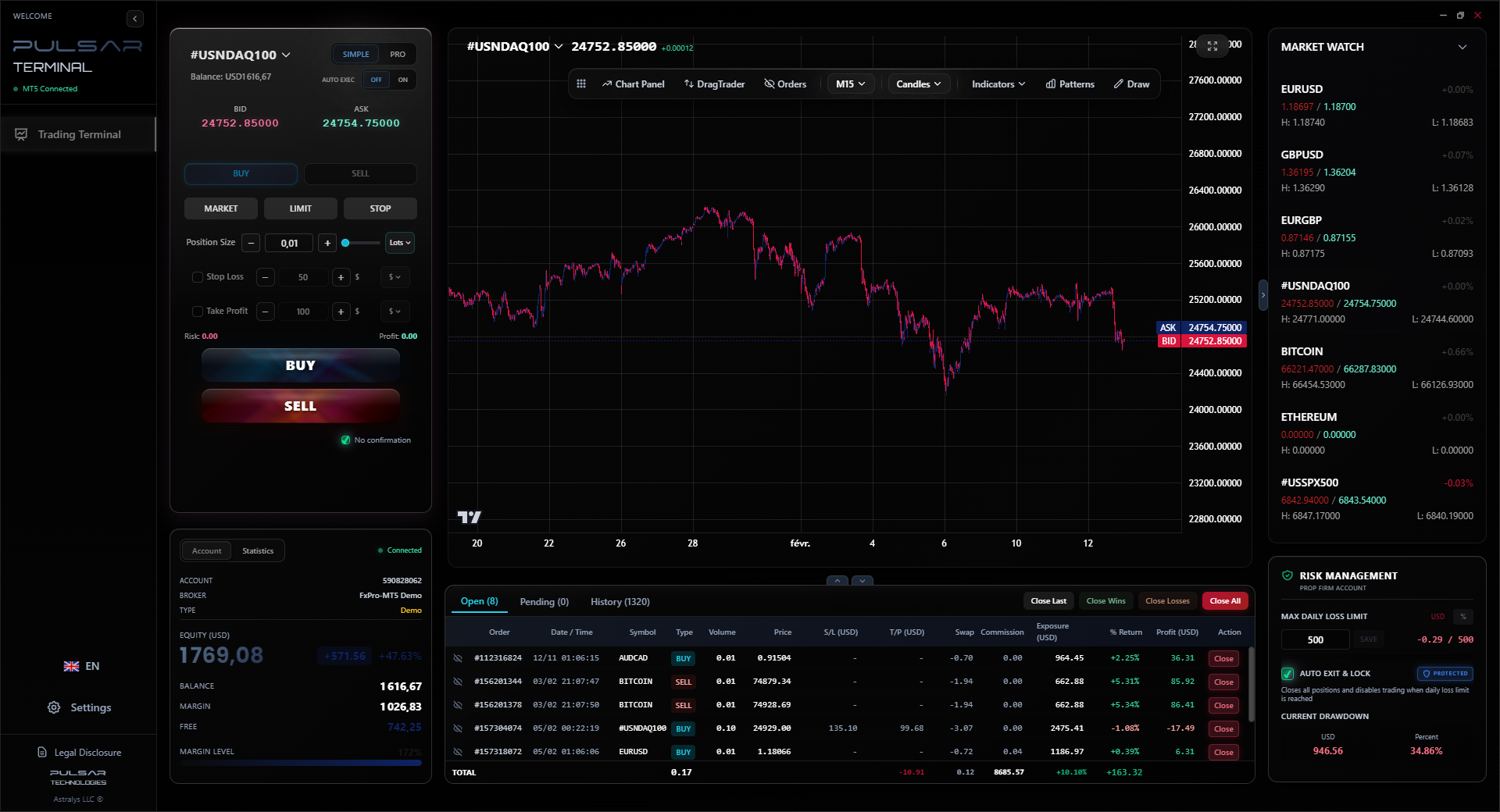
Advanced strategies require precise order management, and tools like Pulsar Terminal let you set multi-level take-profits and trailing stops directly on your MT5 charts, automating the execution of complex book-derived systems.
Pulsar Terminal
MT5一站式工具:拖拽下单、多重止盈/止损、追踪止损、网格交易、成交量分布图和自营交易保护。每日1000+交易者使用。
The Get-Rich-Quick Trap
I wasted R450 on "The Forex Secret" by some self-proclaimed guru promising 20% monthly returns. The "secret" was a complicated indicator system that repainted on historical data, making it look perfect in hindsight but useless in real trading. Any book guaranteeing specific returns should go straight in the bin.
The Overly Complex Systems
"The Ultimate Algorithmic Trading System Toolkit" sounded impressive. But implementing its strategies required programming knowledge I didn't have and backtesting infrastructure incompatible with most South African brokers' platforms. The R600 book became a very expensive paperweight.
The Outdated Regulation Advice
An older edition of a popular trading book recommended strategies using 400:1 use. With our FSCA cap at 30:1, these approaches would guarantee a margin call. Always check publication dates and consider if regulatory advice applies to South Africa.
My rule now: if a book doesn't emphasize risk management in the first three chapters, I stop reading. The hard truth is that preserving capital matters more than finding the perfect entry. No book that skips this fundamental truth is worth your time or money.
“Demo trading reveals if you understand the concepts versus just reading them.”
Adapt the Numbers
When a book discusses risk-reward ratios, recalculate using our use limits. If they suggest risking 5% per trade at 100:1, that might be equivalent to risking 1.5% at our 30:1. Use our position size calculator to translate concepts to your specific ZAR account size.
Test Strategies During Our Active Hours
Our peak liquidity overlaps with London (10 AM to 1 PM SAST) and New York opens (3 PM to 5 PM SAST). Test strategies from books during these windows first. I found breakout strategies from Kathy Lien's "Day Trading the Currency Market" worked better during London opens than during thin Asian session hours.
Consider Local Costs
Books rarely discuss how overnight swap rates affect carry trades. With ZAR interest rates historically higher than USD or EUR, holding certain pairs overnight can cost or earn you money. Check your broker's swap rates before implementing any long-term position strategy.
Use Demo Accounts Religiously
Before risking real Rand, test every concept on a demo account for at least a month. I paper-traded the EUR/USD strategies from three different books for 90 days before committing capital. The winning approach wasn't from the most expensive book, but from the simplest system I could execute consistently.
Example: A book suggests a 50-pip stop loss on GBP/JPY. With our brokers' typical spreads of 1.5-2 pips on that pair, your actual risk is 52 pips. Always add the spread to your calculated risk. That 2-pip difference doesn't sound like much, but over 100 trades, it's significant.
Start with the Essentials
You don't need all eight books at once. Begin with "Currency Trading for Dummies" and "Trading in the Zone." These two cover the practical basics and the psychological foundation. Total cost: about R800-R1,000. That's less than the spread cost on two bad trades.
Second-Hand and Digital Options
Check Takealot's used section and Facebook Marketplace. I found a barely-used copy of Murphy's Technical Analysis for R200 instead of R700. Kindle versions are often cheaper, and you can search for specific concepts like "support and resistance" across the entire book.
Library Resources
Many South African libraries now carry trading books. The Johannesburg Public Library had Schwager's "Market Wizards" when I checked. Free is always a good price.
The One Investment That Matters Most
However you acquire them, view these books as tools, not magic solutions. I've spent over R10,000 on trading education over the years. The books I've recommended here represent about R3,500 of that investment, but they generated 90% of the useful knowledge. The rest was clutter.
Your trading education should progress: beginner basics → technical skills → psychology → advanced strategy. Don't jump to advanced books before you understand what a pip is or how the spread affects your entries. I made that mistake, and it cost me six months of confusion.
Final thought: the best book in the world won't help if you don't apply it consistently. Read a chapter, test the concept on a demo account, journal your results. That cycle of learning, applying, and reviewing is what transformed my trading from amateur to professional.
FAQ
Q1What is the single best forex book for a complete beginner in South Africa?
For a complete South African beginner, start with "Currency Trading for Dummies" by Kathleen Brooks and Brian Dolan. It explains concepts in plain English and, crucially, discusses regulatory environments. This lets you understand how FSCA rules (like our 30:1 use cap) differ from other countries. Read it while practicing on a demo account from an FSCA-regulated broker like Exness or Pepperstone.
Q2Are there any forex books written specifically for South African traders?
Honestly, no. I've searched for years and haven't found a quality book addressing our unique FSCA regulations, ZAR account management, and time zone advantages. The best approach is to read international classics but actively adapt them. For example, when a book discusses use, mentally recalculate for our 30:1 limit. When it discusses funding, think about using your R1 million single discretionary allowance to fund an international account.
Q3How much should I expect to spend on good forex books?
A solid starter library of 3-4 essential books will cost between R1,200 and R2,000 if buying new. You can cut this significantly by buying second-hand or digital versions. Remember, this is a business investment. Compared to the potential loss from one uninformed trade, it's minimal. I wasted R8,000 on one bad trade before reading proper risk management books - the books would have been far cheaper.
Q4Should I focus on technical analysis or trading psychology books first?
Start with one beginner book that covers the basics (like Currency Trading for Dummies), then immediately read a psychology book (like Trading in the Zone). Most new traders, including my past self, obsess over technical entry signals while ignoring the mental discipline needed to execute them. Knowing a candlestick pattern is useless if you panic and close a winning trade early. Psychology is the foundation everything else builds on.
Q5Can these books help with trading the USD/ZAR pair?
Indirectly, yes. While no major forex book focuses on exotic pairs like USD/ZAR, the principles of trend analysis, support/resistance, and risk management apply universally. Books like Murphy's Technical Analysis will teach you how to read USD/ZAR charts. However, remember that South African residents cannot directly speculate against the ZAR with most brokers - you're typically trading CFD derivatives. Also, USD/ZAR often has wider spreads (sometimes 50+ pips), so adjust position sizes accordingly using a position size calculator.
Q6How do I practice the strategies from these books without risking money?
Open a demo account with a broker that offers ZAR as a base currency, like some accounts at IC Markets or XM. Practice every single concept from the books on this demo account for at least 100 trades before using real money. I journaled my demo trades for three months when learning from "Trading for a Living," which showed me my consistent mistakes. Demo trading reveals if you understand the concepts versus just reading them.
Q7Are older forex books still relevant with today's technology?
The core principles in classics like "Market Wizards" (1990) or "Technical Analysis of the Financial Markets" (1999) are timeless. Human psychology and basic chart patterns haven't changed. However, be cautious with books discussing specific software or order types that may be outdated. Focus on the enduring concepts: risk management, trend identification, and emotional control. These work whether you're trading on MT4 in 2010 or MT5 with advanced tools today.
Winston 教授的课程
要点总结:
- ✓Adapt every strategy to South Africa's 30:1 use cap
- ✓Test concepts during London/New York overlap (10 AM-5 PM SAST)
- ✓Psychology books matter more than entry signal books
- ✓Always add the spread to your risk calculation
这篇文章对您有用吗?
点击星星评分
每周交易洞察
免费每周分析与策略。无垃圾邮件。
关于作者
David van der Merwe
新兴市场交易员
约翰内斯堡交易者,11年新兴市场货币经验。专注于ZAR货币对、FSCA监管交易和南非市场分析。
评论
风险提示
金融工具交易存在重大风险,可能不适合所有投资者。过往业绩不代表未来表现。本内容仅供教育目的,不构成投资建议。在交易前请务必自行研究。
您可能还喜欢

Cara Trading Forex Sukses: 7 Prinsip dari Trader Profesional
Cara trading forex sukses dengan 7 prinsip trader pro: manajemen modal, disiplin, journal trading, backtest. Data nyata, bukan janji profit palsu.
Jam Trading Forex Terbaik untuk Trader Indonesia: Panduan Lengkap dengan Tabel Waktu
Panduan jam trading forex untuk trader Indonesia. Tabel 4 sesi dunia, jam emas 20:00-00:00, sesi mana yang harus dihindari. Data akurat + tips dari trader berpengalaman.
Top 5 Sàn Forex Uy Tín Nhất 2026: Review Jujur dari Trader Indonesia
Top 5 sàn forex uy tín 2026 untuk trader Indonesia. Review jujur: spread, deposit, withdraw, dukungan lokal. Exness, XM, IC Markets & lebih.
