


Let's be blunt: obsessing over Habby Forex's net worth is the fastest way to lose your own money.

Olumide Adeyemi
西非交易先驱 ·  Nigeria
☕ 11 分钟阅读
您将学到:
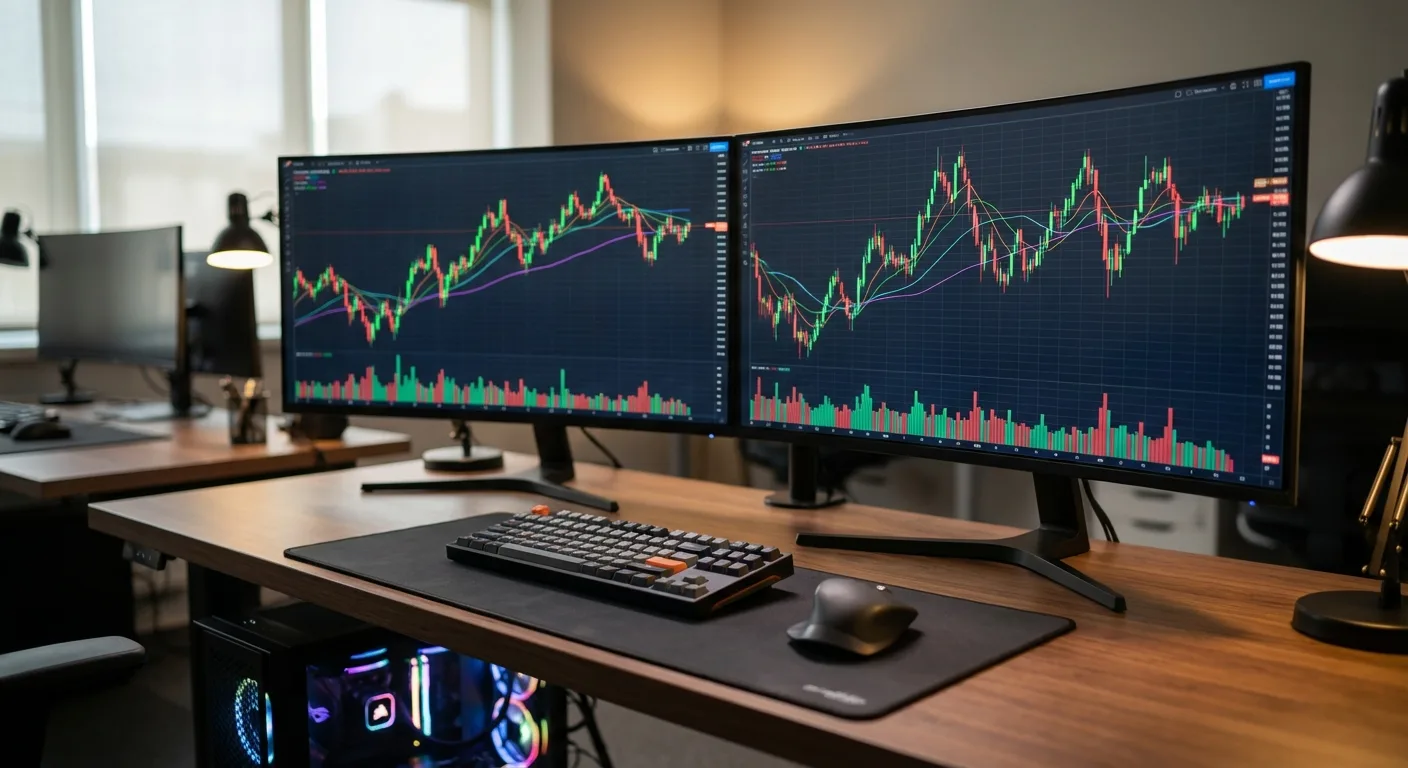
Let's be blunt: obsessing over Habby Forex's net worth is the fastest way to lose your own money. I've seen it a hundred times. A young trader gets inspired by Damilare Ogundare's story, sees the $5 million figure floating around, and jumps into the market with dreams of quick riches. They blow up their account within months. I know because I was almost one of them. This article isn't about celebrity worship. It's about reverse-engineering what actually builds sustainable wealth from trading in Nigeria's unique market. We'll look at the real numbers, the regulatory minefield, and the brutal lessons I learned trying to chase someone else's success.
Damilare 'Habby Forex' Ogundare's story is compelling. Making his first million Naira at 18 and his first million dollars at 20? That's the kind of narrative that fuels dreams across Lagos and Port Harcourt. His alleged net worth of $5-7 million positions him as a titan in the Nigerian trading community. But here's what most people miss completely.
His wealth isn't just from trading. It's a diversified portfolio: trading profits, academy tuition (Habby Forex Trading Academy), and investments in real estate and luxury assets. This is the first critical lesson. Pure trading income is volatile. The smartest traders I know, the ones who last, build multiple income streams around their core skill. They teach, they manage capital, they invest elsewhere. Putting all your eggs in the live trading basket is a recipe for emotional and financial disaster.
I made this mistake early on. After a good six-month run in 2020, I thought I was the next big thing. I poured every Naira of profit back into my account, aiming for some mythical net worth number I'd seen online. Then the CBN started its rate unification process, USD/NGN went haywire, and I gave back 70% of those profits in three brutal weeks. I was over-leveraged and had no other financial cushion. Habby's model - trading plus education plus assets - isn't just for show. It's a survival strategy.

Warning: A public figure's net worth is almost always an estimate, often inflated for branding. Chasing a number is a losing game. Chase the process that might get you there instead.
His trading approach, emphasizing Smart Money Concepts (SMC) and rigid risk management, is what you should study, not his bank balance. SMC focuses on understanding how large institutions move the market, a useful framework in Nigeria's often-manipulated FX environment. The real value of a figure like Habby Forex is the validation he provides: yes, a Nigerian can build serious wealth from this. But the path is specific, regulated, and far harder than any Instagram post suggests.

💡 Winston 小贴士
A public net worth is a branding tool, not a trading target. Your only benchmark should be your own last trade's discipline.

“Obsessing over Habby Forex's net worth is the fastest way to lose your own money.”
Trading in Nigeria isn't like trading in the UK or US. We operate in a unique, sometimes chaotic, financial landscape. Ignoring this context is why so many fail.
The Regulatory Gatekeepers
Forex trading is legal for individuals, but it's watched. The Central Bank of Nigeria (CBN) and the Securities and Exchange Commission (SEC) are the main regulators. The CBN's primary goal isn't to help you get rich; it's to maintain Naira stability and manage foreign exchange outflows. This is crucial. They've explicitly prohibited using official FX windows to fund trading accounts. You must source your dollars through the autonomous market - remittances, exchanges, etc.
The rules are tightening. Look at the Bureau De Change (BDC) recapitalization: operators now need a staggering 2 billion Naira minimum. The CBN revoked over 4,000 licenses in 2024 alone. This push for formalization affects liquidity and channels. As a trader, you need to be aware of where your money flows.
The Tax Man Cometh
Forget the idea of tax-free profits. The Federal Inland Revenue Service (FIRS) expects a 10% capital gains tax on your trading profits. I learned this the awkward way after my first profitable year. I hadn't kept clean records, and reconciling a year of trades from multiple brokers was a nightmare. Now, I use a simple spreadsheet logging every trade, with a column for estimated tax liability. It's not glamorous, but it keeps you legal and prevents a nasty surprise.
The Real Cost of Trading
Your broker's spread is your first enemy. Let's talk real numbers from our market:
| Broker | Avg. EUR/USD Spread | Min. Deposit (NGN/USD) | Key Point for Nigerians |
|---|---|---|---|
| Exness | From 0.0 pips | Low/Variable | Popular for local bank transfers & instant withdrawals. |
| IC Markets | From 0.0 pips | $200 (~₦300k) | Raw spreads, strong execution. |
| HFM | Variable | ~₦4,000 | Offers Naira-denominated accounts. |
| Pepperstone | Low | $0 | use up to 1:400 under CMA regulation. |
A 0.9 pip spread on GBP/USD might not sound like much, but if you're a high-frequency trader, it murders your edge. I once tried a scalping strategy on a broker with "average" spreads. After 100 trades, my "profits" were completely eaten by costs. I was just a glorified spread-payer. Choosing a broker with transparent, low costs is a foundational wealth-building decision. Don't just go for the one with the flashiest ads. Check our deep dive on Exness and IC Markets for Nigerian-specific insights.

Pro Tip: Always calculate your cost per trade (spread in pips * pip value) as part of your risk assessment. If your average profit target is 10 pips, a 2-pip spread means you're giving up 20% of your potential gain before you even start.

“Pure trading income is volatile. The smartest traders build multiple income streams around their core skill.”
This is the core disconnect. Trading is a skill. Building net worth is a financial strategy. They are related but not the same.
The Three Pillars of Trader Wealth
- Trading Capital: This is your engine. It grows through consistent, risk-managed returns. Not explosive, 1000% gambles. Aim for sustainability. A 15-25% annual return on your trading account, compounded over years, is world-class. Seriously. Anyone promising you more is lying or reckless.
- Withdrawal & Reinvestment Strategy: This is where most fail. You must pay yourself. I set a rule: 50% of quarterly profits get withdrawn. Of that, 25% goes to taxes, 25% goes into a completely separate investment - like real estate or a low-index fund. This physically removes money from the emotional trading environment and builds tangible net worth. The other 50% of profits can be re-injected into trading capital to compound.
- Diversified Income: This is the Habby model. Use your expertise to create other revenue. Mentor one person. Write a market analysis newsletter. This does two things: it provides income during drawdowns (which will happen), and it deepens your own understanding. Teaching forces you to systematize your knowledge.
I didn't do this early on. My entire net worth was my MT4 balance. When that dipped, my stress levels skyrocketed, which led to worse trading decisions. It was a vicious cycle. Now, my trading account is just one asset on my personal balance sheet. That psychological shift is more valuable than any indicator.
The Power of "Enough"
Chasing an arbitrary net worth number leads to overtrading. I had a month where I was up 8%. My target was 10%. I forced two extra trades to hit that round number, broke my own rules, and ended the month at -2%. Greed destroyed discipline. Use a position size calculator religiously to enforce mechanical decisions, not emotional ones.
💡 Winston 小贴士
In Nigeria, your biggest edge isn't a secret indicator; it's understanding the flow of dollars between the CBN, the autonomous market, and the parallel rate. Trade the flow, not the news headline.

“Your broker's spread is your first enemy. Choosing a broker with transparent, low costs is a foundational wealth-building decision.”
Trading USD/NGN or any major pair from Nigeria comes with unique psychological baggage. You're trading in dollars, thinking in Naira, and living in an economy with volatile inflation.
When the Naira is depreciating fast, there's a frantic urge to "escape" into dollars by any means necessary, including risky trades. This isn't analysis; it's panic. I've taken terrible USD/NGN positions out of fear of missing out on the dollar's rise, ignoring all technical levels. Conversely, when the CBN intervenes and the Naira strengthens briefly, there's a euphoric belief the crisis is over. Both emotions are killers.
You must decouple your trading from your local currency anxiety. View your trading capital in USD. Measure your performance in USD. Your living expenses are in Naira, so you'll need to convert, but keep the mental separation. This helps you see the charts objectively, not as a lifeboat.
Recent CBN actions - hiking interest rates to 27.5% to fight inflation, introducing the electronic FX matching system (EFEMS) - create massive volatility. This is opportunity, but only for the disciplined. The MACD indicator on a USD/NGN chart during these policy announcements looks like a heart attack. You need a rock-solid plan for news events. My rule? If I don't have a position on before a major CBN announcement, I stay out for the next 4-6 hours. Let the algos and panicked money fight it out first.

Example: In Q1 2024, net foreign capital inflows hit $3.4 billion. That's smart money moving. Your job as a trader isn't to have an opinion on the Naira's "true value," but to identify how those flows are impacting the pairs you trade, like EUR/USD or even XAU/USD (gold), which many Nigerians flock to as a store of value.

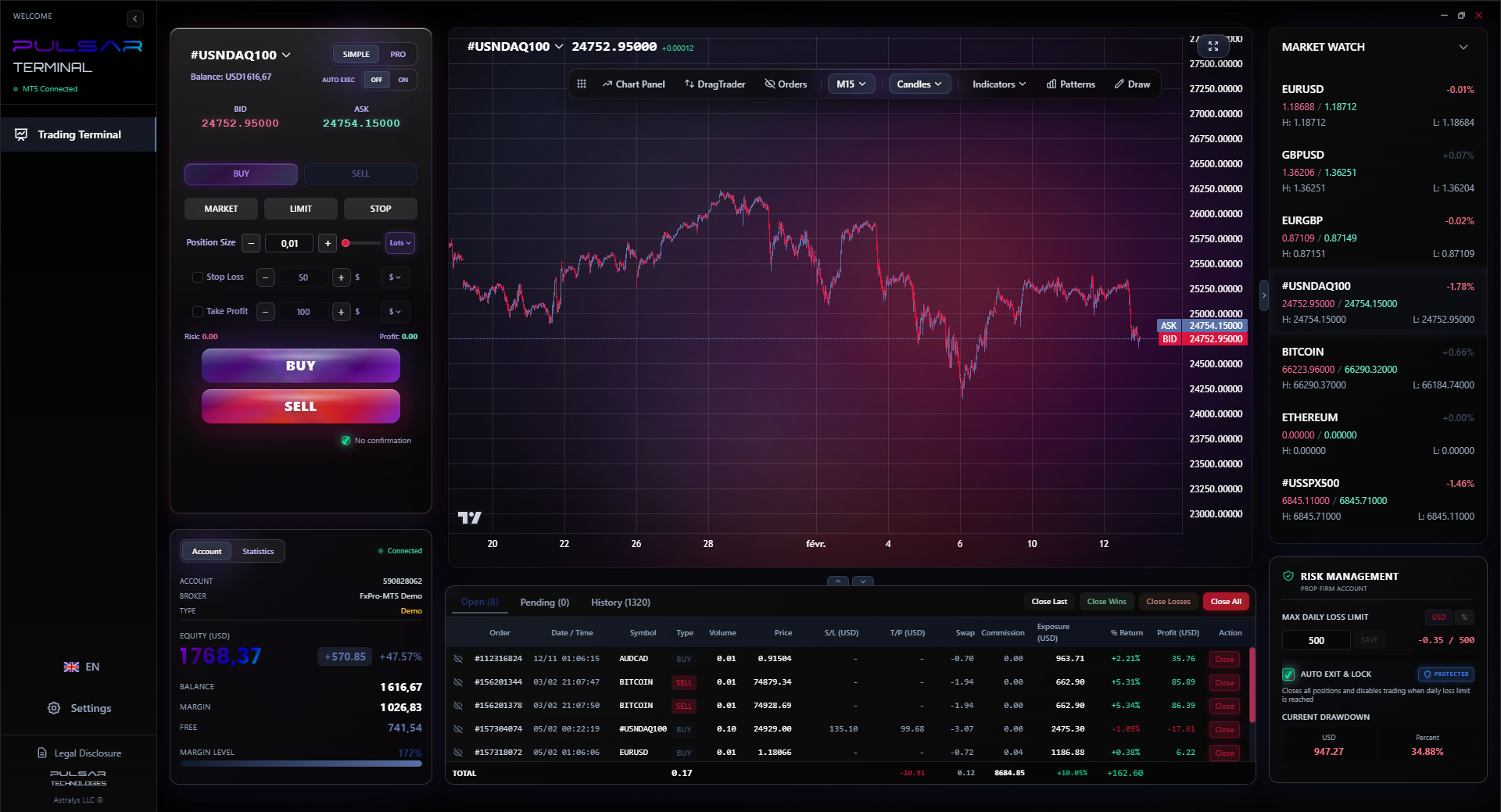
Managing the intense volatility of pairs like USD/NGN during CBN announcements requires iron-clad risk controls, which Pulsar Terminal automates with its advanced stop-loss and partial closure features directly on your MT5.
Pulsar Terminal
MT5一站式工具:拖拽下单、多重止盈/止损、追踪止损、网格交易、成交量分布图和自营交易保护。每日1000+交易者使用。
“Your broker's spread is your first enemy. Choosing a broker with transparent, low costs is a foundational wealth-building decision.”
Forget the $5 million. Let's build your first ₦5 million sustainably.
- Audit Your Broker: Right now, check your last 20 trades. Calculate the average spread cost. Compare it to the brokers listed earlier. If you're paying more than 1.2 pips on EUR/USD consistently, you're being robbed. Consider a switch to a cost-effective broker like Pepperstone or XM.
- Open a 'Wealth' Account: Go to your bank or a fintech app and open a separate savings/investment account. Label it "Trader's Wealth Fund." Your next withdrawal from trading, no matter how small, put at least 20% into it. This starts the mental separation.
- Backtest a Simple SMC Concept: Don't buy a costly course. Pick one Smart Money Concept idea - like identifying a "Fair Value Gap" on the 4-hour chart. Go back on USD/NGN or GBP/JPY for the past year and mark every instance. Did price return to fill it? What was the typical reaction? Do this manual work. It builds intuition no video can give you.
- Set a Process Goal, Not a Profit Goal: For the next month, your goal is not a profit figure. Your goal is: "I will use a stop-loss on 100% of my trades, and my risk will never exceed 1% of my account per trade." Use tools to automate this discipline where possible.
- Get Tax Ready: Start a log. Google Sheets is free. Columns: Date, Pair, Long/Short, Entry, Stop Loss, Take Profit, Exit, P&L (USD), P&L (NGN). Update it after every single trade. This habit will save you immense stress and money.
The glamour of a high net worth is seductive. But the foundation of that wealth is built on boring, repetitive, disciplined actions. I wish I'd spent less time in 2018 looking at traders' luxury car photos and more time building these systems. The cars came later, and with much less anxiety.
💡 Winston 小贴士
If you can't immediately calculate the 10% tax liability on your last winning trade, your record-keeping is already failing. Fix that before your next entry.
“Trading is a skill. Building net worth is a financial strategy. They are related but not the same.”
The landscape is changing. The CBN's new FX code, the electronic matching system, higher BDC capital requirements - all this points to a more formalized, transparent market over time. This is good for serious traders. It reduces the wild, unpredictable swings from opaque market operations.
Your strategy needs to evolve with it. The parallel market rate gap shrinking to under 2% by late 2025 changes the dynamics of trading the Naira. It may become less volatile, more driven by macro fundamentals like oil prices and interest rate differentials. This means fundamental analysis will grow in importance alongside technicals.
Liquidity is improving. Daily FX turnover rising to $350 million means better order execution for you. Less slippage on your entries and exits. This is a tangible benefit that boosts your bottom line.
The key takeaway? The window for making easy, chaotic money in forex is narrowing. The window for building serious, long-term wealth through skill is widening. The traders who treat this as a professional business - with risk management, accounting, and continuous education - will be the ones who not only survive but thrive. They might not all have a public net worth like Habby Forex, but they'll have something more valuable: sustainable financial independence built on their own terms. That's the real goal. Everything else is just noise.
Focus on your chart, your plan, your psychology. Let the net worth figures take care of themselves. They usually do, for those who master the craft.
FAQ
Q1Is Habby Forex's $5 million net worth real?
While widely reported, it's an estimate. His wealth is understood to be a combination of trading profits, income from his Habby Forex Trading Academy, and investments in assets like real estate. The exact figure is private, but his success as a prominent, award-winning Nigerian trader is well-documented.
Q2What is the most important lesson from Habby Forex's success?
Diversification. He didn't rely solely on trading income. He built an educational business and other investments. This creates stability, as trading profits can be volatile. The lesson is to build multiple income streams around your trading skill.
Q3Is forex trading legal in Nigeria, and how is it taxed?
Yes, retail forex trading is legal for individuals. It is regulated by the CBN and SEC. Profits from trading are subject to a 10% Capital Gains Tax, which must be paid to the Federal Inland Revenue Service (FIRS). Traders must keep accurate records of their trades for tax purposes.
Q4What's a realistic annual return for a skilled forex trader in Nigeria?
A consistent 15-25% annual return on your trading capital is considered excellent and sustainable. Promises of returns vastly higher than this are typically unrealistic and involve extreme risk that leads to account blow-ups. Focus on consistency over explosive gains.
Q5Which brokers are best for Nigerian traders starting out?
Look for brokers with low costs, good Naira integration, and strong regulation. Exness is popular for local transfers and low spreads. IC Markets offers raw spreads for more active traders. HFM provides Naira-denominated accounts. Always prioritize low spreads and reliable withdrawal processes. Check detailed reviews like our IC Markets review for specifics.
Q6How do CBN policies affect my forex trading?
Massively. CBN decisions on interest rates (like hikes to 27.5% in 2024) and FX market structure (like the new electronic matching system) directly cause volatility in USD/NGN and influence global capital flows into Nigeria. This affects all currency pairs. A good trader must follow CBN announcements and understand their intent to manage Naira stability.
Q7What's the first step to building trading wealth?
Separate your trading capital from your living expenses and wealth-building money. Open a dedicated 'wealth account' and automatically siphon a portion of any trading profits into it. This psychological and practical separation is the foundation of turning trading income into lasting net worth.
Winston 教授的课程
要点总结:
- ✓Net worth from trading requires a 3-pillar strategy: trading capital, withdrawals, and diversified income.
- ✓Always account for Nigeria's 10% capital gains tax on profits from day one.
- ✓Sustainable annual returns are in the 15-25% range, not 100%+.
- ✓Decouple your trading psychology from Naira volatility; think in USD.
- ✓Broker spreads are a silent killer; aim for under 1.2 pips on majors.
这篇文章对您有用吗?
点击星星评分
每周交易洞察
免费每周分析与策略。无垃圾邮件。
关于作者
Olumide Adeyemi
西非交易先驱
尼日利亚最活跃的外汇交易教育者之一。从拉各斯出发有8年交易经验。专注于低资金策略和面向非洲交易者的自营公司挑战。
评论
风险提示
金融工具交易存在重大风险,可能不适合所有投资者。过往业绩不代表未来表现。本内容仅供教育目的,不构成投资建议。在交易前请务必自行研究。
您可能还喜欢

Cara Trading Forex Sukses: 7 Prinsip dari Trader Profesional
Cara trading forex sukses dengan 7 prinsip trader pro: manajemen modal, disiplin, journal trading, backtest. Data nyata, bukan janji profit palsu.
Jam Trading Forex Terbaik untuk Trader Indonesia: Panduan Lengkap dengan Tabel Waktu
Panduan jam trading forex untuk trader Indonesia. Tabel 4 sesi dunia, jam emas 20:00-00:00, sesi mana yang harus dihindari. Data akurat + tips dari trader berpengalaman.
Top 5 Sàn Forex Uy Tín Nhất 2026: Review Jujur dari Trader Indonesia
Top 5 sàn forex uy tín 2026 untuk trader Indonesia. Review jujur: spread, deposit, withdraw, dukungan lokal. Exness, XM, IC Markets & lebih.
